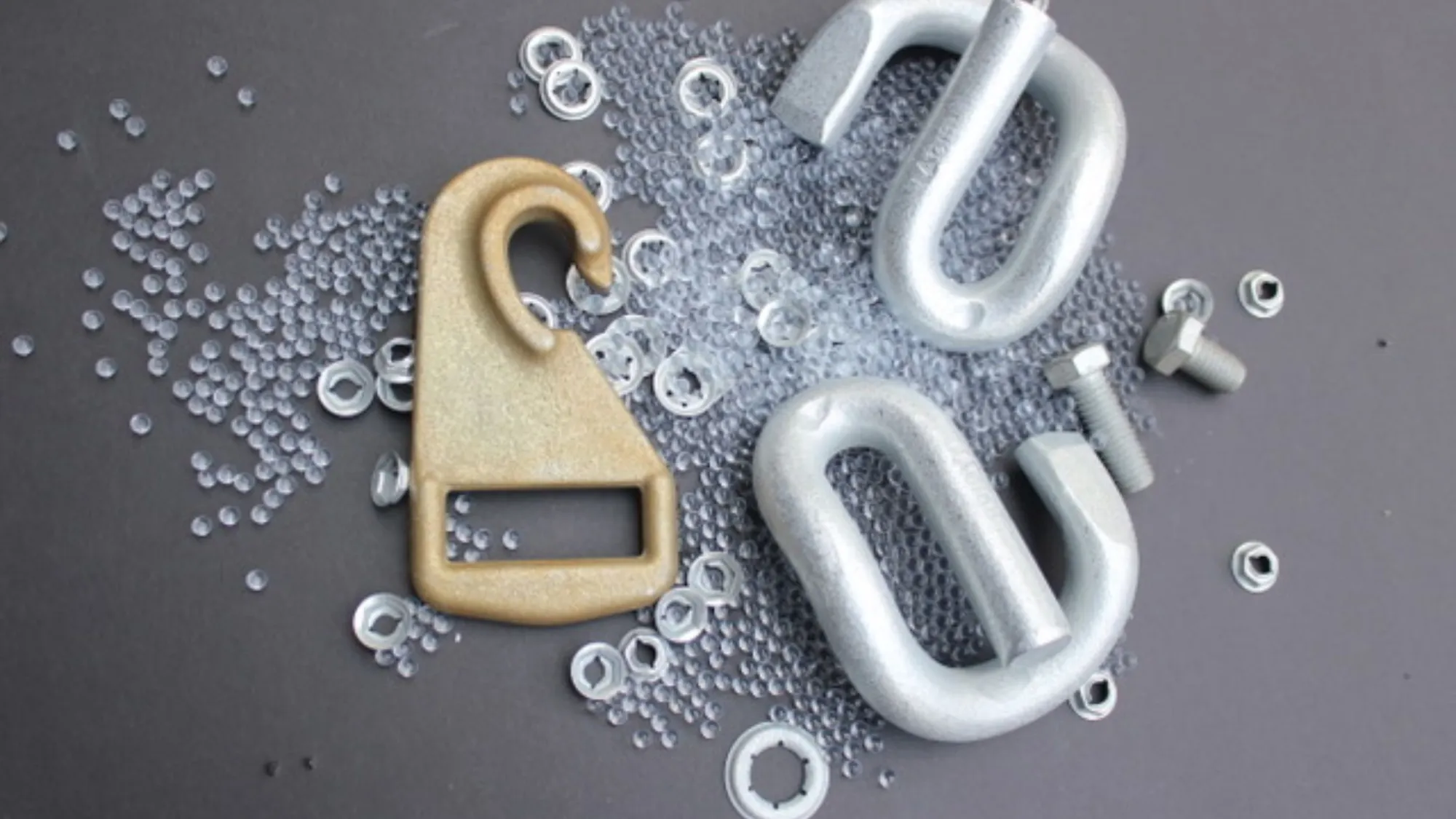

Steel rarely gets much attention until something goes wrong. A corroded fastener, a weakened support bracket, or unexpected maintenance can quickly remind us that the smallest components often carry the biggest responsibilities. That reality explains why Mechanical Galvanizing in Illinois continues to gain attention across industries that depend on long-lasting steel performance.
While corrosion protection has always mattered, today’s manufacturers, contractors, and infrastructure planners are looking beyond simple rust prevention. They want coatings that preserve dimensional accuracy, protect high-strength fasteners, and support long-term reliability. Mechanical Galvanizing fits naturally into that conversation because it addresses challenges that many traditional coating methods cannot.
Illinois Industries Demand More Than Basic Corrosion Protection
Illinois has one of the country’s most diverse industrial economies. Manufacturing, transportation, agriculture, logistics, renewable energy, and public infrastructure all depend on steel components that perform consistently over many years.
Those sectors also face demanding environmental conditions.
Winter road salt, seasonal humidity, fluctuating temperatures, and urban pollution create an aggressive environment for exposed steel. Protective finishes must perform well without compromising the integrity of bolts, washers, anchors, and other precision components.
That combination makes coating selection an engineering decision rather than simply a purchasing decision.
Why Mechanical Galvanizing Continues to Stand Out
Many corrosion protection methods involve heat or electrochemical processes. Mechanical galvanizing takes a different approach.
Instead of using electrical current, zinc powder is mechanically bonded to steel components through a controlled tumbling process. The result is a uniform protective coating that maintains dimensional consistency while helping reduce the risk of hydrogen embrittlement on high-strength fasteners.
That distinction often receives less attention than it deserves.
Professionals frequently focus on coating thickness or appearance. Long-term reliability often depends just as much on how the coating is applied.
Small Parts Often Carry the Greatest Risk
Large steel beams naturally attract attention during project planning. Small fasteners usually do not.
Yet bolts, threaded rods, nuts, washers, and anchors frequently determine whether entire structural systems perform as intended. When corrosion affects these critical connections, maintenance costs can increase rapidly. This explains why many engineers evaluate coating methods based on lifecycle performance rather than initial application cost.
A slightly better finish today may prevent significant operational disruptions years later.
Consistency Creates Confidence
Manufacturing depends on repeatability. Every component must fit correctly, assemble efficiently, and perform under predictable loads. Surface treatments that alter dimensions or create uneven buildup can introduce unnecessary complications during installation.
One overlooked advantage of Mechanical Galvanizing is its ability to produce relatively uniform coverage across complex shapes and threaded surfaces. This consistency supports smoother assembly while helping maintain specified tolerances.
Viewed from a broader perspective, quality coatings simplify more than corrosion protection. They improve manufacturing confidence from production through final installation.
Corrosion Planning Is Becoming More Strategic
Conversations around corrosion protection have changed noticeably during the past decade.
Instead of asking, “Which coating costs less?”
Many organizations now ask:
- Which finish extends service life?
- Which option minimizes maintenance?
- Which process supports compliance goals?
- Which coating reduces long-term operational risk?
Those questions reflect a larger shift toward lifecycle thinking.
Infrastructure owners increasingly recognize that maintenance budgets often exceed original coating costs many times over during the life of an asset.
Choosing protection early becomes a financial strategy rather than simply a technical requirement.
Illinois Projects Reflect National Infrastructure Trends
Illinois serves as an important transportation hub for North America. Bridges, rail systems, agricultural facilities, warehouses, manufacturing plants, and renewable energy projects all depend upon durable fastening systems capable of surviving decades of environmental exposure.
Those same expectations are spreading nationwide.
Government investment in infrastructure, combined with private-sector modernization, has increased demand for corrosion-resistant components capable of delivering predictable performance over extended service lives. Many assume stronger steel alone solves durability challenges.
Real-world experience suggests surface protection often determines whether those materials achieve their intended lifespan.
Looking Ahead: Smarter Protection for Longer Lifecycles
The next several years will likely reshape corrosion management even further.
Digital asset tracking, predictive maintenance, and longer infrastructure planning horizons are changing how engineers evaluate protective finishes. Rather than reacting to corrosion after it appears, organizations are investing earlier in preventive strategies that improve lifecycle economics.
Mechanical coating technologies fit naturally into this direction because they emphasize durability, consistency, and compatibility with demanding applications.
Future projects will likely place greater value on finishes that preserve material properties while supporting environmental responsibility and operational efficiency.
That trend is already visible across transportation, utilities, manufacturing, and public infrastructure.
Building Reliability Before Corrosion Begins
Every durable structure begins with thousands of individual decisions that rarely receive public attention. Selecting the right protective finish is one of those decisions.
Mechanical Galvanizing in Illinois illustrates how thoughtful engineering can improve long-term asset performance without adding unnecessary complexity. Rather than treating corrosion as an inevitable maintenance issue, more organizations now view protective coatings as an investment in reliability from the very beginning.
Viewed through that lens, Mechanical Galvanizing becomes more than a finishing process. It becomes part of a broader strategy for building infrastructure, equipment, and industrial systems designed to perform confidently for decades.






















![Best Cloud Computing Courses & Certificates [2026]](/data/post/1865935/a3146442e219da996ed3b2fd.webp)



Sign in to leave a comment.