
Washington excavation projects require workers to establish hidden underground systems, which become accessible through their development work. The construction process becomes complicated for contractors, property owners, and construction managers because they must deal with concealed electrical wires and communication networks, sewer laterals, water pipelines, and decommissioned facilities during their work. Subsurface investigations need to assess site-specific underground conditions through soil testing, utility assessment, accessibility review, and document examination before conducting their operations.
The RCW 19.122 law establishes that property owners and contractors must contact 811 before starting any excavation work. The 811 utility location service mainly identifies public utility networks but does not cover privately operated infrastructure. The situation requires that further examination be conducted to enhance underground access while decreasing the chances of unexpected utility interruptions. The utility locating service in Washington employs multiple technologies that work together to detect utility lines according to site requirements.
Understanding the Limitations of Single-Method Locating
A single technology for locating underground utilities cannot detect all underground utilities across different locations. The electromagnetic locating equipment works effectively with conductive utility lines but requires different methods to investigate non-conductive utilities such as plastic water services and sewer pipes. The results of locating underground utilities are affected by soil composition, congestion, signal interference, depth variation, and inaccessible utility connection points.
Technicians use multiple investigation techniques to confirm their findings, which results in higher trustworthiness of the data they collect. The combination of multiple technologies in underground utility investigations still faces various restrictions that stem from site conditions and accessibility issues, utility material characteristics, and existing documentation. The exact depth of utilities remains unconfirmed because the methods used for installation and natural ground movement throughout time will change their initial positions.
Public Utilities Versus Private Infrastructure
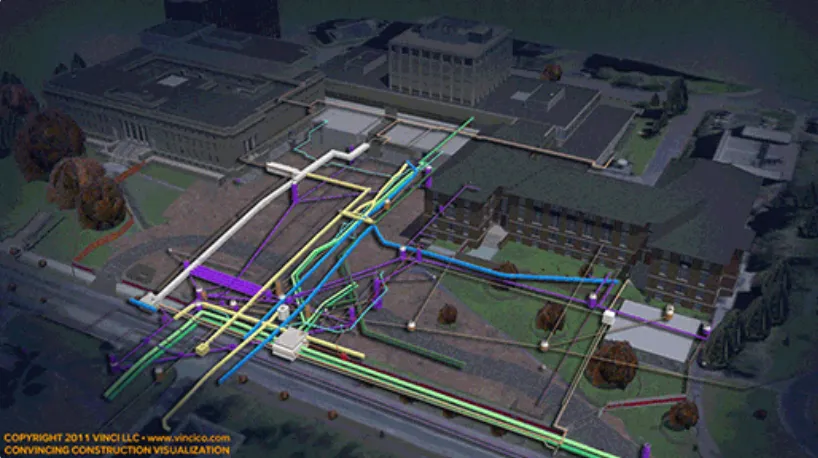
Many property owners are not aware that 811 system utility locators will not display underground pipes that belong to private property. After an 811 request has been completed, all private electrical feeds and irrigation systems, parking lot lighting circuits, and private water services and sewer laterals will remain unmarked. The distinction becomes critical because it applies to commercial properties and industrial facilities, apartment complexes, and older developments that contain undocumented utility modifications.
Washington private utility locating service providers will assist with locating infrastructure that does not comply with standard public utility locating procedures. The technicians will examine the visible site features, utility entry points, and as-built drawings and access conditions to choose the best locating methods for the project.
Why Multiple Technologies Are Commonly Combined
Utility investigations require multiple technologies to be used in a layered approach instead of using a single locating tool. The electromagnetic locating equipment enables tracing of both electrical and metallic utility lines, which carry conductive materials, while magnetic detection helps to find hidden valve boxes, metallic fittings, and tracer wire access points.
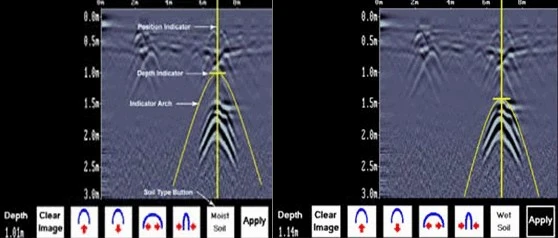
Ground Penetrating Radar (GPR) uses its ability to detect underground disturbances together with its capability to find non-metallic utility routes that electromagnetic devices cannot discover. Technicians use different devices according to the site conditions, which include tracer rods, sondes, push cameras, sewer crawler systems, and acoustic detection methods to get a better understanding of underground structures.
The components function together as integrated systems that need multiple tools for complete operation. The site conditions and utility characteristics, together with project requirements, lead technicians to choose appropriate methods for their work. The results show different outcomes because of three operational factors, which include utility depth, soil moisture content, and concrete strength and underground obstacles.
The Role of Ground Penetrating Radar in Utility Investigations
In congested excavation areas, ground penetrating radar utility locating in Washington is often used to help identify visible underground anomalies that may not respond to electromagnetic signals. GPR can be useful when investigating areas containing plastic piping, unknown utility crossings, or undocumented infrastructure where limited records are available.
Although GPR can improve subsurface visibility, its performance depends heavily on site conditions. Soil composition, moisture content, depth, surface material, and interference from surrounding infrastructure can all affect interpretation quality. Because of these limitations, GPR findings are often reviewed alongside information gathered through electromagnetic locating, mapping data, visual inspections, or other field investigation methods.
Utility Mapping and Documentation Considerations
Once utilities have been identified in the field, some projects may also require mapping deliverables for engineering planning, excavation coordination, or infrastructure management purposes. Depending on the project scope, technicians may document field markings using GPS, GNSS, RTK, or photogrammetry-based workflows.
A utility locating service in Washington may provide mapping information to support project coordination, but mapping accuracy can vary depending on satellite conditions, site accessibility, equipment limitations, and the quality of field observations collected during the investigation process.
Conclusion
Subsurface investigations become challenging because underground conditions vary between different properties, utility systems, and construction environments. Public utility locates requested through 811 remain an important first step under RCW 19.122, but private infrastructure and undocumented utilities may still require additional investigation before excavation begins. The success of excavation planning depends on understanding the limitations that each locating method presents.
Technicians in Washington use electromagnetic locating and acoustic methods, magnetic detection, camera inspections, and ground penetrating radar utility locating because no single technology can identify every underground condition. A private utility locating service in Washington may also help investigate privately owned infrastructure that falls outside standard 811 coverage areas. C-N-I Locates Ltd provides utility locating services for projects that need professional subsurface investigation throughout Washington by using multiple complementary technologies, which they choose based on the specific conditions at each site.


















Sign in to leave a comment.