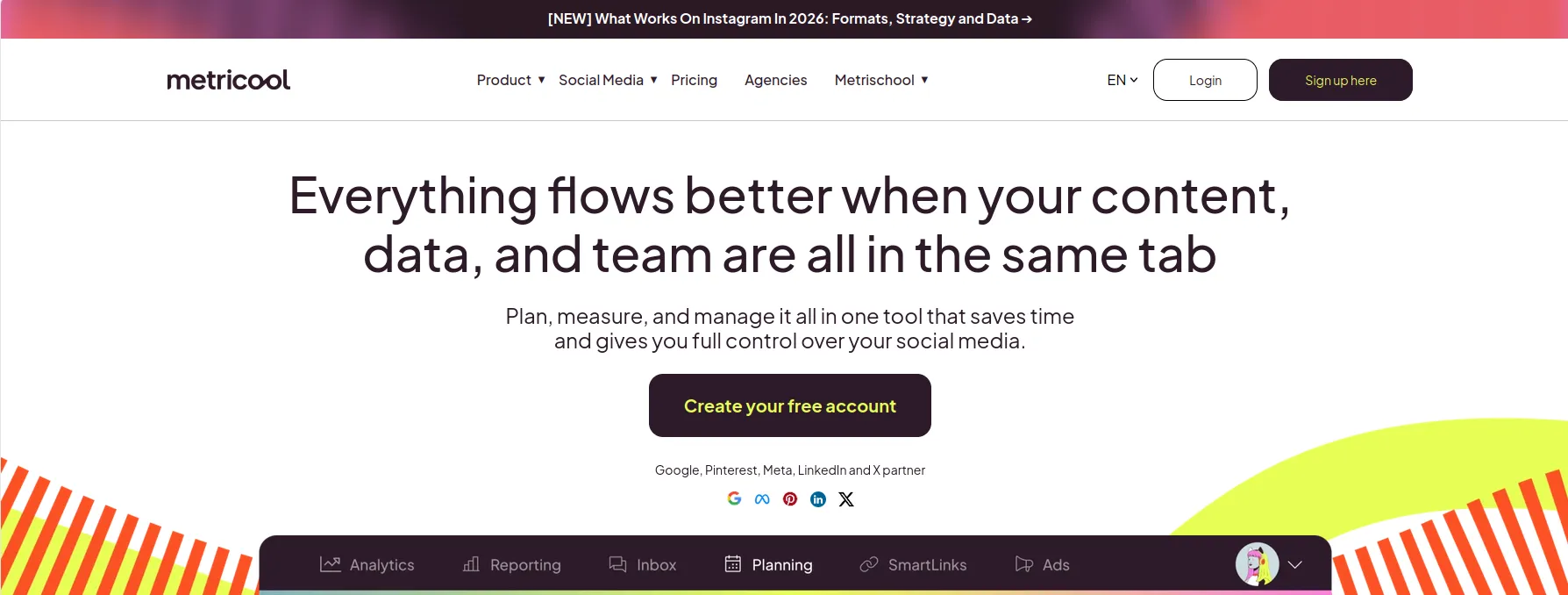

Why I Moved Away From Metricool for an AI-First Workflow
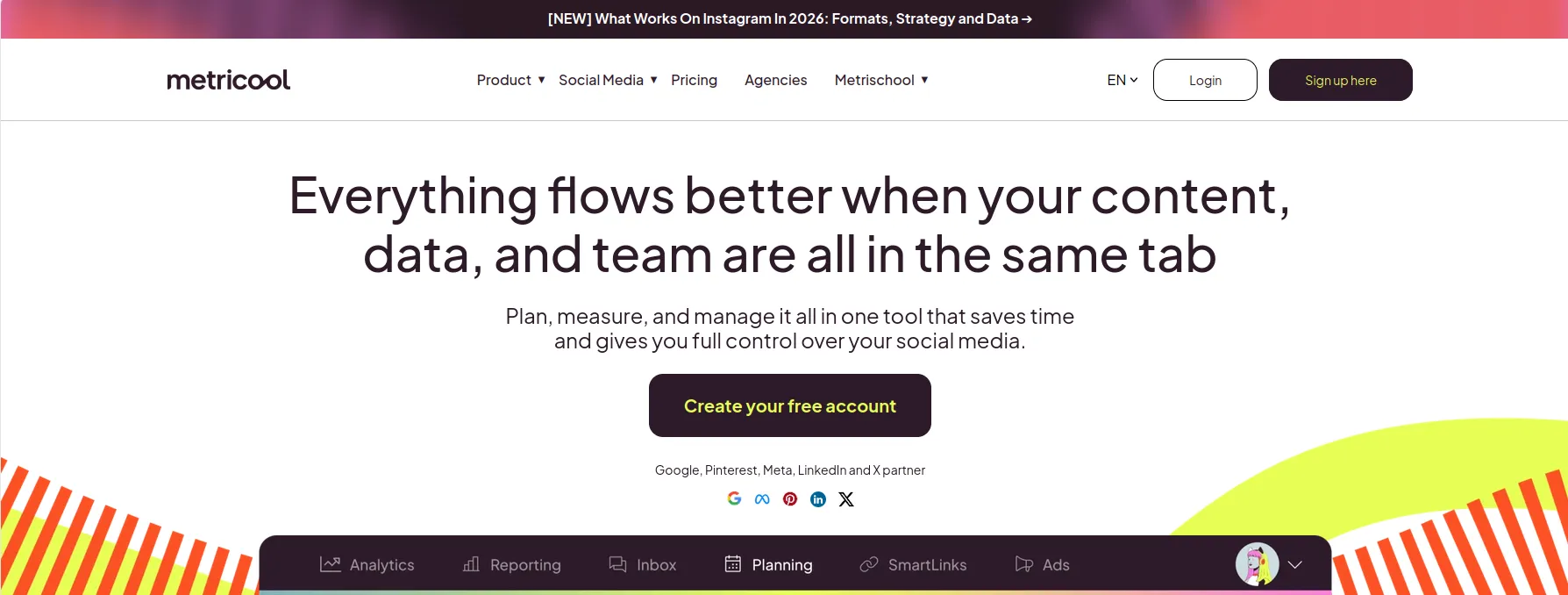
I didn't move away from Metricool because it suddenly stopped working. I switched because my workflow had gradually grown beyond what the platform was designed to support. I only truly recognized that after spending time with an AI-first platform and experiencing how different the entire process could feel.
That realization didn't come from comparing feature lists or analyzing pricing pages. It came from using a fundamentally different workflow for a couple of weeks and finally seeing how much everyday friction I had been accepting without questioning it.
Metricool is a reliable social media management platform. It handles scheduling well, offers useful analytics, and provides the core features many individuals and teams need to manage their social presence.
But over time, I found myself spending more time searching for content, writing captions, and adapting posts for different platforms than I was spending on actual strategy. The platform helped me manage and schedule content, but it didn't do enough to help me create it.
Eventually, that gap became difficult to ignore. It felt like the platform was supporting only one part of the workflow I actually needed.
What an AI-First Workflow Looks Like in Reality
I manage content for a B2B SaaS company alongside one content writer. Between us, we manage eight social accounts across LinkedIn, X, Instagram, Facebook, and Threads, publishing around 20 posts each week.
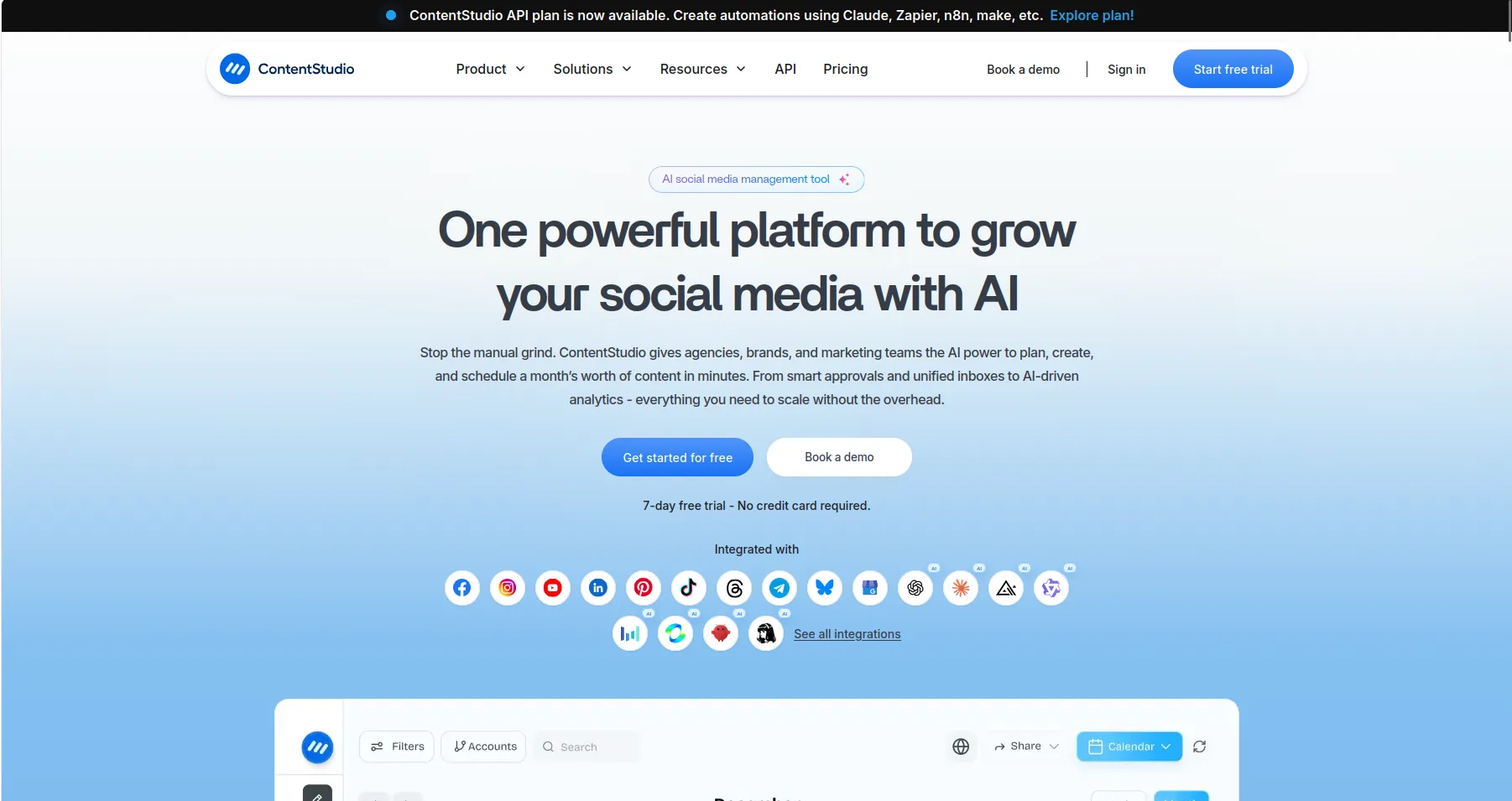
When I began testing ContentStudio, the first thing that stood out wasn't simply another scheduling feature. It was having AI Studio alongside a built-in content discovery feed, allowing me to find ideas, develop drafts, and schedule content within the same environment.
For the first time in years, I didn't need one browser tab for finding content, another for generating captions, and another for scheduling posts. One platform was handling tasks that had previously required several separate tools.
That might sound like a small convenience, but it had a much bigger impact than I expected.
The constant switching between tabs had become a normal part of my routine, but it was also creating a fragmented workflow. Each part of the process lived in a different tool, followed different logic, and had little connection to the rest of the process.
You might discover an interesting article, switch to an AI writing tool to create a caption, and then move to your scheduler to publish it. By the time you had moved between all those tools, the original context and creative momentum could easily disappear.
A process that should have felt continuous had turned into several disconnected tasks requiring completely different types of focus.
What Metricool Did — And Where It Fell Short
None of this means Metricool is a poor product. It simply meant that the platform was no longer a perfect fit for the workflow I was trying to build.
The gap between what I needed from my content workflow and what Metricool could provide continued to become more noticeable.
The Workflow I Actually Needed
To be fair, Metricool is a capable platform for managing social media scheduling, analytics, and publishing. Its reporting features are useful, the interface is relatively straightforward, and it provides a central place to manage multiple social accounts.
If your content is already written and you mainly need a reliable Social Media Scheduler to organize and publish it across different networks, Metricool can be a practical option.
But I kept running into several limitations.
Limited AI writing support. I wanted more help with caption creation, content angles, and variations. Starting every post from a completely blank text field created unnecessary friction.
For a team producing approximately 20 posts per week across five platforms, that added up quickly. Starting from zero every time isn't always creativity. Sometimes, it's simply exhausting.
Content discovery wasn't central enough to the workflow. I still found myself researching content and looking for relevant topics outside the platform before bringing those ideas into the scheduling process.
The system worked, but I was still stitching together parts of the workflow myself rather than having discovery, creation, and scheduling naturally connected.
The composer felt limited for multi-platform content creation. Creating a post for several networks often required more manual adjustment than I wanted.
There wasn't always a smooth way to create one core idea and then easily adapt it for different platforms, audiences, and formats within the same workflow.
For a brand active across five different networks, each with its own audience expectations, this meant either publishing similar content everywhere or manually creating and editing multiple versions.
Analytics showed performance, but didn't always provide enough direction. Engagement numbers, follower counts, and other performance metrics were available, but I wanted more help turning that information into decisions about what content to create next.
The data was there. The deeper workflow around that data was what I felt was missing.
None of these issues made Metricool a bad platform. They simply made it increasingly mismatched with the workflow I was trying to create. Eventually, constantly building workarounds becomes less efficient than moving to a platform that supports the workflow more directly.
That was ultimately what led me to start exploring different Metricool Alternatives.
What My Workflow Looks Like Now
If your process is simple — content is created somewhere else, your social networks are already selected, and you mainly need scheduling and analytics Metricool can be a perfectly reasonable choice.
Its scheduling and reporting capabilities make sense for that type of workflow.
However, if content creation is what consumes most of your week if you're constantly searching for content, staring at blank caption fields, and moving drafts between different tools — a platform focused mainly on scheduling may be solving only part of the problem.
Making scheduling faster won't necessarily solve a content creation bottleneck.
The overall process of social media publishing became more efficient once content discovery, drafting, AI assistance, and scheduling were brought closer together. Instead of constantly moving content between disconnected tools, more of the workflow could happen in one place.
Who Should Probably Continue Using Metricool?
If your content is created externally, your social networks are already determined, and you mainly need a platform for scheduling, analytics, and performance tracking, Metricool remains a strong option.
Individuals, agencies, and social media managers who already have a clear content production process may find that Metricool provides the tools they need without unnecessary complexity.
But if creating content is what takes up most of your time — if you're constantly searching for things to share, facing blank caption fields, and transferring drafts between different platforms — a traditional social media management workflow may not be the best fit.
The real bottleneck isn't always when the posts are published.
Sometimes, it's how long it takes to create them in the first place.
And until the tool helps solve that part of the process, the frustration remains.
The posts simply get scheduled more efficiently.
Read More Articles:
https://writeupcafe.com/why-we-moved-away-from-sendible-for-our-client-accounts-1



























Sign in to leave a comment.