Native-audio AI video models generate dialogue, ambience, and effects with the picture. Learn which production steps shrink and which still need review today.
AI video used to stop at the picture. A model could produce an impressive eight-second shot, but the useful production work often began after export: record or synthesize the voice, find sound effects, choose music, align the mouth, rebuild the timing, and mix everything into a clip that felt intentional.
Native audio changes that handoff. When a model generates image and sound together, the first usable output can already contain spoken lines, room tone, footsteps, traffic, music, and action-timed effects. The production stack becomes shorter because the model solves some local timing decisions during generation.
Shorter, however, does not mean automatic. Native audio removes several assembly steps, but it moves more creative decisions into the script and more responsibility into review.
The Old AI Video Stack Was a Relay Race
Consider a producer making a 30-second launch video with a presenter, three product shots, and a closing logo. In a silent-video workflow, the producer might generate the shots first, then build a separate narration track. That narration sets the real pace, so the shots are trimmed or regenerated to fit. Sound effects are placed against individual movements. Music is cut around the voice. If the presenter speaks on camera, a lip-sync pass is added near the end.
Every handoff creates a new dependency. A revised line changes the voiceover duration. The new duration shifts the cut. The shifted cut moves the sound effect. A regenerated close-up may require the lip sync to be run again. The team is not simply making five creative elements; it is repeatedly reconciling five timelines.
That stack made sense when video models returned silent clips. It becomes wasteful when the model can reason about the visible action and its sound in the same generation.
Native Audio Turns the Prompt Into an Audiovisual Brief
A native-audio prompt describes more than what the camera sees. It can specify who speaks, the exact line, how it is delivered, what the room sounds like, which action produces a sound, and whether music should lead or stay behind the dialogue.
This matters because synchronization is no longer a repair applied to the output. It is part of the generation problem. A model can attempt to make a cup touch the table when the ceramic click is heard, shape a character's mouth around a spoken line, and let street noise rise as a door opens. The image and soundtrack are designed as one event.
The practical change is easy to miss in a polished demo. Native audio does not merely add a soundtrack. It moves sound direction upstream, before the shot exists. Writers and directors now need to describe sonic intent alongside framing, motion, and performance.
Veo 3.1, Kling 3.0, and Seedance 2.0 Show the Same Shift From Different Angles
Google presents Veo 3.1 as a model that generates dialogue, sound effects, and ambient noise natively. Its developer documentation makes audio cues part of the prompt and describes the resulting soundtrack as synchronized with the video. The same documentation also exposes a useful production limitation: extending a voice is ineffective if the voice is absent from the final second of the source clip. That small caveat captures the broader reality. Audio continuity is possible, but it still needs to be directed and checked. (Google DeepMind; Gemini API documentation)
Kling 3.0 approaches the problem through a broader multimodal system. Kuaishou says the model accepts and produces text, images, audio, and video within one architecture. Its native speech supports several languages and accents, while multi-character scenes can control content, delivery, and speaking order. Multi-shot instructions and reference-based voice characteristics make it particularly relevant to narrative sequences where sound belongs to a character rather than to a detached voiceover. (Kuaishou)
Seedance 2.0 is explicitly described by ByteDance as an audio-video joint-generation model. It can use text, images, audio, and video as references, so a creator can direct a shot with more than a written description. The accompanying technical report describes direct audio-video clips from four to 15 seconds and support for multiple reference assets. That makes the relationship between source material, visible performance, and generated sound part of the model input rather than a problem left entirely for post-production. (ByteDance Seed; Seedance 2.0 technical report)
These are not interchangeable models, and their best use cases will keep changing. The durable trend is architectural: sound is becoming a first-class part of video generation, not a file attached afterward.
Which Production Steps Actually Shrink
The largest savings appear in short scenes where sound is tightly coupled to visible action.
- Temporary voice tracks become less necessary. A generated line can establish pacing while the shot is created instead of being added only after the visual is approved.
- Basic lip-sync passes can disappear. When the speaker and dialogue are generated together, there may be no need to animate a silent mouth against a separate recording.
- Routine effects can arrive on cue. Footsteps, impacts, door sounds, crowd noise, and room ambience can be generated in context rather than placed one by one.
- Picture and sound revisions can happen together. A prompt such as “deliver the line more quietly as the train approaches” changes performance, environment, and timing in one request.
- Early cuts become easier to judge. Reviewers can react to rhythm and tone instead of imagining how a silent shot might feel once audio is added.
The important word is can. A successful native soundtrack removes work. A weak one creates a different task: deciding whether to regenerate the whole shot or separate the audio and repair it downstream.
The Human Review Pass Becomes More Important, Not Less
Co-generation does not guarantee a usable mix. Dialogue may be correct but delivered in the wrong mood. An effect may exist but land a fraction too early. Music may crowd the voice. A character can look consistent across two shots while the voice changes enough to break the scene.
Editorial and brand checks remain firmly human. Approved copy must be compared with the spoken output. Names, numbers, and product claims need to be heard rather than assumed correct. Captions still need verification. A final mix must work on a phone speaker as well as headphones, and platform-specific loudness or export requirements do not vanish because the source audio was generated with the image.
Longer stories introduce another problem: continuity across generations. Veo's API currently works in clips of four, six, or eight seconds; Kling 3.0 supports video up to 15 seconds; Seedance 2.0 reports a four-to-15-second range. A 45-second campaign video is therefore still a sequence of decisions. Voice identity, ambience, musical key, pacing, and room acoustics must survive several generated shots and the edit between them.
Native audio changes the review question from “How do we build the soundtrack?” to “Which parts of this generated soundtrack deserve to survive the final cut?”
The New Bottleneck Is Project Orchestration
Once every generated shot can carry its own dialogue, effects, and ambience, file management becomes creative management. The team needs to know which script version produced the clip, which model handled the shot, what references were used, whether the audio is approved, and what should change without disturbing everything else.
Return to the launch-video producer. The presenter close-up may need a model that handles speech and facial performance well. A fast product montage may depend more on motion and impact sounds. The final logo shot might use a locked music cue with no generated dialogue. Choosing a single model for all three scenes is less important than keeping the script, references, outputs, feedback, and revisions connected.
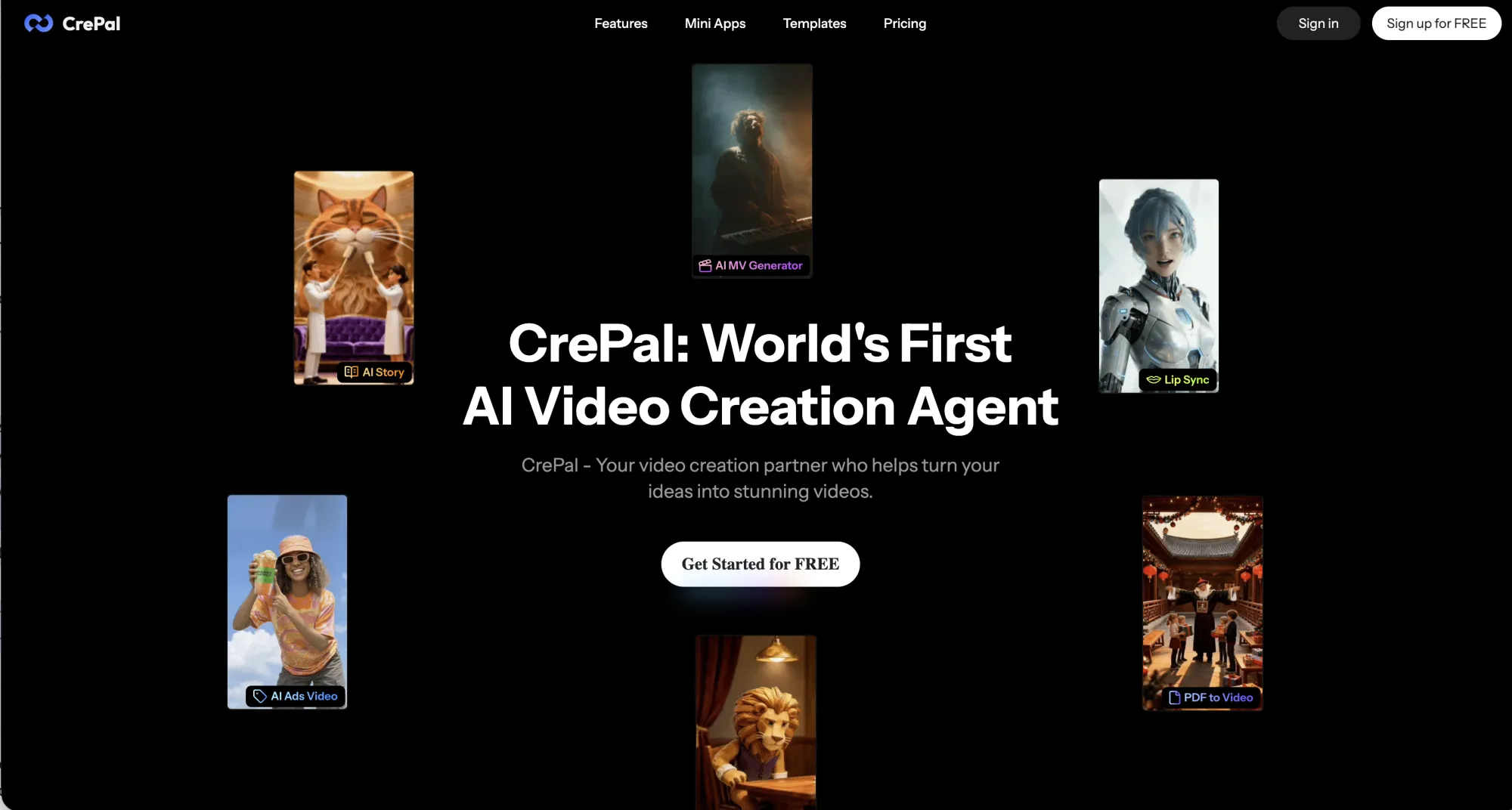
This is where an integrated AI video production workflow becomes more useful than a collection of isolated model tabs. CrePal brings concept development, script planning, multi-model generation, task tracking, and conversational editing into the same environment. The value is not that every shot becomes perfect on the first attempt. It is that a creator can manage the chain of decisions around those attempts without rebuilding the project each time a line, model, or sound choice changes.
Music Videos Reveal Why “Native” Does Not Mean “Generate Everything”
Some projects begin with sound that must not change. A music video has a finished song, fixed lyrics, known sections, and an exact beat structure. Asking a video model to invent a new soundtrack would defeat the point.
The better workflow locks the song, then uses it as the organizing spine for visual generation. Verse, chorus, bridge, instrumental break, and beat changes become scene boundaries. Generated effects may still be useful, but they need to sit around the track rather than replace it. A tool designed to turn a finished song into a structured music video reflects this audio-first version of the stack: upload the MP3, define the visual direction, and build the video around an approved source.
This distinction will matter across more than music. A brand may have a licensed track, an approved spokesperson recording, or a podcast excerpt that must remain untouched. A capable production environment should let the creator decide which audio is generated, which audio is referenced, and which audio is locked.
A Practical Native-Audio Production Stack
The emerging workflow looks less like a cascade of specialist tools and more like a controlled loop:
- Write the script as an audiovisual plan, including dialogue, performance, ambience, effects, and music intent.
- Break the project into shots based on narrative beats and model constraints.
- Route each shot to the model that fits its hardest requirement, then generate picture and sound together where that coupling adds value.
- Review spoken accuracy, voice continuity, lip sync, effect timing, ambience, and mix balance before approving the visual.
- Regenerate only when the image and sound both need to change; otherwise preserve the approved element and repair the failed one.
- Assemble the selected shots, verify captions and levels, and export the required platform versions.
The old stack treated sound as downstream finishing work. The new one treats sound as part of scene design, then reserves post-production for continuity, correction, and delivery.
Native audio is rewriting AI video production because it changes what counts as a first draft. A generated shot can now be heard, timed, and judged as a piece of the finished story. The winning workflow will not be the one that eliminates editors. It will be the one that gives them fewer mechanical sync problems and a clearer place to make the decisions that still matter.























Sign in to leave a comment.