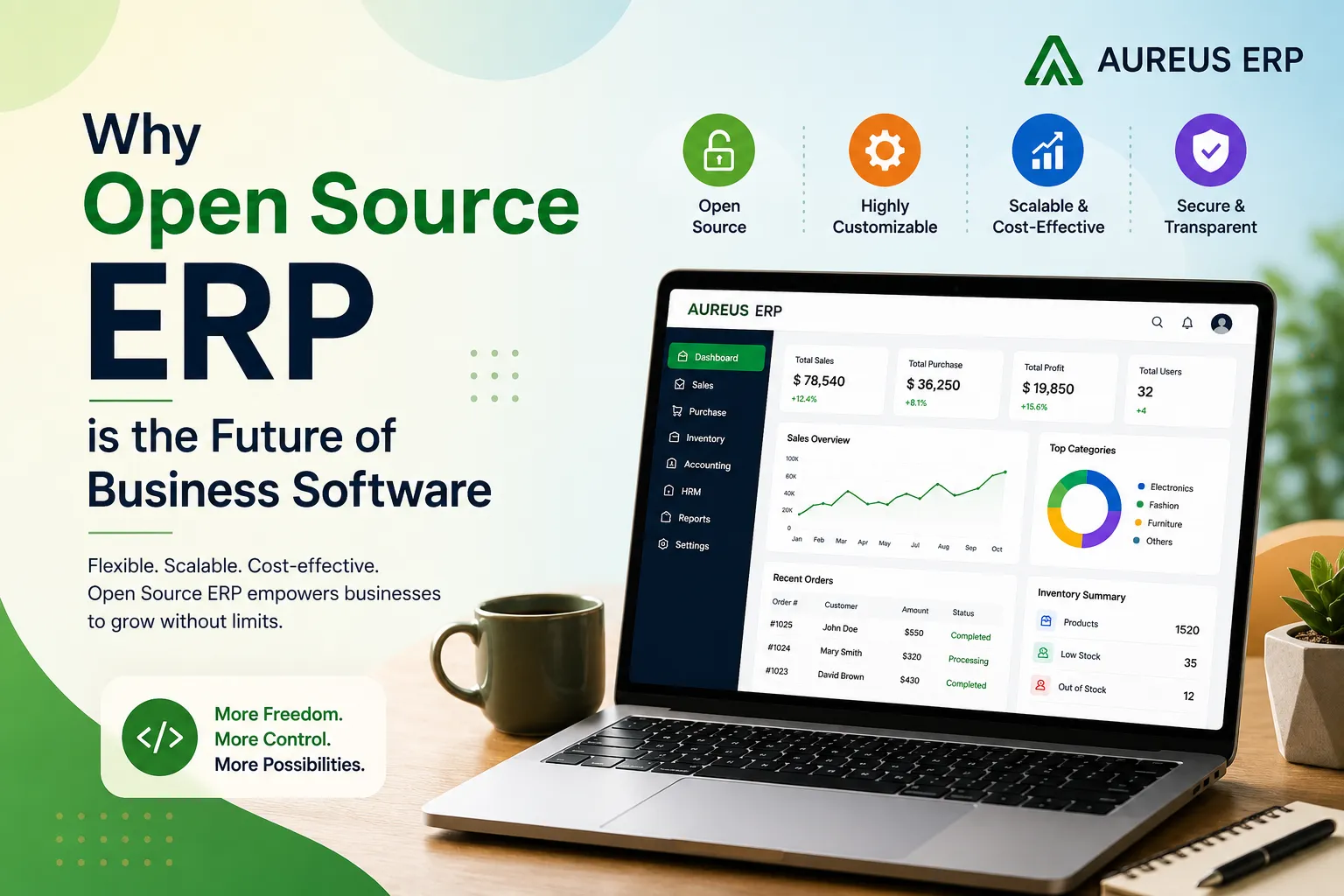

Businesses today need software that can grow with them. They want tools that are flexible, affordable, and easy to adapt. This is one reason why Open Source ERP is becoming the preferred choice for companies of all sizes.
In the past, many businesses relied on expensive ERP systems that came with high licensing costs and limited customization.
While these systems worked for some organizations, they often created challenges for growing businesses.
Today, open source ERP offers a different path. It gives companies more control over their software, data, and future growth.
This article explains why open source ERP is shaping the future of business software and how solutions like Aureus ERP help organizations improve efficiency without being tied to costly licensing models.
What Is an Open Source ERP?
An Enterprise Resource Planning (ERP) system helps businesses manage various operations from a single platform.
It connects departments such as finance, inventory, sales, purchasing, manufacturing, customer management, and human resources.
An open source ERP provides access to its source code. This means businesses can customize the software to match their needs instead of changing their processes to fit the software.
Unlike proprietary ERP solutions, open source platforms offer greater flexibility. Companies can add new features, integrate with other systems, and scale as their business grows.
Why Businesses Are Moving Toward Open Source ERP
Technology changes quickly. Business software must keep up with these changes. Open source ERP gives organizations the freedom to improve their systems without waiting for a software vendor to release updates.
Companies can build new workflows, automate routine tasks, and connect third-party applications whenever needed.
This flexibility makes open source ERP a smart investment for businesses that want long-term growth.
Lower Costs Without Sacrificing Features
Cost is one of the biggest reasons businesses choose open source ERP. Traditional ERP systems often require expensive licensing fees, annual renewals, and additional charges for extra users or modules. These costs can increase as a company grows.
Open source ERP removes many of these licensing costs. Businesses can invest more in implementation, customization, employee training, and process improvement instead of paying large software fees.
This makes enterprise-level software more accessible for startups, small businesses, and growing organizations.
Complete Control Over Your Software
A retail company has different needs than a manufacturing business. A healthcare organization follows different workflows than a wholesale distributor.
With open source ERP, companies can customize dashboards, reports, workflows, approvals, and automation rules to match their operations.
Instead of changing business processes to fit the software, businesses can make the software fit their processes. This level of control is difficult to achieve with many closed-source ERP platforms.
Better Integration With Existing Tools
These may include accounting software, CRM systems, payment gateways, eCommerce platforms, shipping providers, or business intelligence tools.
An open source ERP can integrate with these applications through APIs and custom connectors.
This helps teams avoid duplicate work, reduce manual data entry, and improve the flow of information across departments.
Improved Security Through Transparency
Some people think open source software is less secure. In reality, transparency often improves security.
Because the source code is available for review, developers can identify issues, fix bugs, and improve security faster.
Businesses also have more control over where their data is stored and how the system is managed.
With proper maintenance, regular updates, and strong security practices, open source ERP can provide a reliable and secure business platform.
Easier to Scale as Your Business Grows
More customers, larger inventories, additional employees, and new locations all require better management systems.
Companies can add new modules, users, locations, and business processes without replacing the entire system.
This protects the investment businesses make today while supporting future expansion.
Faster Innovation
Artificial intelligence, workflow automation, advanced reporting, and cloud computing are changing how businesses operate.
Open source ERP allows companies to adopt new technologies more quickly because developers can extend and improve the software without waiting for a vendor's roadmap.
This helps businesses stay competitive in fast-changing markets.
Strong Community and Developer Support
Many open source projects have active developer communities. These communities contribute improvements, share ideas, fix issues, and create new features.
Businesses also have the freedom to work with different development partners instead of relying on a single vendor.
This reduces vendor lock-in and gives organizations greater flexibility over the long term.
Why Aureus ERP Is a Smart Open Source Choice
Choosing the right ERP is just as important as choosing the right business strategy. Aureus ERP is an open source ERP platform designed to help businesses simplify operations while remaining flexible for future growth.
It combines essential business functions into one system, making it easier to manage daily operations from a single platform.
Some key benefits of Aureus ERP include:
- Open source architecture for greater flexibility
- Easy customization based on business needs
- Centralized business management
- Scalable design for growing organizations
- Modern interface with user-friendly navigation
- Integration-ready architecture
- Reduced dependence on expensive licensing models
Whether you operate a startup, a manufacturing company, a distribution business, or a service organization, Aureus ERP can adapt to your workflow instead of forcing you to change your business processes.
Is Open Source ERP Right for Every Business?
Open source ERP is an excellent choice for businesses that want flexibility, customization, and long-term value. However, success depends on proper planning.
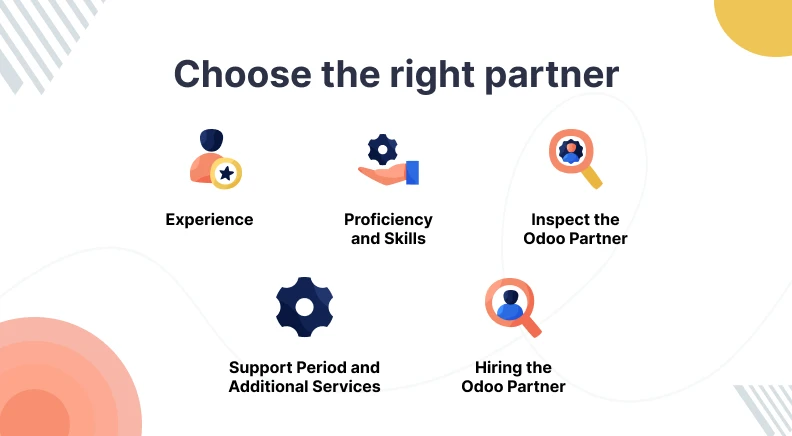
Organizations should define their business goals, choose the right implementation partner, train employees, and continue improving workflows after deployment.
With the right approach, open-source ERP becomes more than just business software. It becomes the foundation for digital transformation.
Final Thoughts
The future of business software is moving toward flexibility, transparency, and innovation. Open source ERP supports all three.
Businesses no longer want software that limits growth or locks them into expensive licensing agreements. They want systems they can control, improve, and expand as their needs change.
That is why open source ERP continues to gain popularity across industries.
Solutions like Aureus ERP make it possible for businesses to modernize operations, improve efficiency, and prepare for future growth without sacrificing flexibility.
As more organizations focus on digital transformation, open source ERP is set to play a leading role in the next generation of business software.


























Sign in to leave a comment.