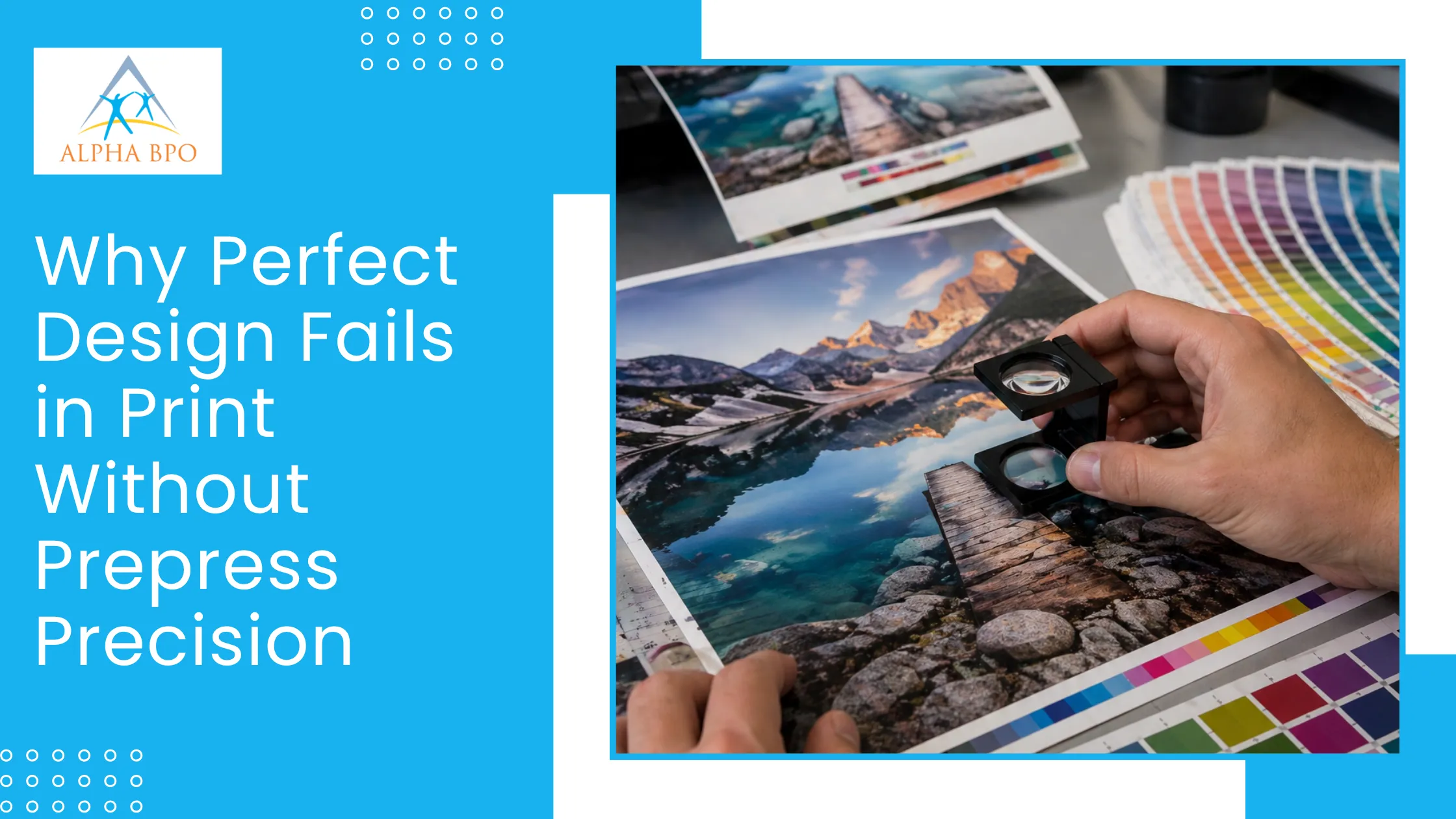

It does not matter how beautiful a design looks on screen; if you fail to set up the print correctly in production, it will be ruined. Technical problems like color mismatches, redemptions by review, low resolution, or incorrect bleed settings can make people question quality and trust.
And this is where prepress printing is extremely important, impacting what translates into printing psychology, basically, how unknowing observers assess the quality of printed material.
How People Instantly Judge Printed Materials
People don't see printed material line by line; they respond right away. Google's UX research shows that visual judgment occurs in 50 milliseconds, meaning the viewer has already formed an opinion about the content before they even think about it.
These reactions are stronger in print because physical things seem more real and permanent than digital screens. Print ads often get 5 to 9 times as many responses as digital ads. But that benefit only applies when the output looks correct.
Blur, uneven alignment, or color inconsistencies can indicate poor quality. Not logically. Subconsciously. And once that impression is made, it's difficult to change.
Where Print Project Actually Goes Wrong
Most businesses think that problems start with the design. In fact, many printing problems occur after the design is complete.
Some common problems are:
- The colors change between the screen (RGB) and the print (CMYK).
- The effect of the pixel caused by low image resolution
- White edges due to missing bleed
- Registration or misalignment errors
- Incorrect file formats or fonts that are embedded
These mistakes don't mean that the design was bad. They just weren't set up right for printing. You could say that building a house from a perfect blueprint is like this, but using the wrong measurements is like this. The plan is good, but the outcome doesn't feel right.
The Role of Prepress Printing in Preventing Failure
This is when prepress printing becomes very important. It connects design and the final product.
Prepress includes the following:
- Modifying color profiles correctly
- Adjusting the resolution as per print standards, which are usually 300 DPI
- Set the bleed and trim margins right
- Checking that alignment and layout are the same throughout
- Performing preflight checks to find hidden mistakes
Even the best-made file can yield unexpected results if this step isn't taken. Many teams think prepress is unnecessary. No, it's not. It's the time when accuracy is required.
Professional prepress printing services make sure that what you see on screen is exactly what you get on paper. That consistency is what keeps people trusting what they see.
The Printing Requirements Most Teams Overlook
Print doesn't forgive. It has strict rules for printing, and not following them makes flaws more obvious. A few important ones:
Resolution: When printed, images with a resolution below 300 DPI lose clarity.
Color Mode: RGB files need to be changed to CMYK.
Bleed: Extra space around the edges (usually 3mm) to keep gaps from forming.
File Format: PDFs are more compatible.
Font embedding: Stops text from changing in ways you didn't expect
These are not small technical details. They directly affect the finished product's polish. And that polish is more important than most people think.
Brand consistency across materials has been shown to boost sales by up to 23%. Design alone does not guarantee consistency. It comes from doing it.
Why Businesses Still Overlook Prepress
People often think that the job is done once a design is approved. Many people see prepress as a technical formality instead of an important step.
Part of the reason is that errors at this stage are subtle. They’re not always obvious until the final product is in hand. And even then, people may not be able to explain what feels wrong. They just know something does.
Cost-cutting is also a factor. Not doing detailed prepress checks saves time at the start. But it often means more printing, wasted materials, and a loss of trust.
The irony is that the smallest things, like alignment, color accuracy, and edge precision, have the biggest effect on how things look.
How Precision Influences Printing Psychology
This is where the concept of printing psychology becomes clear. People associate visual accuracy with professionalism.
- Sharp images suggest attention to detail.
- Colors that remain consistent show reliability.
- Clean edges show that you are concerned and mindful.
On the other hand:
- Blurry pictures look cheap.
- Layouts that aren't lined up right feel careless
- Inconsistent colors look unprofessional.
These reactions happen right away. They don't make conscious choices. They are emotions.
That’s why precision matters, not because of technical perfection, but because of how it makes people feel about the brand behind the print.
When to Use Professional Prepress Services
Taking care of prepress work in-house can work for simple jobs. But the risk of making a mistake increases as things get more complicated.
The risk is reduced when you work with teams that have been doing prepress printing for a long time. They offer structured workflows, quality checks, and technical know-how that most in-house teams don't keep up with.
Outsourcing this step often yields better results and fewer changes for businesses that produce high-volume or high-impact print materials.
This guide, "Prepress Tips for Successful Digital Label Printing," offers practical tips to avoid common mistakes and explains how structured workflows can help you achieve better results.
And for companies that want to speed up this process on a large scale, working with a provider like prepress printing services ensures that every file is ready to go to press.
When Design Isn’t the Problem
It’s easy to blame design when something looks off in print. But more often than not, the issue lies in how the design was prepared for production.
Design creates intent. Prepress ensures that intent survives the transition to print. Without that precision, even the best ideas lose their impact.





















Sign in to leave a comment.