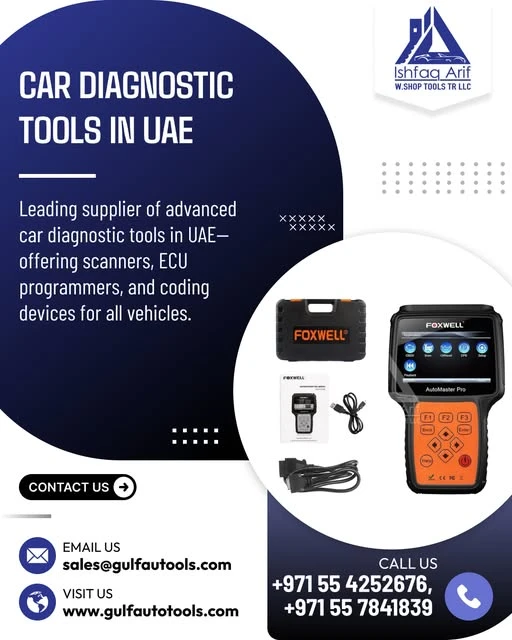

Car problems rarely introduce themselves politely. A warning light blinks. A strange noise shows up under the hood. Or worse — nothing obvious at all, just poor performance or rising fuel use.
Now, sure, you can take a guess. Replace a part here, tweak something there. But guessing adds up. Wrong fixes waste money, and the original fault keeps chewing away at the system. That’s where the Professional Car Diagnostic Tool steps in — not the basic code readers, but professional-grade ones.
What a Professional Tool Actually Does
People sometimes think diagnostic tools are just fancy error code machines. Plug it in, a code pops out, and the problem is solved. But professional tools dig deeper.
They don’t just say “there’s an error.” They tell you what kind, where it’s happening, and often the conditions that triggered it. A misfire code, for instance, can be traced down to a cylinder, fuel injector, or even ignition timing. That kind of precision changes everything.
Some professional units go further with live data streams. You can watch sensor readings in real time — throttle response, air intake, fuel pressure. That level of detail makes it clear whether a part needs replacing or if the issue is elsewhere.
Accuracy Saves Time
Think about it: in workshops, time is money. Every wrong guess is equivalent to labour hours that could have been spent elsewhere. Professional diagnostic tools strip away the trial-and-error. A mechanic can pinpoint faults quickly, which means faster repairs.
For fleet owners, it’s even bigger. Trucks or service vehicles off the road mean lost revenue. Accurate diagnostics get them back into service without unnecessary downtime.
Beyond the Basics
There’s also a difference between entry-level tools and professional-grade. The cheaper models usually only cover basic engine codes. Professional tools handle a full range — ABS, transmission, airbags, body control modules. Modern vehicles are basically rolling computers, and without the right tool, you’re only reading half the story.
Some tools even come with guided troubleshooting. It is like having a digital manual that updates itself, saving hours of manual searching.
The Cost Factor
Yes, professional diagnostic tools aren’t cheap. But compare the cost to a single major misdiagnosis. Replacing a transmission when the fault was a simple sensor? That bill makes the tool look like pocket change.
For workshops, the tool pays for itself in customer trust. People remember when their issue gets fixed right the first time. They also remember when it doesn’t. A reliable tool helps keep that trust intact.
Better for Communication Too
There’s another side people don’t think about: customer communication. When a shop uses a professional diagnostic tool, it can show live data or reports to the customer. It’s one thing to say “your O2 sensor is bad.” It’s another to show the flatline reading compared to normal activity.
That transparency builds confidence. Customers understand what they’re paying for, and mechanics avoid the “you just guessed and swapped parts” accusations.
Long-Term Payoff
Vehicles keep getting more complex. Hybrids, advanced driver systems, connected modules — diagnosing these without proper tools is nearly impossible. Professional diagnostic tools future-proof a workshop. They adapt to new models, software updates, and evolving standards.
For individual enthusiasts or fleet managers, the payoff is in control. Knowing exactly what is wrong, changes how decisions get made.































Sign in to leave a comment.