

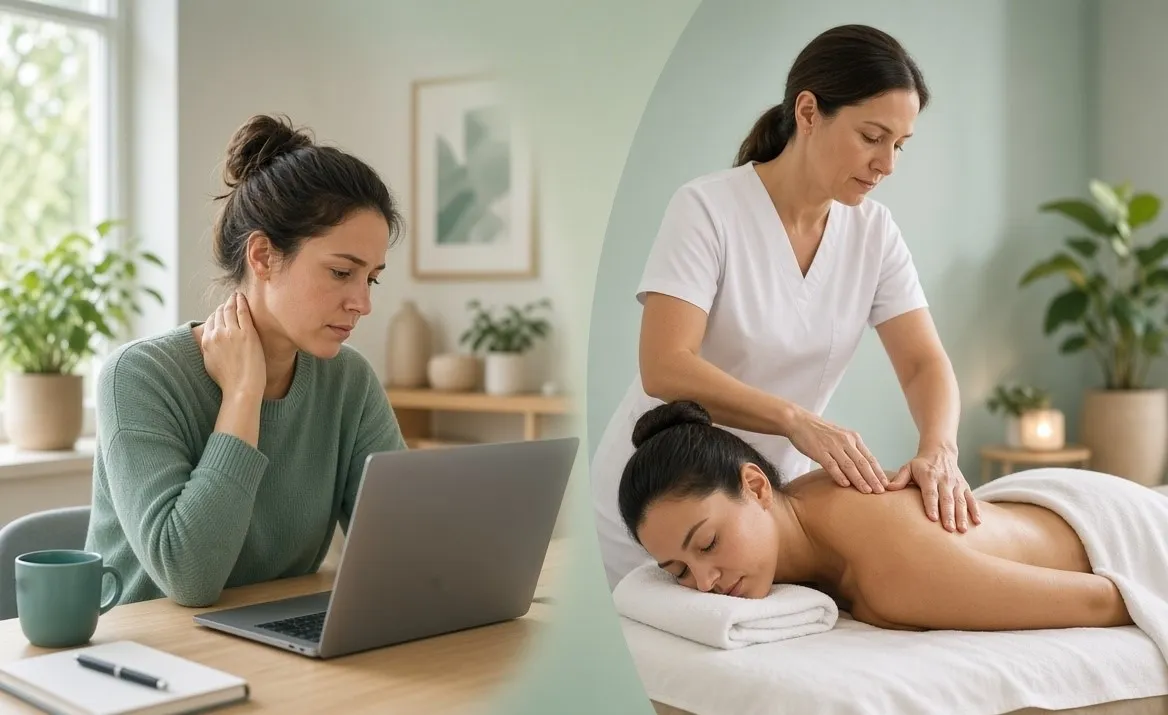
Working from home sounds comfortable. There is no commute, no office dress code, and you can work from your favourite chair. But remote work can also mean sitting for long periods, using a laptop at an awkward height, and taking fewer movement breaks than you realize.
For many people, these habits can contribute to neck, shoulder and back discomfort. This is where massage therapy may have a useful role as part of a broader approach to looking after your body.
Remote workers should consider massage therapy because long hours at a desk can contribute to muscle tension, stiffness and discomfort, particularly around the neck, shoulders and back. Massage may provide short-term relief for some types of pain and can complement regular movement, ergonomic improvements and other healthy work habits.
Why Remote Work Can Be Hard on Your Body
Remote work itself is not necessarily harmful. The problem is often the way people work at home.
A dining table may become a desk. A laptop may replace a properly positioned monitor. A sofa may seem comfortable for an hour but become uncomfortable after several hours of sitting.
Common habits include:
- Sitting in the same position for several hours
- Looking down at a laptop screen
- Keeping the shoulders raised while typing
- Working without regular movement breaks
- Using a chair without adequate back support
- Continuing to work through mild pain or stiffness
Over time, these habits can leave muscles feeling tight and tired.
This does not mean every remote worker needs regular massage. Instead, massage therapy can be considered one part of a wider strategy that also includes movement, good workstation setup, adequate rest and appropriate healthcare when symptoms persist.
What Is Massage Therapy?
Massage therapy involves working with the body's soft tissues, including muscles and other structures, using different hands-on techniques. The approach can vary depending on a person's needs, physical condition and treatment goals.
A therapeutic massage generally focuses on addressing specific areas of discomfort or physical tension rather than simply providing relaxation.
For a remote worker, that could mean focusing on areas such as:
- Neck and upper shoulders
- Upper and lower back
- Arms and forearms
- Hips and surrounding muscles
- Other areas affected by prolonged sitting or repetitive desk work
The right approach should be based on the person's individual situation rather than assuming that more pressure or a particular technique is always better.
5 Reasons Remote Workers May Benefit From Massage Therapy
1. It may help with neck and shoulder discomfort
Neck and shoulder tension is a common concern for people who spend much of their day working at a computer.
Research reviewed by the National Center for Complementary and Integrative Health (NCCIH) suggests massage may provide short-term benefits for some types of neck pain. However, the evidence is not strong enough to suggest that massage works equally well for everyone.
This makes massage a potential supportive option, rather than a guaranteed solution.
2. It can address muscle tightness associated with desk work
Holding the same posture for long periods can leave certain muscles feeling tight or fatigued.
A massage session can give attention to areas that feel particularly tense. Some people may notice temporary improvements in how those areas feel after treatment.
However, massage should not replace the habits that contribute to the problem. If your workstation is poorly arranged, for example, changing the setup is still important.
3. It may provide short-term relief from back discomfort
Lower-back discomfort is another concern for people who spend much of the working day sitting.
Research on massage for low-back pain has found potential short-term improvements, although the overall quality of evidence varies and long-term benefits are less certain. A review of 25 studies involving approximately 3,000 people found short-term improvements in pain, but the evidence was considered low to very low quality.
That distinction matters. Massage may help someone feel better, but it should not be presented as a cure for every type of back pain.
4. It creates a deliberate break from work
Remote workers can find it difficult to separate work from personal time.
There is always another email to answer or another task to finish. A scheduled appointment can create a clear interruption in an otherwise sedentary day.
This can be useful from a practical perspective: instead of waiting until your body feels extremely uncomfortable, you can build regular opportunities to step away from your desk and pay attention to how you feel.
5. It can encourage better awareness of physical tension
One overlooked benefit of taking care of your body is becoming more aware of where you hold tension.
For example, you may notice that your shoulders rise while concentrating, your jaw stays clenched during meetings, or your lower back becomes uncomfortable after several hours of sitting.
That awareness can encourage useful changes, such as adjusting your chair, raising your screen, changing positions or taking more frequent movement breaks.
Also Read: Why Regular Massage Therapy Is More Than Just Relaxation
Massage Therapy vs. Ignoring Desk, Related Discomfort
When deciding what to do about work-related stiffness, the difference is straightforward:
Ignoring discomfort
- Continue working without changing the underlying habits
- Take breaks only when symptoms become noticeable
- Assume stiffness will always disappear on its own
- Delay professional assessment when symptoms continue or worsen
Using massage as part of a broader approach
- Address areas of muscle tension
- Combine treatment with movement and ergonomic changes
- Pay attention to recurring symptoms
- Seek appropriate healthcare when pain does not improve
Massage is therefore best viewed as one component of a self-care and health strategy, not as a replacement for movement or medical assessment.
How Remote Workers Can Get More From Massage Therapy
Massage works better as part of a healthy routine rather than as a solution used only after discomfort becomes severe.
Consider these practical habits:
1. Improve your workstation
Keep your screen at a comfortable viewing height, position your keyboard and mouse so your arms can relax, and use a chair that provides appropriate support.
2. Change positions regularly
Even a good sitting position should not be maintained indefinitely. Stand up, walk around and change your posture throughout the working day.
3. Take movement breaks
Short periods away from the screen can help break up long periods of sitting. Use meetings, calls or natural pauses in your schedule as reminders to move.
4. Pay attention to recurring symptoms
If the same area repeatedly becomes painful or stiff, don't simply keep treating the symptom without considering what may be causing it.
5. Use massage according to your needs
A qualified practitioner can discuss your concerns and determine an appropriate approach instead of automatically using the same technique for everyone.
What Type of Massage Is Suitable for Remote Workers?
There is no single massage technique that is best for every remote worker.
Someone experiencing general muscle tension may have different needs from someone dealing with a specific area of discomfort. Therapeutic massage may be appropriate when the goal is to focus on particular areas rather than simply relax.
Some people may also search for fascia massage when they are interested in techniques focused on connective tissues. The important point is to choose treatment based on your individual needs rather than choosing a technique because it is trending online.
If you are pregnant, have an existing medical condition or are unsure whether massage is appropriate for you, discuss your situation with a qualified healthcare professional and your massage therapist first. NCCIH notes that certain people may need modifications or additional precautions.
When Should a Remote Worker Consider Professional Help?
Not every ache requires professional treatment. Occasional stiffness after a long day may improve with movement, rest and workstation changes.
However, consider getting professional advice if:
- Pain keeps returning
- Discomfort is interfering with work or sleep
- Symptoms are becoming more severe
- You experience unexplained weakness or numbness
- A problem follows an injury
- Self-care measures are not helping
Massage therapists can work within their scope, but persistent, severe or unusual symptoms may require assessment by another healthcare professional.
How Advance therapy helps you
A local option can also make it easier to include treatment in a realistic routine. Advance therapy can help remote workers explore massage therapy based on their individual concerns rather than treating every desk-related problem in exactly the same way.
The goal should be practical: understand what is bothering you, discuss your needs with the practitioner, and consider massage alongside better movement and workplace habits.
For people searching for massage therapy in Brantford, choosing a qualified local practitioner can also make regular appointments easier to fit around a work-from-home schedule.
Finding Massage Therapy in Brantford
If you are searching for massage therapy near me, location is only one factor to consider.
For someone in Brantford, useful searches may include massage therapist Brantford, Brantford massage therapy, or massage in Brantford Ontario.
When comparing local options, look beyond convenience and consider:
- Practitioner qualifications and registration
- Experience with your particular concerns
- Whether the treatment is individualized
- How clearly the practitioner explains the treatment approach
- Whether they ask about your health history and current symptoms
- Whether the clinic provides appropriate guidance about when other healthcare may be needed
For people specifically looking for an RMT in Brantford, checking the practitioner's current registration and credentials is an important part of making an informed decision.
Final Takeaway
Remote work gives people flexibility, but it can also make it easy to spend most of the day sitting in the same position. Massage therapy may provide short-term relief for some neck, shoulder and back discomfort, but the strongest approach is broader: improve your workstation, move regularly, take breaks and respond to persistent symptoms appropriately.
If you are looking for massage Brantford options, Advance therapy can be one local place to explore when considering how massage may fit into your overall approach to managing the physical demands of working from home.
Frequently Asked Questions
Q1. Is massage therapy good for people who work from home?
It can be useful for some remote workers, particularly those experiencing muscle tension or certain types of neck, shoulder or back discomfort. Research suggests benefits can be short-term, so massage works best alongside movement and ergonomic improvements.
Q2. How often should remote workers get a massage?
There is no universal schedule. Frequency depends on your symptoms, goals, response to treatment and overall health. A qualified practitioner can help determine a reasonable approach.
Q3. Can massage help with sitting all day?
Massage may help temporarily with muscle tension and some types of discomfort associated with prolonged sitting. However, it cannot replace regular movement or a suitable workstation.
Q4. Should I get a massage if I have back pain?
Massage may provide short-term relief for some types of low-back pain, but the evidence is limited. If pain is severe, persistent, follows an injury or occurs with other concerning symptoms, seek appropriate medical advice.
Q5. How Advance therapy helps you?
Advance therapy can help you understand your available massage therapy options and discuss your specific concerns with a practitioner. The appropriate approach should depend on your symptoms, goals and individual circumstances rather than a one-size-fits-all treatment.
Q6. Can massage replace exercise for remote workers?
No. Massage and exercise serve different purposes. Remote workers still benefit from regular physical activity, movement breaks and reducing long periods of uninterrupted sitting.
Q7. Should pregnant remote workers get massage therapy?
Pregnancy can require modifications to massage techniques and positioning. Anyone considering massage during pregnancy should discuss it with an appropriately qualified practitioner and healthcare provider when necessary.
Q8. When should I avoid massage and see a healthcare professional?
If you have severe or unexplained pain, significant swelling, weakness, numbness, a recent serious injury or symptoms that are getting worse, seek appropriate healthcare advice rather than relying on massage alone.























Sign in to leave a comment.