
Introduction
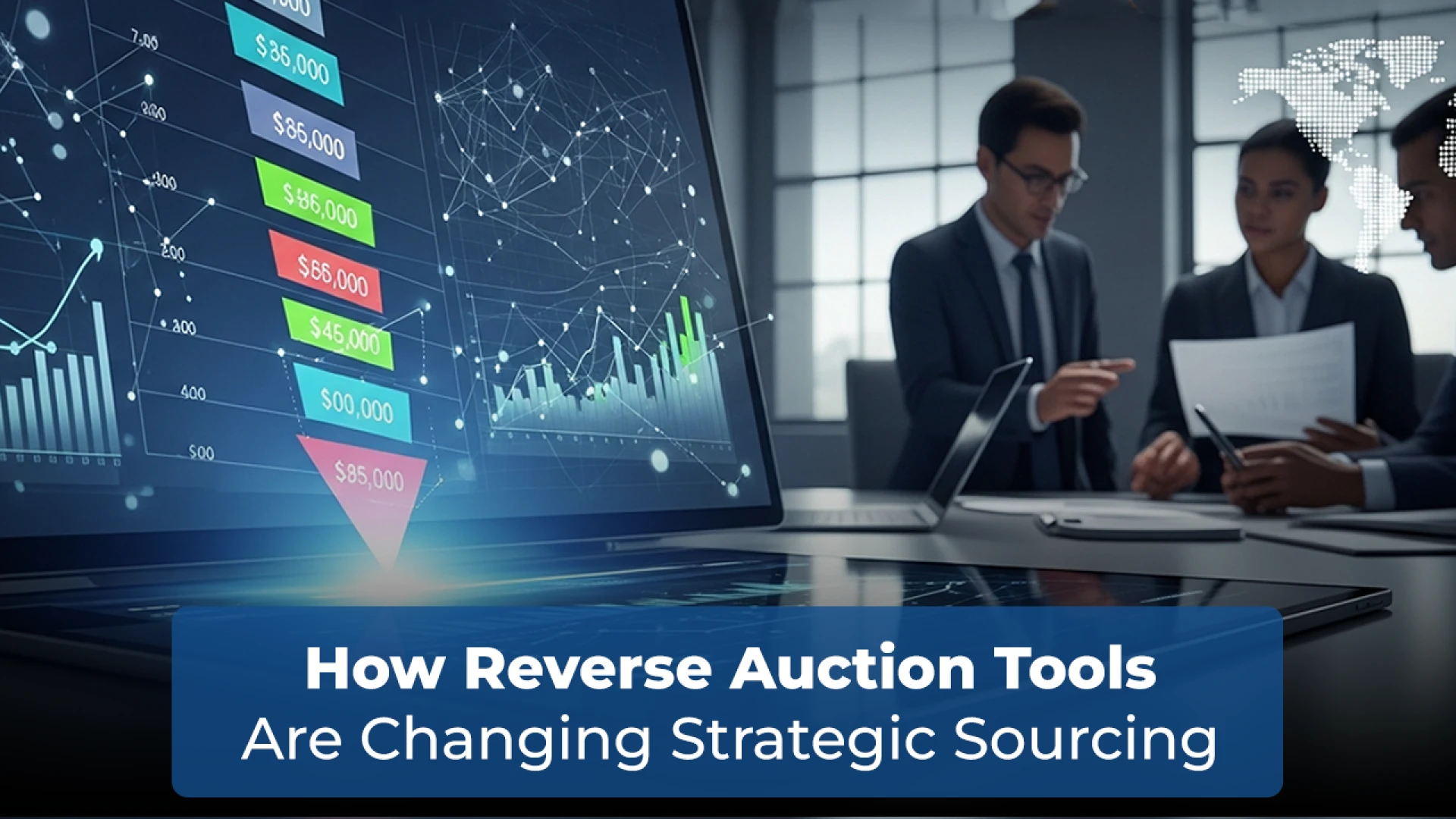
In the world of strategic sourcing, reverse auctions have been gaining ground in recent years. This approach is redefining the procurement process. This is a major reason why a growing number of businesses are opting for reverse auction management software to transform the way they source goods and services.
In a traditional auction, buyers quote higher prices to purchase the necessary items. Reverse auctions flip this model, where multiple suppliers compete against each other by offering the lowest price for securing the buyer’s deal.
This post digs deep into how a reverse auction system drives business growth. Let us understand the concept of strategic sourcing in the beginning.
Overview of Strategic Sourcing in Reverse Auction
eSourcing, also known as Strategic sourcing, plays a vital role in driving efficiencies for modern businesses. It uses digital tools and software to manage the procurement process. In a broader sense, strategic sourcing harnesses market competition by saving costs, building a reliable and continuous supply chain, minimizing supplier risks, and securing the best value for goods and services. Strategic sourcing becomes more impactful on combined with the best online auction software.
Many pre-qualified suppliers compete to fulfill the buyer’s product or service requirements by quoting the lowest price in the reverse auction process. Procurement teams can identify the most competitive offers while maintaining transparency and fairness in the entire process.
Procurement teams can quickly identify the most competitive offers while maintaining transparency and fairness. However, strategic sourcing shows that this process is not about the pricing. It takes into account other factors like supplier performance, reliability, compliance, and long-term value.
Now, let's delve into the importance of reverse auction management software in strategic sourcing.
How Reverse Auction Tools Can Change Strategic Sourcing
The reverse auction in the procurement process begins with thorough preparation, where the buyer clearly defines procurement needs and detailed specifications. After defining requirements, purchasers can invite qualified suppliers to participate in an online auction.
Suppliers, on the other hand, can compete with one another by submitting lower bids in real time to win the contract. The buyer selects the supplier based on the most competitive rates. It leads to substantial cost savings and a transparent purchasing process.
The reverse auction system has changed strategic sourcing by reversing the script of the traditional auction model. This model promotes real-time bidding for suppliers. It offers full transparency, where qualified suppliers can view their rank but not the exact bid amounts. Accordingly, they can adjust their pricing, resulting in lower bids. This cuts down procurement costs while maintaining supplier engagement.
When implemented in the right manner, reverse auctions help buyers to determine current market pricing, increase cost-efficiency, and improve supplier transparency.
Strategically, reverse auction tools are ideal for sourcing categories where pricing is negotiable and multiple qualified suppliers are available. They work best in buying the necessary raw materials, standard components, equipment, and processed goods with pre-defined specifications.
Companies should avoid reverse auctions for highly strategic categories or for maintaining supplier relationships where other factors play a larger role. Additionally, a reverse auction is not very beneficial if the company has two or fewer shortlisted or invited suppliers. Reverse auction tools help create a more competitive and transparent sourcing environment with proper implementation.
After understanding the scope of reverse auction tools for handling strategic sourcing, let's go through their benefits.
Key Benefits of Reverse Auction System in Strategic Sourcing
Here are the key benefits companies can get of reverse auction software in strategic sourcing-
Cost Savings
Competitive bidding encourages suppliers to offer the lowest possible prices, leading to significant cost savings for buyers.
Real-Time Pricing
Auctions give valuable data on market pricing and supplier capabilities, helping purchasers determine fair and transparent pricing.
Reduced Time and Effort
Reverse auctions can save time and internal resources because of the streamlined process of automated supplier negotiations.
Faster Procurement Cycles
Unlike traditional models, reverse auction tools are faster as they streamline the process and enable companies to award contracts quickly.
Higher Process Transparency
A fair and open bidding environment in reverse auctions enables suppliers to see their relative ranking in real time.
Promotes Innovation and Competitiveness
It builds a competitive bidding environment where suppliers can offer their best prices quickly.
Alignment with Strategic Sourcing Goals
Reverse auction tools manage supplier evaluation, negotiation, and selection, to support strategic sourcing.
Actionable Market Intelligence
Auctions provide valuable insights into supplier pricing trends and market dynamics, which are useful for improving future sourcing strategies.
However, businesses must deploy the system the right way to leverage these benefits.
Best Practices for Implementing Reverse Auction Software
Companies should follow certain best practices to implement reverse auction tools to obtain their optimum benefits. Let’s get into the details.
Outline Goals and Strategy
First thing is to set a goal, whether cost savings or new suppliers. It provides the right direction to align the strategy with your business objectives. This leads to accurate and competitive bids.
Choose the Right Software
Businesses should select a future-ready software that fits with their procurement process. It should have the necessary features that can easily integrate with their current systems.
Define Specifications and Requirements
It is essential to identify and explain the product or service specifications to eliminate any confusion and ensure that suppliers are bidding under the same terms.
Pre-Qualify Suppliers
It is necessary to examine shortlisted suppliers to check whether they meet specific standards for quality and compliance before inviting them. Pre-qualification helps companies reduce risks.
Analyze Auction Data
Finally, it is imperative to evaluate the results of the auction and supplier performance. These data help companies refine sourcing strategies and negotiate better long-term contracts in the future.
Such best practices help companies gain better outcomes from reverse auctions. At the same time, it helps improve their sourcing strategy as well.
Concluding Remarks
Reverse auction tools lend a helping hand to businesses to rethink their negotiations with suppliers. It creates a fast, transparent, and competitive bidding environment where suppliers bring their best offers to the table. To stay ahead of the curve, businesses should choose the right reverse auction management software.




















Sign in to leave a comment.