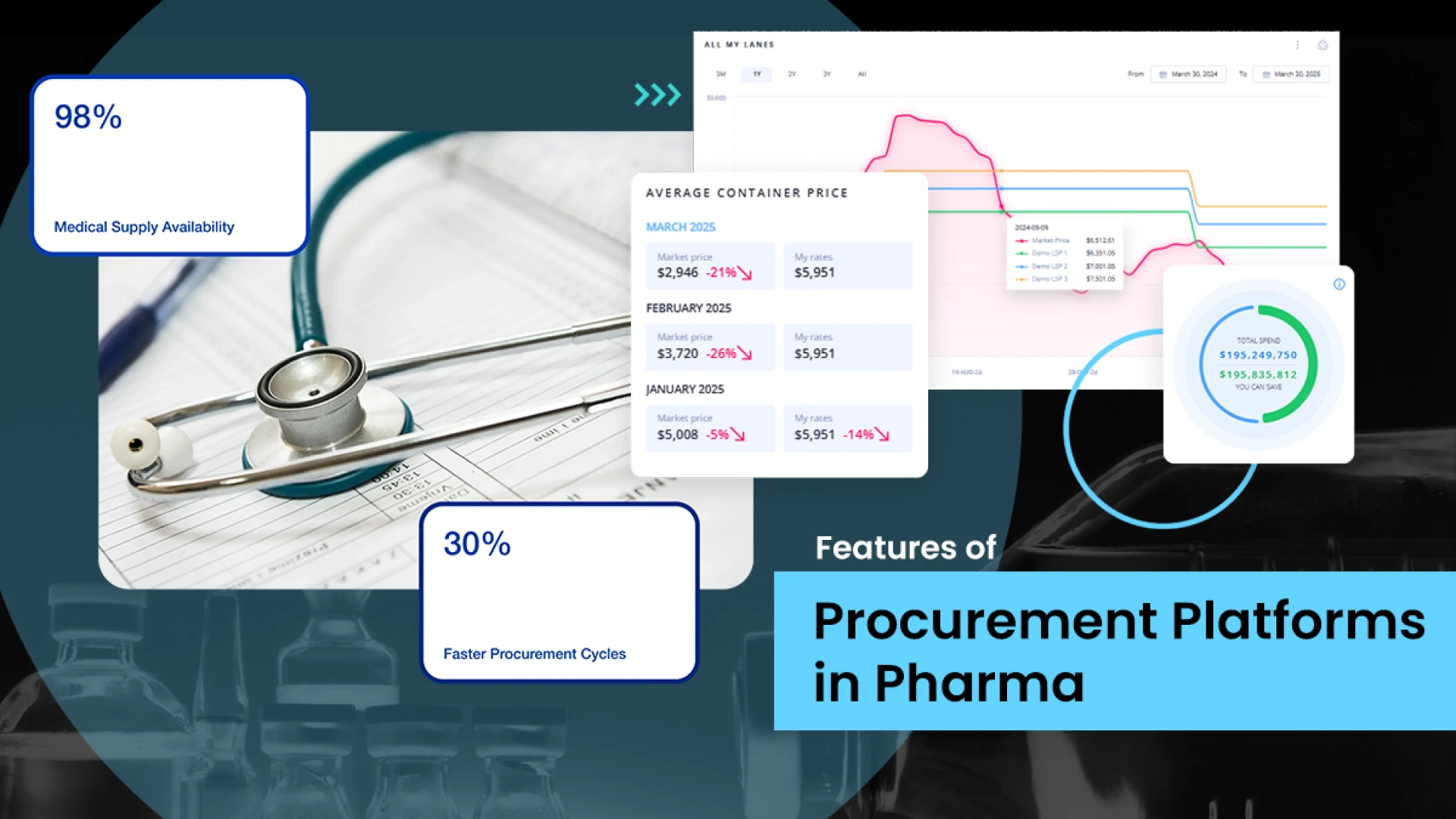

Introduction
Managing suppliers in the pharmaceutical industry is not that easy. Strict compliance requirements, intricate supply chains, and the demand for top-quality materials often make it difficult for pharma companies to maintain smooth operations. That's where procurement software provides respite.
Implementing supplier management solutions allows pharmaceutical companies to streamline procurement, reduce operational risks, and ensure consistent product quality.
This post digs deep into how procurement software comes as a game-changer for pharma companies. First things first. We will take a closer look at the core features of these platforms and how they contribute to better supplier management in these companies.
Top Features of Procurement Platforms in Pharma
Although supplier management in pharma can be challenging, modern procurement platforms make it easier. These platforms have tools that can automate tasks, centralize supplier data, ensure compliance, and provide real-time performance insights. It can onboard new suppliers, improve communication, and monitor key performance metrics.
In this way, pharma companies streamline their procurement processes. Let us now explore the key features that truly make an impact.
Supplier Management System Software
A supplier management system is the main part of any procurement platform. It automates tasks, such as onboarding new suppliers, managing contracts, and tracking orders. It consolidates all supplier information in one place, making it easier for procurement teams to access and evaluate supplier performance.
These systems have tracking features integrated into it that ensure suppliers meet the required standards. If any issues arise, the system sends automated notifications to alert the team, and they can take prompt action to correct them.
Supplier Management Applications
This application enables teams to monitor supplier performance in real time. It provides instant insights into delivery speed, product quality, and overall reliability. These insights help pharma companies make more informed decisions on supplier selection and how to build more effective partnerships.
Procurement teams can track key performance indicators (KPIs) such as cost, lead times, and quality compliance, allowing them to optimize their supplier base continuously.
Supplier Onboarding Software
In the pharma industry, strict due diligence is required. Hence, onboarding new suppliers takes time. But the supplier onboarding software automates the registration and vetting steps. It ensures that all necessary compliance checks are done and that the supplier is thoroughly vetted before receiving approval.
This feature makes the onboarding process faster and maintains the integrity of the supply chain from the very beginning. Hence, there is a consistent boarding experience for all suppliers.
Supplier Relationship Management (SRM)
For long-term success, effective supplier relationship management (SRM) is essential. Procurement platforms have tools to facilitate collaboration and communication between pharma companies and suppliers.
There is transparency of communication, so both parties can access relevant information, track order statuses, and resolve issues promptly. This makes collaboration easier and helps strengthen supplier relationships. As a result, companies can build more reliable and resilient supplier partnerships.
Next, let's take a glance at the benefits this software provides to pharma companies.
How Pharma Companies Benefit from Supplier Management Platforms
This platform provides multiple benefits for pharmaceutical companies, such as
Improved Efficiency and Productivity
Procurement software can automate repetitive tasks, such as order processing, compliance checks, and contract renewals. This allows procurement teams to devote more time to strategic tasks instead of administrative work. With all information kept in a central place, teams can access it quickly and make faster decisions.
Real-time data helps procurement teams to resolve problems before they escalate. This boosts productivity and ensures a smooth supply chain.
Enhanced Compliance and Risk Management
Due to the regulatory complexity of the pharmaceutical industry, compliance is a major concern. The platform's compliance tracking feature ensures suppliers meet all necessary standards, such as FDA regulations or GMP. This reduces the risk of expensive errors or regulatory breaches.
These systems automatically monitor supplier compliance and generate audit trails. Therefore, companies can easily prove adherence during inspections or audits.
Cost Reduction and Strategic Sourcing
Reducing cost is a critical priority of supplier management. With procurement platforms, pharma companies can make smarter decisions while selecting suppliers. Advanced analytics tools help procurement teams evaluate suppliers based on cost, quality, and reliability, resulting in better pricing and contract negotiations.
Furthermore, procurement platforms enable inventory management, helping companies avoid overstocking or understocking. This reduces inventory costs and allows for more efficient use of resources.
Enhanced Supplier Relationships
It is crucial to build rapport with suppliers to keep operations running smoothly. Procurement platforms facilitate better communication and collaboration with suppliers by offering real-time insights into order statuses, delivery timelines, and quality control metrics.
This level of transparency builds trust between both parties and enables suppliers to address any issue proactively. This, in turn, results in better service, lesser disruptions, and a more reliable supply chain.
Choosing the right platform is essential for success. However, there are some important aspects to keep in mind.
Things to Consider When Choosing a Supplier Management Solution
When selecting a procurement platform, pharma companies should take into account a few important factors, such as
Scalability
The software should be able to accommodate an expanding supplier base and the growing needs of a company.
Customization
The platform should have customization options to meet the unique needs of the pharmaceutical industry, especially in terms of regulatory compliance.
Integration
You should make sure the system integrates seamlessly with existing ERP or other enterprise systems for an uninterrupted workflow.
Ease of use
The platform should have a user-friendly interface so procurement teams can quickly adopt and effectively use the system.
Security
Since pharmaceutical data are sensitive, the solution should have robust security features to protect both supplier and product information.
Summing up, the right supplier management system can strengthen your procurement strategy significantly.
Final Thoughts
In the pharmaceutical sector, a supplier management solution is essential for improving efficiency, mitigating risks, and staying compliant. The right procurement system helps companies optimize their procurement processes and strengthen supplier relationships. These tools help simplify everyday tasks, giving teams greater control over supplier performance. Hence, pharma companies can gain a competitive edge and stay ahead of the curve.
























Sign in to leave a comment.