Travelers often assume that all tropical beaches share the same tranquil character—powdery sand, gentle surf, and postcard-perfect clarity. Yet anyone who has explored multiple Caribbean shorelines quickly learns that not all coasts are created equal. Some beaches face constant wave action and shifting sands, while others feel almost lagoon-like, with water so calm it resembles glass.
This difference is not a matter of chance. Coastal orientation, prevailing winds, reef barriers, and seabed gradients all shape how energy from the open ocean reaches the shore. One of the clearest examples of this coastal science in action is Rum Point in the Cayman Islands.
Understanding why the rum point cayman islands shoreline remains consistently gentle reveals much more than a simple travel fact; it offers insight into coastal geomorphology, marine ecology, and safe recreational design. In this guide, we unpack the science behind Rum Point’s leeward location and explain how it naturally reduces wave energy, creating one of Grand Cayman’s calmest coastal environments. keep reading.
Understanding Wave Energy: The Basics:
Before exploring Rum Point specifically, it helps to understand what wave energy actually is. Ocean waves carry kinetic energy generated primarily by wind. The strength of that energy depends on three key factors:
- Wind speed.
- Wind duration (how long it blows).
- Fetch (the distance over open water the wind travels).
When waves approach a coastline, their energy can be:
- Dissipated by reefs or shoals.
- Reflected by steep shorelines.
- Amplified by coastal orientation.
- Reduced by sheltered positioning.
This is where the concept of leeward vs. windward coasts becomes crucial.
Leeward vs. Windward: A Simple but Powerful Coastal Principle:
In tropical island geography:
- The windward side faces the prevailing trade winds
- The leeward side is sheltered from them
The Caribbean’s dominant winds typically blow from the east and northeast. That means:
- East-facing shores receive direct wave energy
- West-facing or northwestern shores are shielded
Rum Point sits on the north side of Grand Cayman but slightly recessed and angled, placing it in a naturally protected position relative to prevailing winds and swell patterns.
In other words, it lies in the island’s hydrodynamic shadow, a zone where incoming wave energy is partially blocked or refracted around the island mass. Think of it like standing behind a large boulder in a river: the current slows dramatically in the sheltered zone. Rum Point benefits from that same principle on a coastal scale.
How Grand Cayman’s Shape Shields Rum Point?
Grand Cayman is elongated east-to-west, with its widest landmass lying between Rum Point and the open Caribbean Sea. When trade-wind-driven waves approach from the east:
- They strike the island’s eastern headlands first.
- Energy disperses along the north shore.
- The western and northwestern coasts receive reduced swell.
Rum Point sits toward the island’s northern curve, where the coastline bends inward slightly. This curvature:
- Deflects incoming wave fronts
- Reduces fetch exposure.
- Encourages wave refraction away from shore.
As a result, wave heights decrease before reaching Rum Point’s beach zone.
Offshore Reefs: Nature’s Breakwater System:
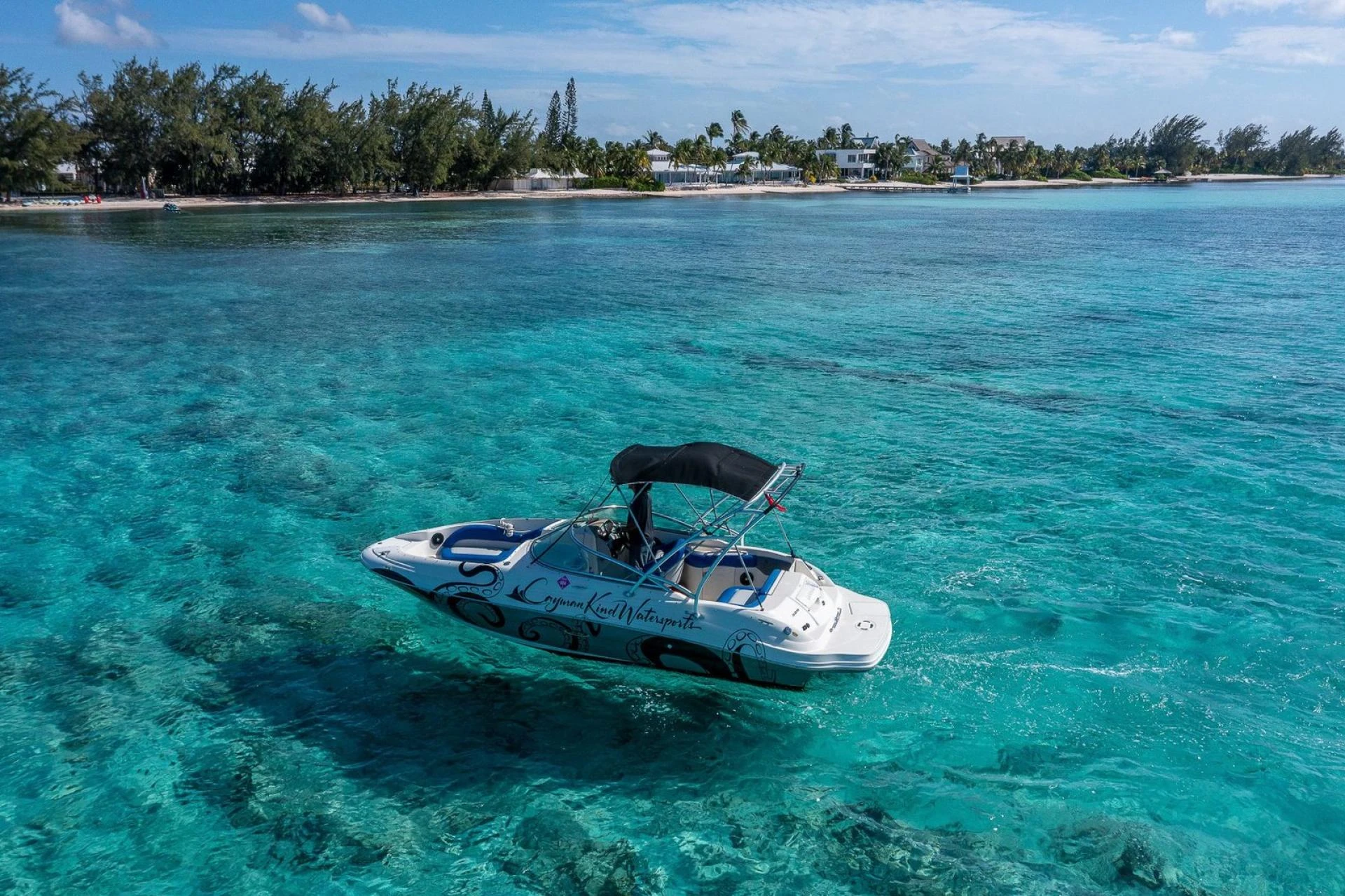
Another major factor reducing wave energy at the rum point cayman islands coastline is the presence of offshore coral formations and shallow carbonate platforms. These structures act as submerged breakwaters.
When waves encounter reefs:
- Wave bases drag along the reef crest.
- Energy dissipates through turbulence.
- Waves break offshore instead of onshore.
By the time water reaches Rum Point’s shoreline, much of its force has already been spent.
This process creates what coastal engineers call a low-energy shoreline environment, characterized by:
- Minimal surf.
- Gentle swash zones.
- Stable sand deposition.
In short, reefs take the punch out of incoming waves before they ever reach the beach.
Shallow Bathymetry: Why Depth Matters:
Wave energy is also strongly influenced by seabed slope and depth profile, known as bathymetry. Rum Point’s offshore zone is relatively shallow and gradually sloping.
This matters because:
- Waves lose speed in shallow water.
- Wave height decreases through friction.
- Energy spreads laterally.
Steep coastlines, by contrast, allow waves to retain power until impact. Rum Point’s gentle seabed acts like a natural brake system, slowing waves long before they reach swimmers.
That’s why visitors often describe the water here as:
- Calm
- Waist-deep far offshore.
- Ideal for floating or wading.
These are classic signatures of a shallow, low-energy coastal shelf.
The Role of Fetch Reduction at Rum Point:
Fetch, the distance wind travels across open water, is a major determinant of wave size. Rum Point’s geographic position reduces effective fetch in multiple directions.
From the east:
The island blocks long-distance wave development.
From the northeast:
Land curvature interrupts wind alignment.
From the north:
Regional shelf and reef zones shorten wave growth distance.
With limited fetch, waves simply cannot build large amplitudes. The result is persistent calmness even on breezy days.
Mangroves and Coastal Vegetation: Hidden Stabilizers:
Rum Point is located near mangrove ecosystems that fringe portions of Grand Cayman’s northern coast. While often overlooked, mangroves play a significant role in coastal energy moderation.
They:
- Trap sediments.
- Reduce shoreline erosion.
- Absorb wave motion.
- Stabilize coastal gradients.
Mangrove-adjacent beaches tend to be:
- Shallower.
- More protected.
- Less wave-exposed.
This ecological buffering reinforces Rum Point’s already sheltered conditions.
Wave Refraction: Bending Energy Away from Shore:
As waves move into shallow water near curved coastlines, they bend, a process called refraction. Around Rum Point:
- Offshore contours redirect wave fronts.
- Energy spreads alongshore instead of onshore.
- Wave crests align parallel to the beach.
This alignment reduces the direct impact force.
Imagine ocean energy wrapping around the coastline rather than striking it head-on. That’s precisely what happens at Rum Point, further softening wave action.
Sediment Stability: Why the Sand Stays Put:
Low-energy beaches like Rum Point tend to have:
- Fine carbonate sand
- Gentle slopes
- Minimal erosion
Because wave force is weak:
- Sand isn’t constantly removed
- Shorelines remain consistent
- Water clarity improves
High-energy beaches often appear murky due to suspended sediments. Rum Point’s calm hydrodynamics allow particles to settle, producing its famously clear turquoise waters.
Seasonal Wind Patterns and Consistency:
Another reason the rum point cayman islands shoreline remains calm year-round is the consistency of Caribbean trade winds. Since dominant winds rarely shift dramatically:
- Exposure patterns stay stable.
- Wave climate remains predictable.
- Leeward shielding persists.
Even during moderate weather changes, Rum Point remains relatively protected compared with the windward coasts of the island.
Safety and Recreation Benefits of Reduced Wave Energy:
The practical implications of Rum Point’s leeward location extend beyond scenery. Calm wave environments provide major advantages for visitors:
Safer Swimming Conditions
- Minimal rip currents
- Gentle entry slopes
- Predictable water movement
Ideal Snorkeling Environment
- Clear visibility
- Low surge
- Stable marine habitats
Family-Friendly Shoreline
- Shallow water
- Soft surf
- Easy access
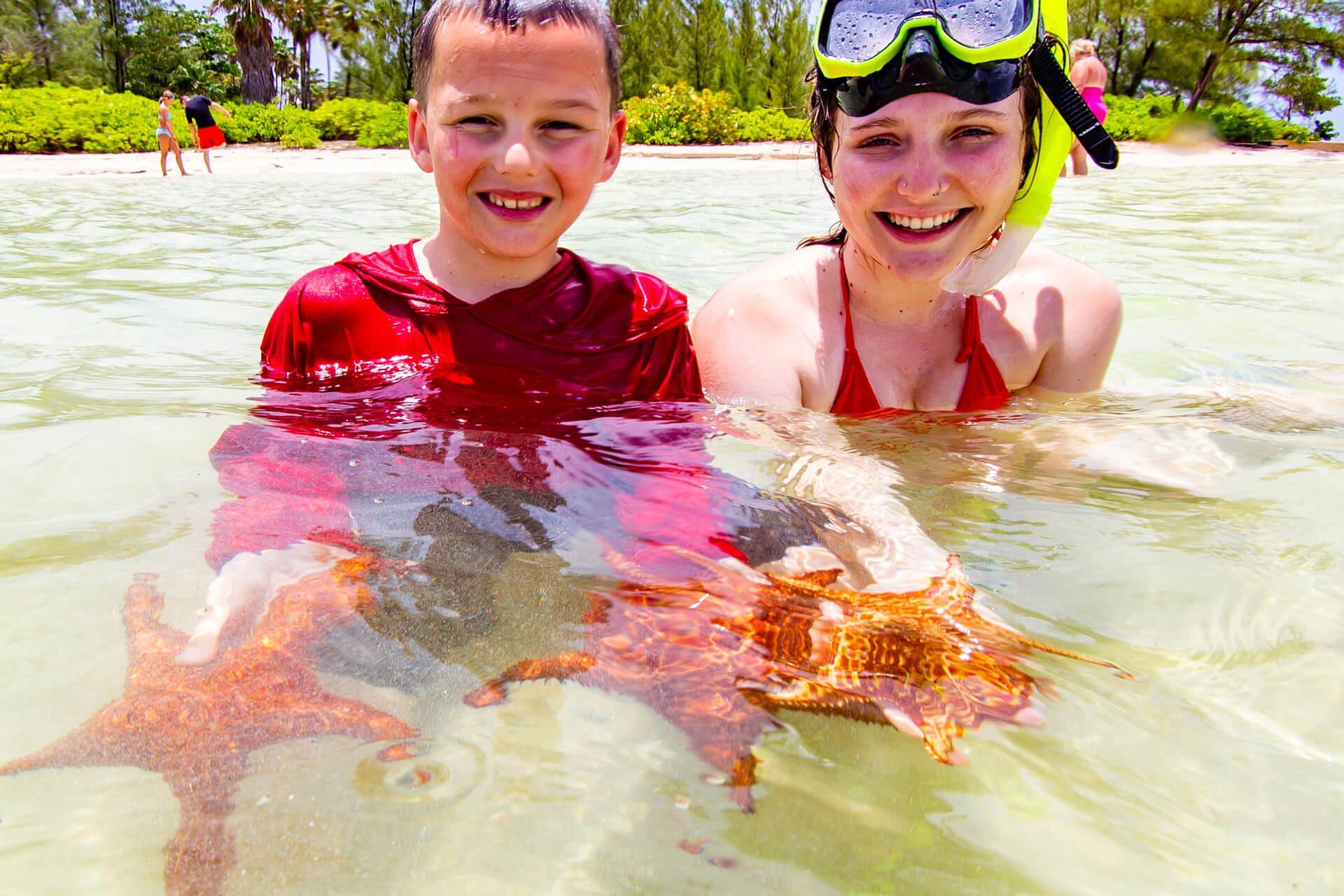
This is why Rum Point is often recommended for:
- Families with children
- Beginner swimmers
- Casual snorkelers
- Paddle sports
Calm water isn’t just aesthetic; it’s functional safety.
Marine Ecology in Low-Energy Environments:
Wave energy shapes ecosystems. At Rum Point, reduced turbulence supports:
- Seagrass beds
- Juvenile fish habitats.
- Invertebrate communities.
- Patch reef systems.
High-energy coasts tend to favor hardy organisms like barnacles and wave-resistant corals. Low-energy zones like Rum Point allow delicate species to thrive, increasing biodiversity.
This ecological richness enhances snorkeling and wildlife observation opportunities.
Comparing Windward Cayman Beaches:
To appreciate Rum Point’s calmness, contrast it with the windward shores of Grand Cayman, which face direct trade winds.
Windward beaches typically show:
- Larger waves.
- Coarser sediments.
- Steeper profiles.
- Higher erosion rates.
These coastlines are dynamic and energetic. Rum Point, by comparison, behaves like a sheltered lagoon system.
Human Design and Natural Advantage:
Interestingly, Rum Point’s calm hydrodynamics make it ideal for low-impact coastal recreation infrastructure. Because wave forces are small:
- Docks require less reinforcement.
- Moorings remain stable.
- Beach amenities face a lower erosion risk.
In coastal planning terms, Rum Point represents a naturally optimized site—where geography does the heavy lifting.
Why Leeward Positioning Matters in Coastal Tourism?
From a tourism and environmental management perspective, leeward beaches like Rum Point are highly valuable because they:
- Require less shoreline engineering.
- Maintain water clarity.
- Support marine biodiversity.
- Provide safer recreation.
This combination is rare and desirable. It’s one reason Rum Point is widely regarded as one of Grand Cayman’s most tranquil coastal zones.
The Big Picture: Coastal Physics in Action:
Rum Point’s reduced wave energy is not due to a single factor but a layered system of natural protections:
- Island mass shielding.
- Coastal curvature.
- Offshore reefs.
- Shallow bathymetry.
- Mangrove proximity.
- Limited fetch.
- Wave refraction.
Together, these create a classic leeward low-energy shoreline.
In coastal science, such environments are textbook examples of how geography shapes ocean behavior.
Conclusion!
The serene character of the rum point cayman islands shoreline isn’t accidental—it’s the product of geography, oceanography, and ecology working in harmony. Its leeward location shields it from prevailing trade winds, while reefs, shallow seabeds, and coastal curvature dissipate incoming wave energy long before it reaches shore.
For visitors, this translates into clear water, gentle surf, and safe swimming conditions. For marine life, it creates a stable habitat. And for coastal planners, it offers a naturally resilient shoreline requiring minimal intervention.
Understanding why Rum Point stays calm doesn’t just deepen appreciation—it helps travelers choose beaches aligned with their comfort, safety, and activity preferences. If tranquil waters, easy snorkeling, and family-friendly shores are priorities, leeward beaches like Rum Point offer a reliable solution grounded in coastal science.
So as you plan your next Cayman coastal experience, consider this: are you choosing a beach based on scenery alone, or on the coastal physics that shape your entire shoreline experience?






















Sign in to leave a comment.