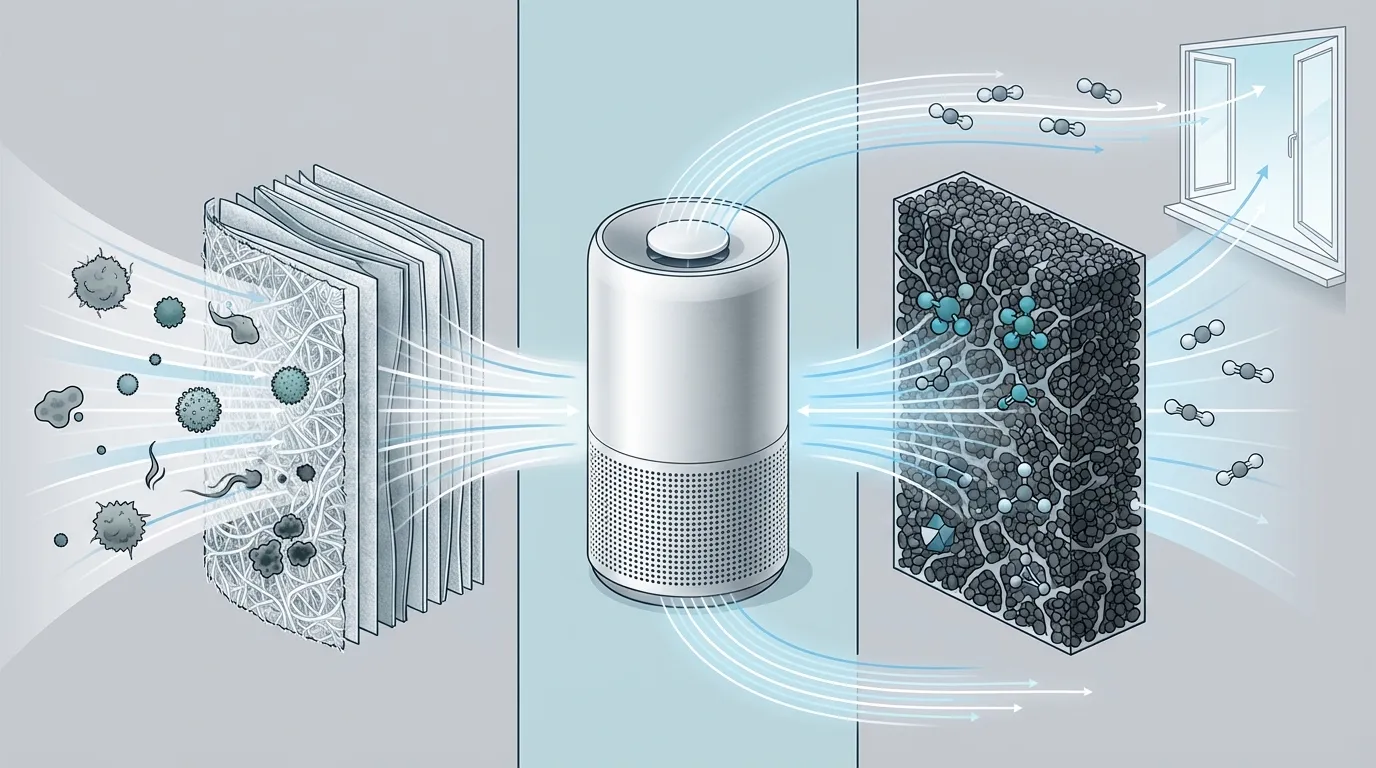

Most people buy an air purifier thinking it will clean everything from their indoor air, particles, gases, odors, and even CO2. But understanding exactly what a purifier can and cannot remove is the key to making the right buying decision for your home or office. The truth is that different types of pollutants require different filtration technologies, and no single unit handles every threat equally well. Whether you are searching for a co2 air purifier, a unit that removes chemical vapors, or protection against industrial gases and volcanic smog, knowing how each technology works puts you firmly in control of the air quality decisions that matter most for your health.
Understanding the Difference Between Gas and Particle Pollution
Before choosing any air purifier for gas or vapor removal, it helps to understand how indoor air pollution actually breaks down. Airborne pollution comes in two broad categories. The first is particulate matter, solid or liquid particles suspended in the air, including dust, pollen, smoke, mold spores, and pet dander. These are captured by HEPA filters. The second is gaseous pollution, invisible chemical compounds in the form of vapors and gases, including volatile organic compounds (VOCs), sulfur dioxide, nitrogen dioxide, formaldehyde, and many other chemical emissions from building materials, cleaning products, cooking, industrial sources, and outdoor pollution events like wildfires and volcanic activity. According to Wikipedia's article on indoor air quality, gaseous pollutants are among the most harmful components of indoor air because they are completely invisible, have no color or smell in many cases, and are far too small for any HEPA filter to capture. This is where activated carbon filtration and specialist gas-phase filtration become critical, not just helpful additions, but essential components for genuinely comprehensive air purification.
What a Vapor Air Purifier Actually Does
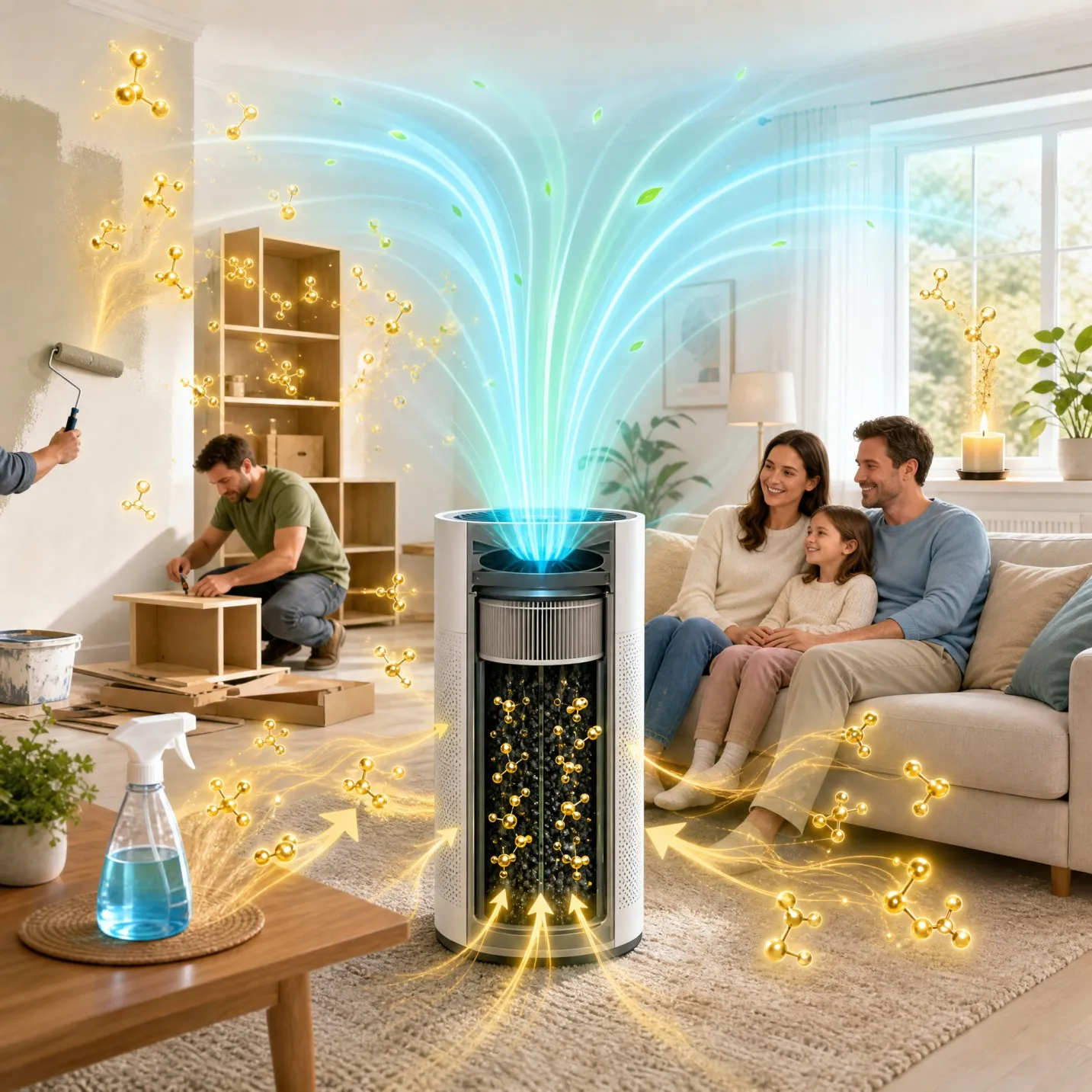
A dedicated vapor air purifier is designed specifically to address the gas-phase component of indoor air pollution, the chemical vapors and VOCs that standard HEPA-only purifiers simply cannot touch. The core technology in any effective vapor purifier is activated carbon, a highly porous material with an enormous internal surface area that works through a process called adsorption, where gas molecules bond chemically to the carbon structure and are permanently trapped inside its pores. The amount of activated carbon in the filter is everything, a thin, sprayed-on carbon coating will saturate within days in a high-VOC environment, while a deep-bed filter containing several pounds of granular activated carbon provides lasting protection over months of continuous use. For homes with new furniture, fresh paint, synthetic flooring, cleaning products, or any other source of chemical off-gassing, a vapor purifier with substantial activated carbon is not an optional upgrade, it is the specific tool needed to address the primary form of pollution actually present in the air.
Can an Air Purifier Really Reduce CO2 Levels?
This is one of the most commonly misunderstood questions in indoor air quality, and it deserves a clear, honest answer. A standard air purifier for co2 search leads many buyers to believe that a purifier can lower the carbon dioxide concentration in a room. The reality is more nuanced and important to understand. Carbon dioxide is a naturally occurring gas exhaled by humans and animals, and its molecules are extremely small, far smaller than the chemical gases that activated carbon is designed to capture. No conventional air purifier, regardless of how advanced or expensive, can meaningfully reduce CO2 levels in a room through filtration alone. The only effective solution for elevated CO2, which can cause drowsiness, difficulty concentrating, and headaches at higher concentrations, is fresh air ventilation, either by opening windows, using mechanical ventilation, or improving HVAC airflow. What an air purifier does excel at, however, is removing the other gaseous pollutants and particles that accumulate alongside rising CO2 in poorly ventilated spaces, providing a critical second layer of air quality protection.
Industrial Gases, Sulfur Dioxide, and Volcanic Smog
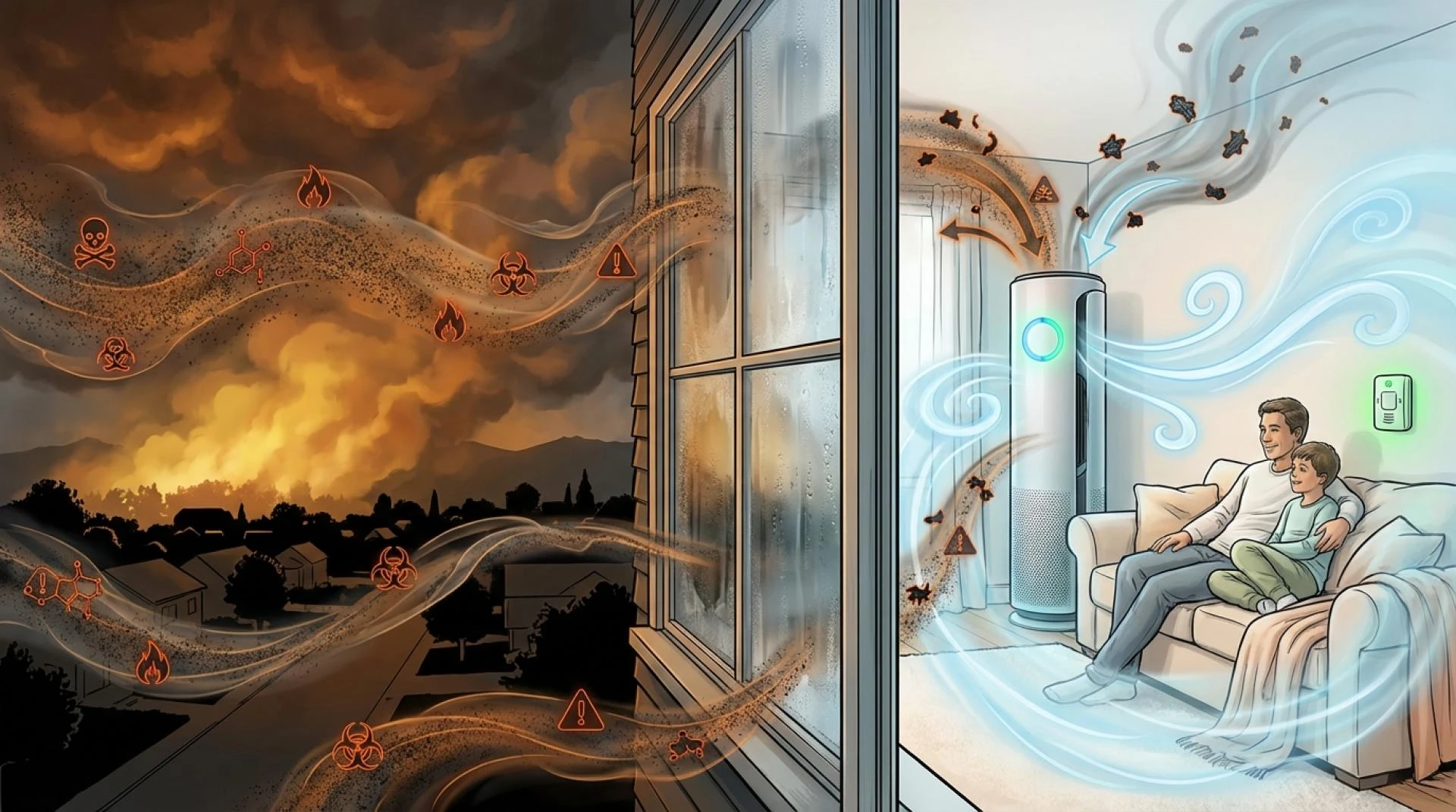
While everyday VOCs and household odors represent the most common gas-phase air quality challenge for American homeowners, some environments face far more extreme gaseous pollution from sources like industrial emissions, agricultural chemicals, combustion byproducts, and in certain regions, volcanic smog, a toxic mixture of sulfur dioxide and fine particles emitted by volcanic activity that can travel hundreds of miles from eruption sites. A high-performance gas air purifier designed for these more demanding applications needs a specially formulated activated carbon blend, not just standard granular carbon, to adsorb specific industrial gases like sulfur dioxide, hydrogen sulfide, ammonia, and other reactive compounds effectively. Different chemicals bond to activated carbon at different rates and capacities, which is why specialist gas purifiers use carefully selected carbon blends impregnated with specific chemicals to target the exact pollutants present in a given environment. For people living near industrial zones, in agricultural regions, or in areas with periodic volcanic activity, this level of specialist gas filtration is a genuinely important health investment.
Choosing the Right Gas Purifier for Your Environment
Selecting the right gas air purifier comes down to accurately identifying the specific gases or vapors you need to address. For most households, the primary concerns are everyday VOCs from furniture, cleaning products, cooking, and building materials, all of which are well-handled by a quality purifier with a substantial standard activated carbon filter. For more challenging environments involving sulfur compounds, ammonia, formaldehyde, or industrial chemical emissions, a specialist carbon blend tailored to those specific compounds is needed. Always check the weight of the carbon filter, this is the single most important specification for gas-phase filtration performance. Look for third-party certifications like AHAM Verifide and Energy Star, and ensure the unit carries CARB certification confirming it does not produce ozone as a byproduct of its operation. According to Wikipedia's overview of activated carbon, this material's extraordinary internal surface area, over 3,000 square meters per gram, makes it uniquely effective at trapping a vast range of gaseous pollutants, but only when sufficient quantities are present in the filter to handle the ongoing chemical load of the environment it is being used in.
Build a Complete Air Defense for Gases, Vapors, and Beyond
The best approach to indoor air quality in 2026 is one that treats your home's air as a multi-layered challenge rather than a single problem with a single solution. Particles need HEPA. Gases and vapors need activated carbon. CO2 needs ventilation. Specialist industrial or volcanic gases need specialist carbon blends. Each layer of protection works differently and addresses a different category of pollutant, and building a complete defense means understanding which threats are present in your specific environment and choosing technology that matches each one. Whether you are dealing with VOC off-gassing in a newly furnished home, chemical vapors in a workspace, sulfur dioxide from an industrial source, or any other gas-phase air quality challenge, a purpose-built vapor air purifier with the right carbon formulation for your environment is the most effective, science-backed tool available. Explore specialist air purification solutions engineered specifically for gas and vapor removal, and take the most informed step possible toward indoor air that is not just particle-free, but genuinely free of the invisible chemical threats that standard purifiers consistently leave behind.






















Sign in to leave a comment.