
Motivation is useful, but it has one obvious weakness: it comes and goes.
Most of us have experienced the sudden urge to change something. We decide to exercise more, organise the house, read every evening, save money, eat better or finally finish a project that has been sitting untouched for months.
For a few days, everything feels easy.
Then normal life returns.
This is why small systems often work better than relying on motivation alone.
Motivation Is an Emotion, Not a Plan
Motivation tends to be strongest when an idea is new. Starting something gives us a sense of possibility, and that feeling can provide enough energy to get moving.
The difficulty is that enthusiasm naturally fades.
A system removes some of the need to make the same decision repeatedly.
Instead of asking, “Do I feel like doing this today?”, the activity becomes attached to something that already happens.
For example:
- reading ten pages before going to bed
- going for a short walk after lunch
- checking finances every Friday
- preparing tomorrow’s clothes before sleeping
- spending fifteen minutes tidying before dinner
None of these habits is particularly dramatic. That is precisely why they can work.
Make the Starting Point Smaller
One common mistake is designing a routine around the person we hope to become rather than the person we currently are.
Someone who rarely exercises might suddenly plan five gym sessions a week.
Someone who has not read a book in years decides to read fifty pages every evening.
The problem is not ambition. The problem is friction.
Large changes require more time, energy and organisation, making them easier to abandon.
A smaller starting point creates less resistance.
Ten minutes of exercise can become twenty.
One drawer can eventually become an organised room.
Five pages can turn into a regular reading habit.
Consistency gives a habit somewhere to grow.
Reduce the Number of Decisions
Many routines fail because they contain too many decisions.
Consider exercise.
You may need to decide:
What exercise should I do?
When should I do it?
Where should I go?
What should I wear?
How long should the session last?
Each additional decision creates another opportunity to postpone the activity.
Simple systems remove some of those choices.
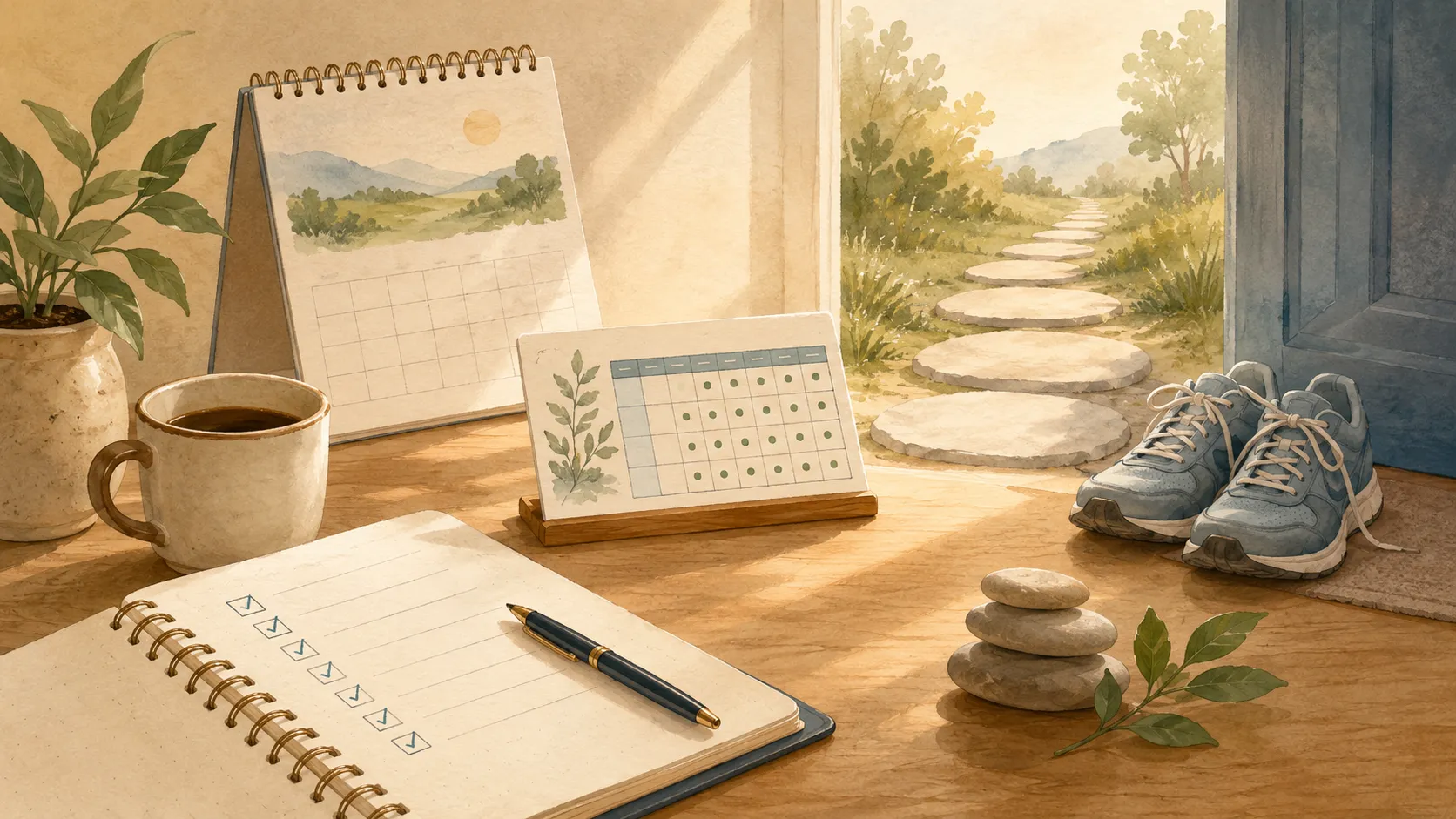
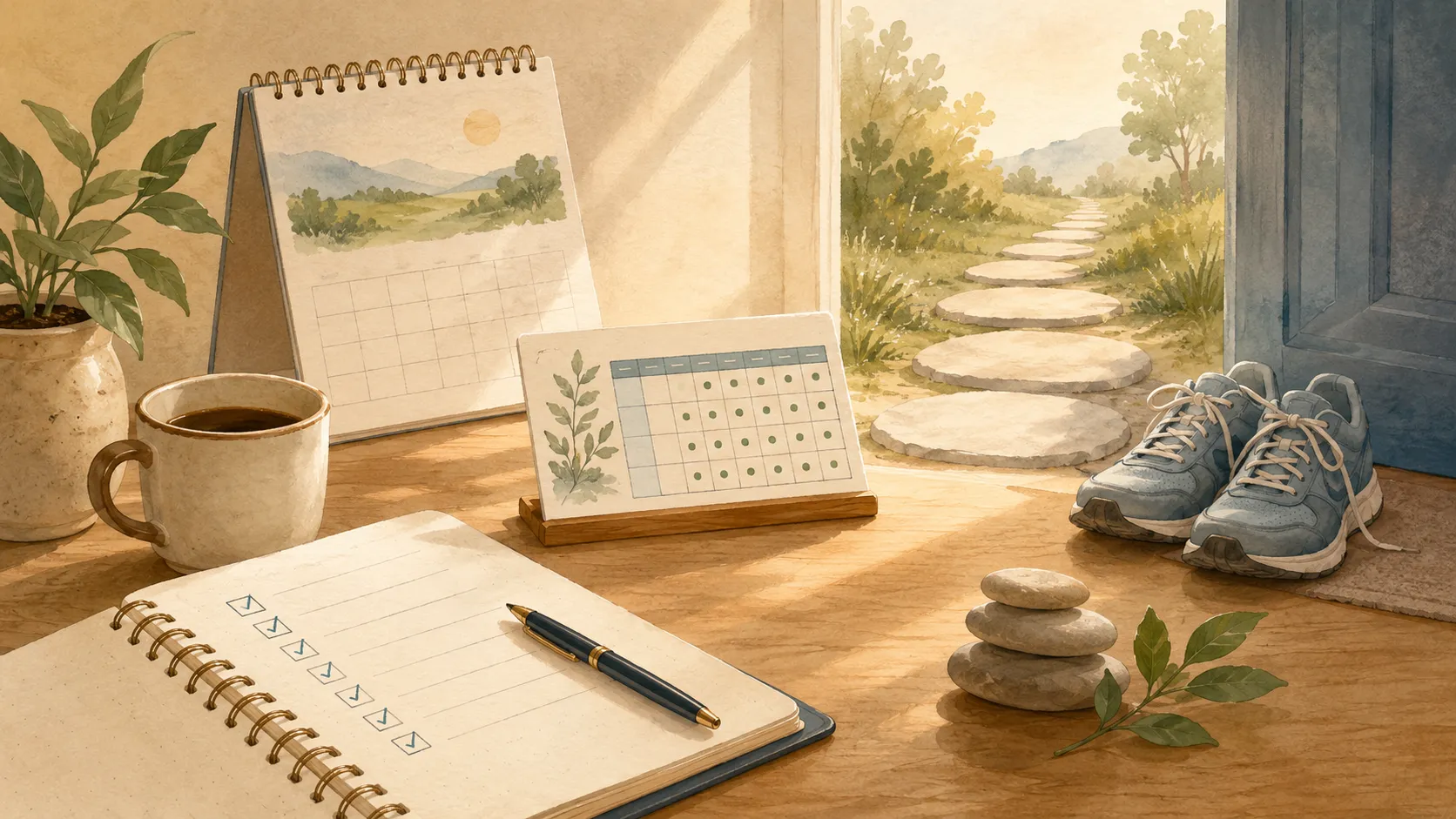
Putting walking shoes beside the door, keeping a regular workout time or following the same basic routine can make starting considerably easier.
The same idea applies to work, cooking, studying and household organisation.
Design the Environment Around the Behaviour
Willpower is not always the strongest influence on behaviour. Our surroundings matter too.
If something is visible and convenient, we are more likely to use it.
A book beside the bed is easier to remember than one stored in a cupboard.
Fruit sitting on the kitchen counter is easier to choose than something hidden at the back of the fridge.
A notebook left open on the desk can encourage you to continue a project.
Small environmental changes can quietly support good habits without requiring constant conscious effort.
Expect Imperfection
A useful routine should survive imperfect weeks.
People travel, get busy, become tired and occasionally lose interest.
Missing one day usually matters far less than turning one missed day into a reason to stop entirely.
Good systems allow for interruption.
The goal is not perfect behaviour.
The goal is making it easy to return.
Small Changes Become Normal
The most effective habits often stop feeling like achievements.
They simply become part of the day.
That may sound less exciting than a dramatic transformation, but it is also more sustainable.
A few minutes repeated regularly can eventually accomplish far more than occasional bursts of motivation.
Sometimes progress is not about becoming more disciplined.
It is about making the useful choice slightly easier to repeat.
























Sign in to leave a comment.