

Quick Summary
Stable weight validation ensures accurate, tamper-proof weighment by capturing weight only when a vehicle is fully stationary and centered. Despite its importance, many weighbridge systems ignore it—leading to errors, disputes, and hidden operational losses.
Introduction: Accuracy Starts After the Vehicle Stops

When industries talk about weighbridge automation, the focus usually falls on flashy features—RFID, ANPR cameras, FASTag integration, or unmanned operations. But there’s one feature that quietly decides whether your weight data is reliable or flawed: stable weight validation.
In simple terms, stable weight validation ensures that a vehicle’s weight is captured only when the vehicle is fully stationary, properly positioned, and the weight readings are consistent. Without it, even the most advanced automation system can produce inaccurate results.
Surprisingly, this critical capability is often ignored or treated as a “nice-to-have.” In reality, it is the foundation of trustworthy weighbridge automation.
What Is Stable Weight Validation? (In Simple Words)
Stable weight validation is a process where the system confirms that:
- The vehicle has completely stopped
- There is no movement, vibration, or braking impact
- Weight readings remain constant for a defined duration
- External disturbances do not affect the measurement
Only after these conditions are met does the system lock and capture the final weight.
Think of it as the difference between clicking a photo while someone is moving versus when they are standing still. The clarity—and accuracy—changes completely.
Why Unstable Weights Are a Bigger Problem Than You Think
Many weighbridge errors don’t come from faulty load cells or poor calibration. They come from capturing weight too early.
Common real-world causes include:
- Vehicle inching forward or backward
- The driver applies or releases the brakes
- Tyres not fully aligned on the platform
- Suspension movement in heavy trucks
- Wind, vibration, or uneven positioning
These small movements cause weight fluctuations, which can easily go unnoticed—but over time, they result in:
- Incorrect billing
- Material reconciliation mismatches
- Repeat weighings
- Disputes with transporters
- Compliance failures
In high-volume industrial environments, even a 0.5–1% deviation can translate into significant financial and material losses.
Why Stable Weight Validation Is Often Ignored
Despite its importance, stable weight validation rarely gets the attention it deserves. Here’s why:
1. It’s invisible when done right
Unlike cameras or gates, stable weight validation works silently in the background. When it functions correctly, no one notices it—until it’s missing.
2. Many systems rely on manual judgment
In semi-automated or legacy setups, operators decide when the weight “looks stable enough,” which introduces human bias and inconsistency.
3. The focus is misplaced on entry and exit automation
Most automation projects prioritize faster entry, ANPR, or ticket generation—but forget that the core purpose of a weighbridge is accurate weight capture.
4. Vendors underplay their complexity
True stable weight validation requires intelligent logic, not just timers. Many solutions simplify it, leading to unreliable outcomes.
The Hidden Risks of Skipping Stable Weight Validation

When stable weight validation is missing or poorly implemented, the risks compound silently.
1. Operational Risks
- Frequent re-weighments slow down throughput
- Increased queue times and congestion
- Manual intervention creeps back into “unmanned” systems
2. Financial Risks
- Over- or under-billing of materials
- Revenue leakage over time
- Inventory mismatches during audits
3. Compliance Risks
- Disputes with vendors and customers
- Poor audit trails
- Inconsistent data across shifts and locations
What seems like a minor technical gap often becomes a systemic business problem.
Stable Weight Validation in Unmanned Weighbridge Systems
In unmanned weighbridge environments, stable weight validation becomes even more critical.
Why?
Because there is no operator present to confirm stability visually. The system must independently decide when:
- The vehicle is correctly positioned
- The weight has settled
- External influences are absent
Without intelligent validation, unmanned systems risk becoming fast but inaccurate, which defeats their purpose.
A true unmanned weighbridge must be able to say:
“I will not record weight until conditions are correct.”

How Helious Strengthens Stable Weight Validation in Unmanned Weighbridge Systems
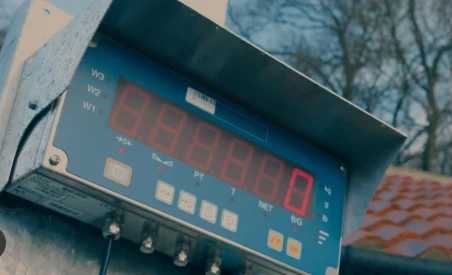
Helious strengthens stable weight validation by embedding intelligent logic directly into its unmanned weighbridge automation. The system does not rely only on timers—it continuously analyzes live weight data to ensure accuracy before locking the transaction.
- Vehicle halt confirmation before weight capture
- Consistency of weight readings over defined validation intervals
- Detection of micro-fluctuations caused by braking or suspension movement
- Event logging for complete audit traceability
In a fully unmanned setup, the system ensures proper positioning and stability before recording weight. If instability is detected, the transaction pauses automatically. Integrated with ANPR and entry-exit control, every transaction is validated, secure, and audit-ready.
The Link Between Stable Weight Validation and True Automation
Automation is not just about removing people—it’s about removing uncertainty.
Stable weight validation ensures:
- Every transaction follows the same logic
- Weight capture is unbiased and repeatable
- Manual overrides are minimized
- Data integrity is maintained across locations
In fact, many “automated” weighbridges still rely on manual judgment during weight capture. Without stable weight validation, automation remains incomplete.
Why Stable Weight Validation Matters for ESG and Audits
With increasing focus on ESG, traceability, and compliance, weight data is no longer just an operational metric—it’s a reporting asset.
Stable weight validation supports:
- Accurate material movement records
- Reliable logistics and dispatch data
- Strong audit trails for compliance
- Reduced disputes and corrections
When weight data is stable and validated, downstream systems—ERP, inventory, billing—become more trustworthy.
What to Look for in a Stable Weight Validation System
If you’re evaluating or upgrading a weighbridge automation system, ask these questions:
- Does the system automatically validate weight stability?
- Is weight captured only after defined stability conditions?
- Can it reject unstable readings on its own?
- Does it work consistently across vehicle types?
- Is the logic transparent and auditable?
If the answer to any of these is unclear, stable weight validation may not be robust enough.
The Bigger Picture: Accuracy Builds Trust
In logistics and industrial operations, trust begins with data accuracy. And weight is one of the most critical data points in the entire supply chain.
Stable weight validation might not be the most visible feature of weighbridge automation—but it is one of the most impactful.
It protects revenue.
It prevents disputes.
It ensures compliance.
And it turns automation into a system you can actually rely on.
Conclusion: Don’t Automate Errors—Eliminate Them
Weighbridge automation should not just make processes faster—it should make them right.
Stable weight validation ensures that automation does not amplify small errors into large problems. By capturing weight only when conditions are truly stable, industries gain accuracy, consistency, and confidence in every transaction.
In the race toward unmanned and intelligent weighbridge systems, stable weight validation isn’t optional—it’s essential.





















Sign in to leave a comment.