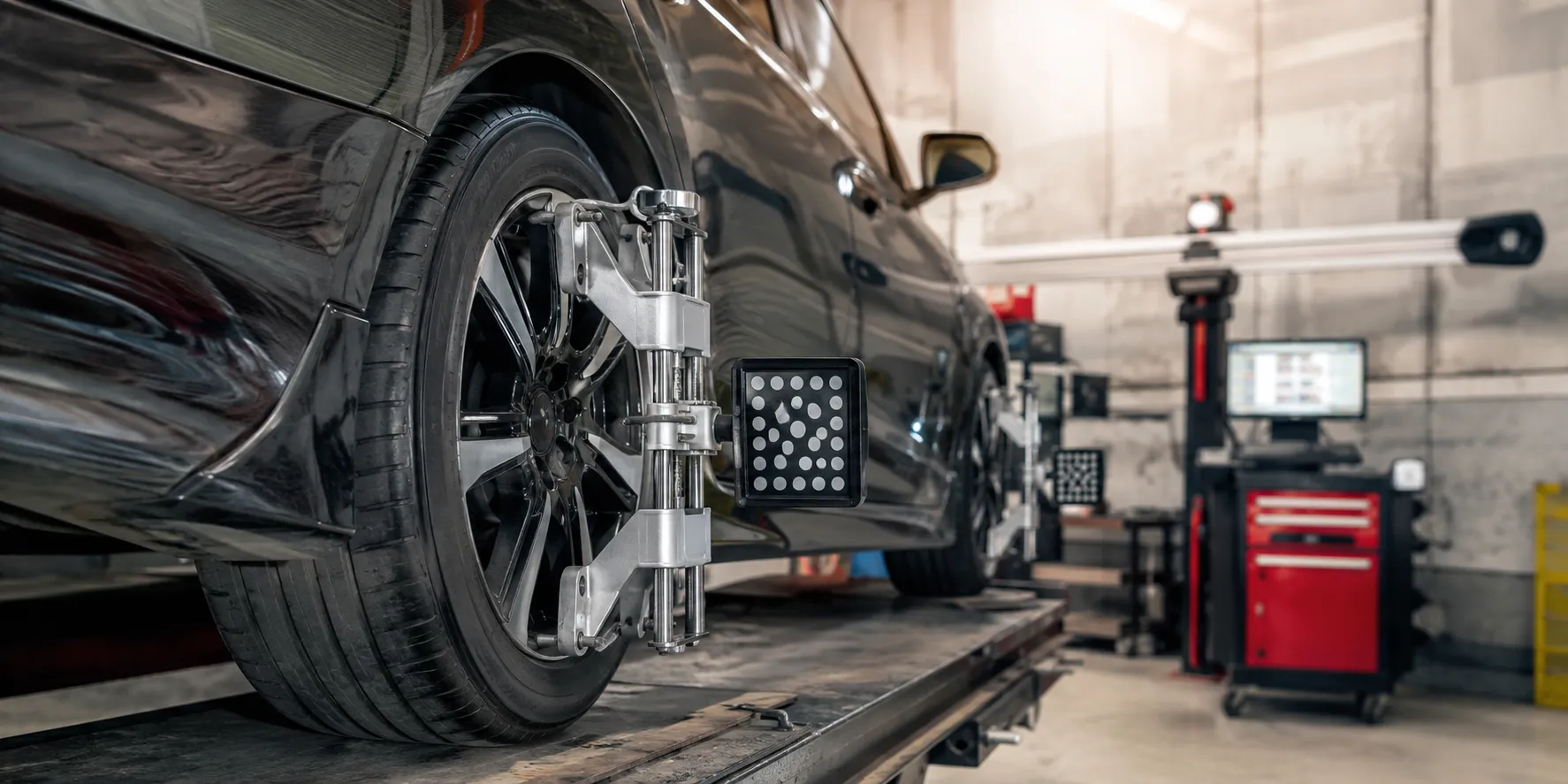

Driving on the road should be a pleasant experience. Sometimes things get difficult when you have to fight your steering wheel to stay on track. Or you may notice the steering wheel, seat, or floor vibrating as your vehicle reaches certain speeds. These symptoms should not be ignored because they may indicate tire, wheel, alignment, suspension, or steering problems.
Most people will explain situations just like the examples above by saying, "That's just car trouble." When really, those are just the beginning signs of your car having serious problems. Regular wheel alignment and balancing are a great way to make sure your car stays in better shape for a longer period of time.
These preventive services may help reduce premature tire wear and avoid more expensive repairs when problems are identified early.
Understanding Wheel Alignment: Keeping You Straight
To understand why your car might be acting up, it helps to break down what happens under the chassis. First, let’s talk about a wheel alignment service, sometimes called a suspension alignment or front-end alignment.
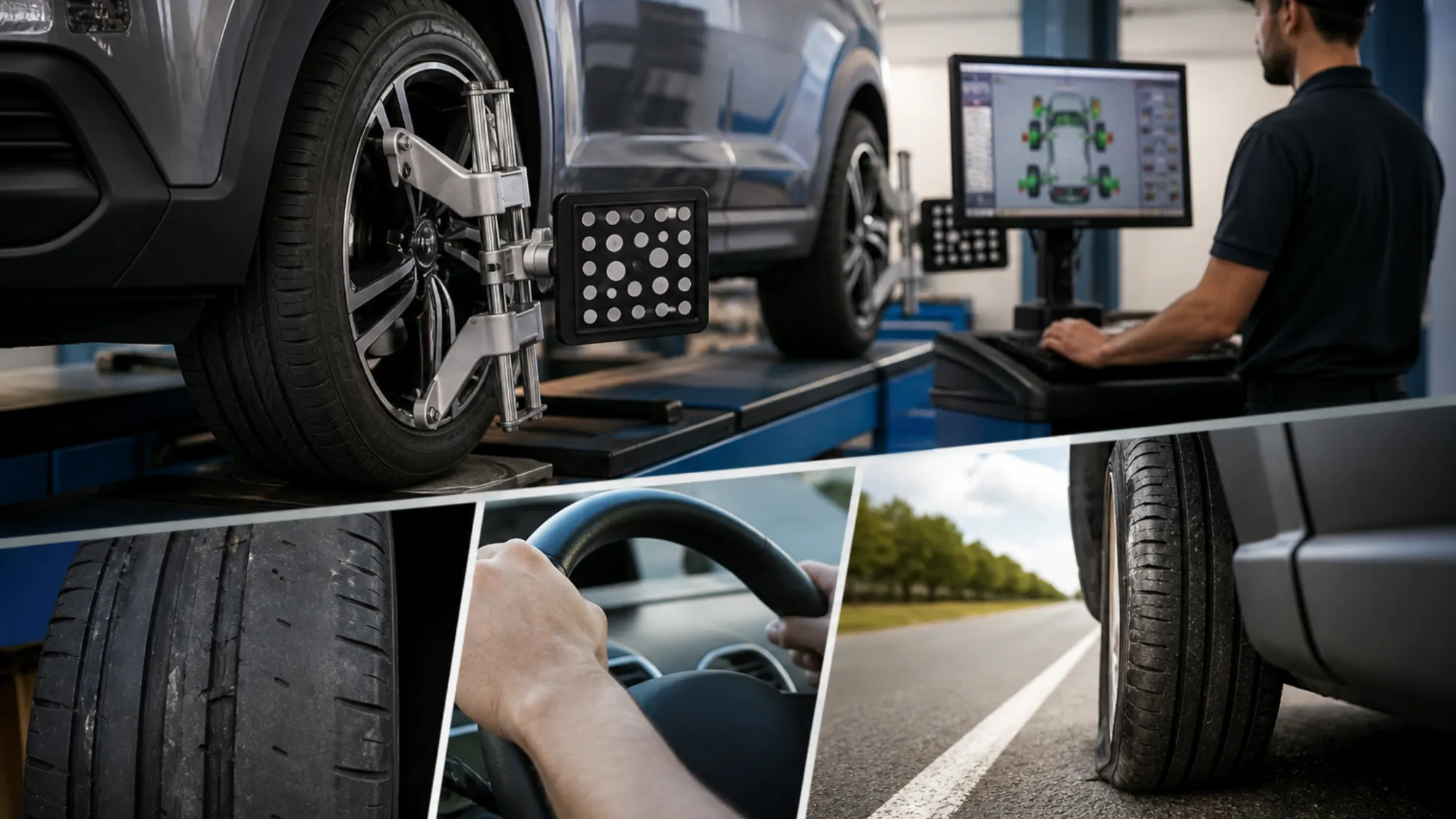
Wheel alignment does not change the shape of the tires. A technician will measure specific angles for the steering and suspension that help show how the vehicle will move and sit relative to the road. This service helps explain how the steering and suspension help position the wheels to assist the vehicle and how it sits on the road. The goal is to bring the vehicle’s toe, camber, and caster angles within the manufacturer’s specifications.
A hard pothole or curb impact can alter alignment angles or damage a tire, wheel, or suspension component. Here are some of the noticeable symptoms of a wheel alignment issue:
- The vehicle pulls to one side along a flat and constant stretch of road.
- The steering wheel should sit at a straight angle and should remain straight while you are driving.
Every potential alignment makes driving and steering assist in handling the vehicle much easier. When your alignment is correct, your car tracks straight, responds predictably to your steering, and keeps you safely in control of your lane.
Understanding Wheel Balancing: Smoothing Out the Ride
Wheel balancing corrects uneven weight distribution in the tire-and-wheel assembly, while alignment adjusts the angles of the steering and suspension system. Tires and wheels are never perfectly uniform from the factory; Small variations in the tire and wheel can cause the assembly’s weight to be distributed unevenly.
During a balance service, a technician places your wheel on a specialized machine that spins it to locate the heavy spots. And the technician installs small weights to reduce the imbalance and help the assembly rotate smoothly.
If you are driving around on unbalanced tires, your car will let you know. The classic symptom is a distinct steering wheel vibration or a noticeable shake in your seat that gets worse the faster you drive. Beyond being incredibly annoying, continued vibration can contribute to irregular tire wear and place added stress on wheel and suspension components.
The Ultimate Perks: Saving Money and Tires
Along with comfort, getting an alignment and balance also saves you money since this gets you two things: tires and money. So basically, the two are intertwined.
Maxing Out Your Tires
Tires are expensive. If you want to maximize your tire lifespan, you need to ensure they wear down evenly. Incorrect alignment can cause feathering or excessive wear on one side of the tread. Vibration and uneven wearing may be caused by wheel imbalance.
Alignment should be coupled with balancing and regular rotations, as well as proper and accurate air pressures in the tires, to renew their tread. Using these methods, the tires will not need to be replaced as often.
Preventing feathering or uneven patch wear will keep your tires in condition longer, but a professional must determine the actual cause of the problem
Better Gas Mileage
The friction caused by the misalignment of the tires forces the car's engine to work harder and burns more gas, creating a drag. Fixing the misalignment can help the car operate more efficiently, and gas consumption will improve. The actual fuel-economy improvement depends on the severity of the alignment problem and other vehicle conditions.
Timing It Right: When Do You Actually Need This?
There is no universal mileage interval for every vehicle. Follow the manufacturer’s recommendations and have the alignment inspected when you notice pulling, an off-center steering wheel, or uneven tire wear, or after a significant pothole or curb impact. Have the wheels balanced when tires are installed or remounted, or when speed-related vibration develops.
A question many drivers ask when buying new rubber is: Do I need an alignment after replacing tires?
New tires do not automatically require a wheel alignment, but checking the alignment is a sensible way to protect your investment.
An alignment is particularly important if the old tires wore unevenly, the vehicle pulls, the steering wheel is off-center, or the car recently hit a pothole or curb. New tires should always be balanced when they are installed.
If your car is even slightly misaligned, it will immediately start wearing down your expensive new tires incorrectly. Starting with a fresh alignment ensures you protect your investment from day one.
Keep Your Car Rolling Smoothly
Your tires are the only part of your vehicle that actually touches the road. Proper wheel alignment and balancing contribute to smoother handling, more even tread wear, and a more comfortable ride. Leaving tires misaligned makes accidents very likely, as well as increasing the chance of having to buy a whole new set of tires.
Pay attention to changes in how your vehicle steers and rides. If you notice persistent pulling, an off-center steering wheel, uneven tire wear, or speed-related vibration, schedule an inspection with an experienced car wheel alignment check. Don't be surprised when something that costs very little suddenly costs a lot.


























Sign in to leave a comment.