
Introduction
As a parent in Gurgaon, you are not just picking a school — you are choosing the environment where your child will spend their most formative years.. In a city like Gurgaon, where educational options are plentiful, parents often find themselves overwhelmed. What truly sets a school apart is not just its infrastructure or curriculum — it is the philosophy behind how it nurtures children. The best pre nursery schools in Gurgaon are moving beyond rote learning and embracing a whole-child development approach that builds confident, curious, and emotionally intelligent young learners from the very start.
What Is Whole-Child Development?
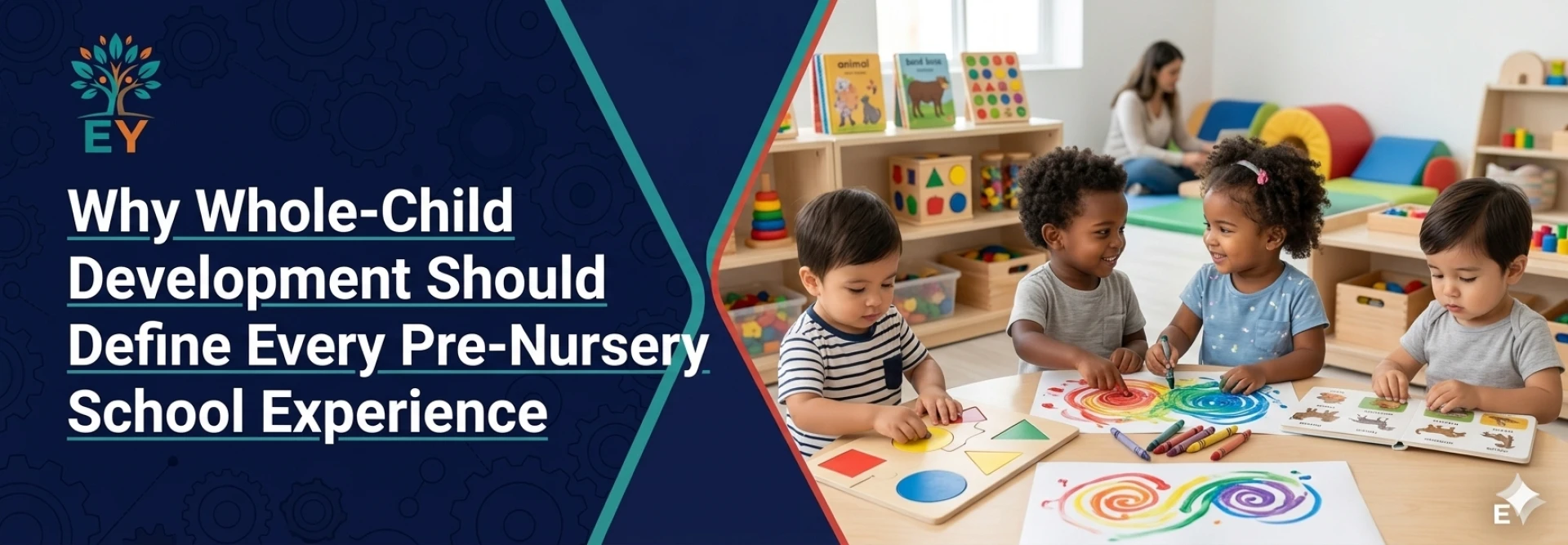
Whole-child development is an educational philosophy that looks at a child as a complete human being — not just a student who needs to memorize alphabets and numbers. It addresses five interconnected domains:
- Cognitive development — building thinking, reasoning, and problem-solving skills
- Social development — learning how to interact, share, and collaborate
- Emotional development — understanding and managing feelings
- Physical development — strengthening fine and gross motor skills
- Creative development — expressing ideas through art, music, and play
When a school commits to this philosophy, every activity, every interaction, and every classroom moment is designed with the whole child in mind.
Why This Philosophy Matters in Early Childhood Education
The first five years of a child's life are the most formative. Research in developmental psychology consistently shows that early experiences shape brain architecture. Children who receive nurturing, stimulating, and emotionally secure education during these years demonstrate:
- Higher academic performance in later years
- Stronger social bonds and communication skills
- Better emotional regulation
- Greater creativity and resilience
A philosophy that prioritizes whole-child development does not view play as a break from learning. It recognizes play as the most powerful vehicle for learning in the early years.
H3: How Pre Nursery Schools in Gurgaon Are Embracing This Approach
Gurgaon has seen a significant shift in how early childhood education is structured. Progressive schools are abandoning pressure-driven models and replacing them with child-centric environments. Here is what this looks like in practice:
H4: Play-Based Learning Over Drill-Based Teaching
Instead of drilling letters and numbers repetitively, play-based learning allows children to discover concepts naturally. A child building a tower learns physics. A child sorting colored blocks learns math. A child role-playing learns empathy and language.
H4: Structured Routines That Build Emotional Security
Young children thrive on predictability. A well-structured day — with time for circle time, outdoor play, creative activity, and quiet reflection — gives children the emotional security they need to take risks and explore.
H4: Teachers as Facilitators, Not Instructors
In a whole-child model, the teacher's role shifts dramatically. Teachers observe, guide, and ask open-ended questions rather than deliver instructions. This encourages independent thinking from a very young age.
H3: HEI Schools Gurugram Sector 49 — A Philosophy in Action
Among the schools championing this approach in Gurgaon, HEI Schools Gurugram Sector 49 stands out as a strong example of how international early childhood education principles can be adapted meaningfully for Indian families.
HEI Schools follows the Finnish early childhood education framework — one of the most respected and research-backed educational models in the world. Finland consistently ranks among the top nations in global education outcomes, and its early years approach is central to that success.
At HEI Schools Gurugram Sector 49, the environment is intentionally designed to support every dimension of a child's growth:
- Nature-integrated learning spaces that encourage outdoor exploration
- Child-led project work that builds curiosity and ownership
- Multilingual exposure that supports cognitive flexibility
- Mindfulness and emotional literacy practices embedded into the daily routine
- Small group sizes that allow teachers to truly know each child
This is not education as a transaction. It is education as a relationship.
H3: Key Pillars of the Whole-Child Philosophy at Quality Pre Nursery Schools
Whether you are exploring HEI Schools Gurugram Sector 49 or evaluating other options, here are the core pillars to look for in any school that genuinely practices whole-child development:
H4: 1. Emotional Safety Comes First
A child cannot learn when they feel unsafe or anxious. The best early childhood schools invest heavily in building warm, trusting relationships between teachers and children before any academic content is introduced.
H4: 2. Individual Pace Is Respected
Every child is different. A four-year-old who speaks less but draws brilliantly is not behind — they are simply expressing themselves through a different channel. Schools committed to this philosophy celebrate diverse developmental timelines.
H4: 3. Parents Are Partners
Whole-child development extends beyond school walls. Strong early childhood programs actively involve parents through regular communication, workshops, and home-learning connections. When the school and home speak the same developmental language, children flourish.
H4: 4. Assessment Is Observational, Not Competitive
Children in the early years should not be ranked or graded. Observational assessment — where teachers document what they notice about a child's interests, strengths, and progress — gives a far more accurate and useful picture of development.
H4: 5. Creativity Is Non-Negotiable
Art, music, storytelling, and imaginative play are not extras. They are central to cognitive and emotional development. Schools that treat creativity as core — not co-curricular — are aligned with the whole-child philosophy.
H3: What to Ask When Visiting Pre Nursery Schools in Gurgaon
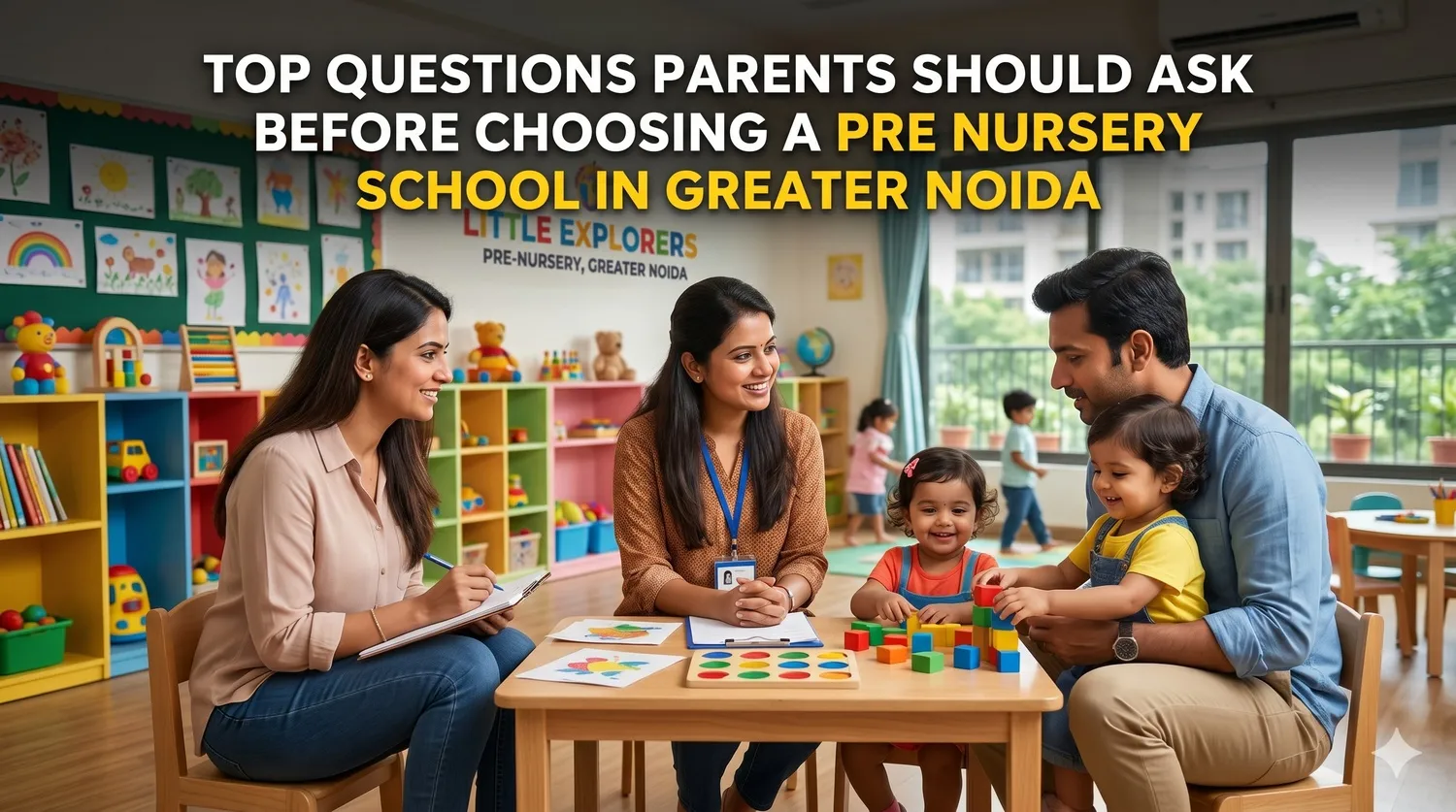
Before enrolling your child, visit the school and ask these questions:
- How do teachers handle conflict between children?
- What does a typical day look like, hour by hour?
- How is learning documented and shared with parents?
- What role does outdoor play have in the daily schedule?
- How are children transitioned into the school environment?
- What professional development do teachers undergo?
The answers will tell you everything about whether a school genuinely practices what it preaches.
H3: The Long-Term Impact of Whole-Child Education
Parents sometimes worry that a play-based, child-centered approach might leave their children "behind" academically. The evidence suggests the opposite. Children who attend schools that prioritize whole-child development enter primary school with:
- Stronger reading readiness because they have rich language exposure
- Better math intuition because they have explored quantities and patterns concretely
- Greater social confidence because they have practiced cooperation and communication
- Stronger self-regulation because they have learned to manage transitions and emotions
These are not soft skills. They are the foundation of all future academic and personal success.
Conclusion
The philosophy of whole-child development is not a trend. It is a return to what early childhood education has always been meant to be — a nurturing, joyful, and deeply human experience. As a parent in Gurgaon, you have the power to choose a school that sees your child as more than a set of milestones to be checked off. The best pre nursery schools in Gurgaon will tell you clearly what they believe in, how they practice it, and why every choice in their environment is intentional. HEI Schools Gurugram Sector 49 represents exactly this kind of thoughtful, evidence-based commitment to early childhood excellence.
If you are beginning your school search, visit HEI Schools Gurugram Sector 49 to see the philosophy in action. Ask questions, observe a class, and trust what you see. Your child deserves an education that grows them — fully, joyfully, and completely.
Frequently Asked Questions
Q1. What age group do pre nursery schools in Gurgaon typically cater to? Most pre nursery programs in Gurgaon accept children between the ages of 2 and 4 years. Some schools, including HEI Schools Gurugram Sector 49, offer programs starting from age 2.5, depending on the child's readiness.
Q2. What is the whole-child development approach in simple terms? It means the school focuses on your child's emotional, social, physical, cognitive, and creative growth — not just academic preparation. Every activity is designed to support the complete development of the child.
Q3. Is play-based learning effective for school readiness? Yes. Extensive research shows that children who learn through structured play develop stronger language, math, and social skills than those in purely instruction-based environments. Play is how young children build understanding.
Q4. How is HEI Schools Gurugram Sector 49 different from other pre nursery schools? HEI Schools follows the Finnish early childhood education framework, which is globally recognized for its child-centered, research-backed approach. It combines international best practices with a warm, community-oriented environment suited to Gurgaon families.
Q5. How can I assess whether a pre nursery school truly follows a whole-child philosophy? Observe how teachers interact with children, ask about daily routines, review how learning is documented, and assess whether the school involves parents meaningfully. A school that genuinely practices whole-child development will have clear, consistent answers to all of these questions.
Q6. Are there any red flags to watch for when choosing a pre nursery school? Watch out for schools that use homework for very young children, rely heavily on worksheets, rank or compare children, have limited outdoor time, or have high teacher turnover. These are signs that the school may not be truly child-centered.






























Sign in to leave a comment.