
Let's be honest. Running customer communication for a growing business in India right now feels a little like being the only chef in a restaurant where orders are coming in from 6 different windows at the same time.
Someone DMs you on Instagram. Another customer texts on WhatsApp. A third sends an email. And there you are - switching tabs, copy-pasting names, losing track of who said what - while your competitor replies in 30 seconds flat.
Sound familiar? Yeah, most businesses have been there.
The good news? There's a smarter way to handle this - and WhatsApp is right at the centre of it.
The Real Problem Isn't WhatsApp. It's Working in Silos.
WhatsApp already has over 500 million active users in India alone. Your customers are already on it. They prefer it. They open messages on WhatsApp faster than any email you'll ever send.
But here's where most businesses get it wrong - they treat WhatsApp like just another inbox. One agent handles it on their personal phone. Messages get missed. Follow-ups slip through. And there's zero visibility for the rest of the team.
That's not a WhatsApp problem. That's a workflow problem.
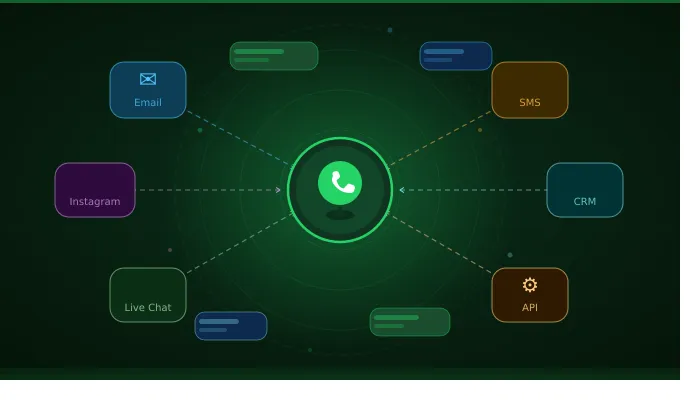
What businesses actually need is a unified messaging solution - one central platform where every customer conversation, from every channel, lives in one place. No switching apps. No "who replied to this?" confusion. Just clean, trackable communication.
Think of it like a control room. Every message comes in through one dashboard. Your team can assign conversations, set automated responses, track response times, and never drop the ball on a follow-up again.
A mid-sized e-commerce brand in Delhi once told me they were losing nearly 30% of their leads simply because WhatsApp messages came in after business hours and nobody picked them up until the next afternoon. The customer? Already bought from someone else.
That's the kind of problem a WhatsApp omnichannel messaging platform solves - not just by managing messages, but by making sure no conversation ever falls through the cracks.
How WhatsApp Fits into an Omnichannel Strategy (Without the Jargon)
"Omnichannel" sounds like one of those buzzwords that consultants love. But strip it down and it just means this: your customer gets the same smooth experience whether they reach you on WhatsApp, Instagram, your website chat, or even SMS.
They don't have to repeat themselves. They don't have to wonder if you got their message. And your team doesn't have to play detective trying to piece together a conversation that started on one platform and jumped to another.
For enterprise businesses - retail chains, edtech platforms, logistics companies, fintech apps - this isn't a nice-to-have. It's a survival requirement.
A courier company handling 10,000 deliveries a day can't afford to have their support team manually updating customers on WhatsApp one message at a time. They need enterprise WhatsApp messaging that's automated, scalable, and integrated with their CRM and order management systems.
That's exactly what a well-built omnichannel setup delivers.
What's a CPaaS Platform, and Why Should You Care?
Okay, let's talk about CPaaS - Communications Platform as a Service. Big name, simple idea.
A CPaaS platform in India is basically the tech backbone that lets you plug messaging, voice, and notifications directly into your existing business tools - without building everything from scratch.
Instead of your dev team spending months coding a WhatsApp integration, a CPaaS platform gives you APIs and ready-made tools to connect WhatsApp with your CRM, your helpdesk, your payment gateway, whatever you need.
For a business scaling fast, this is massive. You get enterprise-grade messaging infrastructure without the enterprise-grade engineering bill.
And the best CPaaS platforms don't just connect channels - they give you analytics, automation workflows, chatbot capabilities, and broadcast messaging. So you can send order confirmations, payment reminders, promotional offers, and support replies all from the same place.
Wrap-Up: Stop Juggling, Start Connecting
If your team is still managing customer conversations across four different apps, or your WhatsApp is sitting on one salesperson's phone with no backup - it's time to upgrade the system, not the effort.
A proper WhatsApp omnichannel messaging platform doesn't just make life easier for your team. It makes your customers feel like they're talking to a business that actually has its act together.
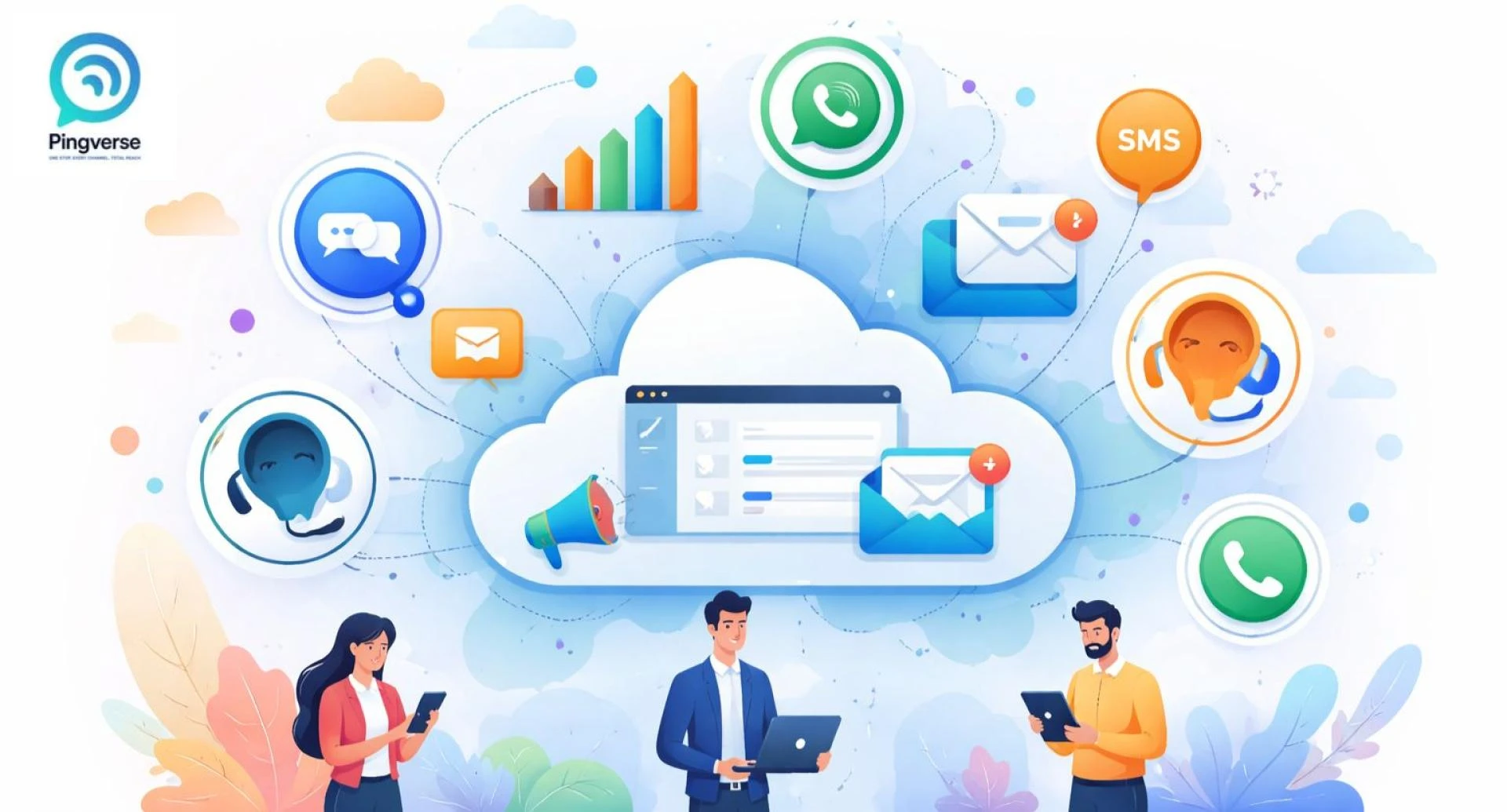
That's where Pingverse comes in. Built for Indian businesses that are serious about customer communication, Pingverse brings enterprise WhatsApp messaging, omnichannel support, and CPaaS capabilities under one roof - so you can focus on growing, not just managing.
Ready to bring all your conversations into one place? Check out Pingverse.
FAQ
Q: What is a WhatsApp omnichannel messaging platform?
It's a system that lets businesses manage WhatsApp along with other messaging channels (like SMS, email, or Instagram) from a single dashboard. Everything in one place, zero chaos.
Q: Is WhatsApp Business API suitable for large enterprises in India?
Absolutely. The WhatsApp Business API is built for scale - it supports bulk messaging, automation, CRM integration, and multi-agent access. It's what separates enterprise WhatsApp messaging from the basic app.
Q: What does a CPaaS platform do for my business?
A CPaaS platform gives you the APIs and tools to embed messaging (WhatsApp, SMS, voice) directly into your apps and workflows - without building the infrastructure yourself. Think of it as plug-and-play communication for businesses.
Q: How is a unified messaging solution different from just using WhatsApp Business?
WhatsApp Business is great for small teams. A unified messaging solution connects WhatsApp with all your other channels, gives multiple agents access, adds automation, and gives you analytics - everything a growing business needs to scale communication properly.






















Sign in to leave a comment.