

Winter may feel refreshing, but it’s also the season when dandruff and itchy scalp become more common. The cold wind outside and dry indoor heating together strip moisture from your scalp, leading to flakiness, irritation, and even seasonal hair fall. According to Dr. Asma Parveen, a leading skin doctor in Lucknow with extensive experience in scalp and hair disorders, maintaining scalp hydration and choosing the right care routine can significantly reduce winter dandruff.
This guide explains why dandruff worsens in winter and how you can prevent it with dermatologist-approved methods.
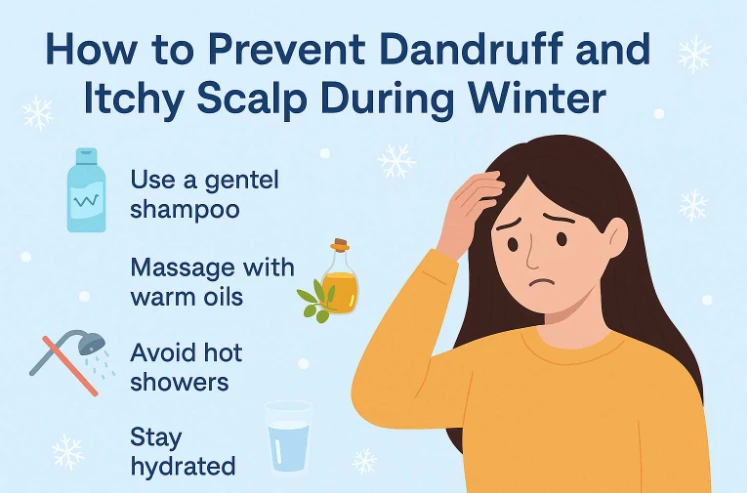
Why Does Dandruff Get Worse in Winter?
Several winter-specific factors trigger scalp dryness and flaking:
1. Low Humidity
Dry winter air pulls moisture from the scalp, leaving it tight, itchy, and flaky.
2. Hot Showers
Very hot water strips natural oils, damaging the scalp barrier.
3. Indoor Heaters
Heaters reduce indoor humidity, worsening dryness and irritation.
4. Harsh Hair Products
Shampoos with sulphates or strong fragrances can inflame sensitive winter skin.
5. Poor Hydration & Nutrition
Not drinking enough water or eating nutrient-poor meals weakens the scalp barrier and encourages dandruff.
Symptoms You Should Not Ignore
- White or yellow flakes
- Persistent itching
- Red or sensitive scalp
- Flaking around the hairline
- Seasonal hair shedding due to weakened roots
If symptoms persist, a quick evaluation from a skin doctor in Lucknow helps identify whether it’s simple dandruff or conditions like seborrheic dermatitis or psoriasis.
Dermatologist-Approved Remedies for Winter Dandruff
1. Switch to a Moisturising Anti-Dandruff Shampoo
Look for ingredients such as:
- Zinc Pyrithione
- Ketoconazole
- Salicylic Acid
- Tea Tree Oil
These soothe flakes without over-drying your scalp.
2. Massage with Warm Oils
Warm coconut, almond, or olive oil restores scalp moisture and improves blood circulation. Massage gently and wash after 30–45 minutes.
3. Avoid Over-Washing
Wash your hair 2–3 times a week with lukewarm water. Frequent washing strips essential oils.
4. Hydrate Your Body & Environment
Drink 2–2.5 litres of water daily. Use a humidifier at home to maintain moisture levels.
5. Eat a Scalp-Friendly Winter Diet
Include:
- Nuts & flaxseeds (Omega-3s)
- Eggs, lentils (Protein & Biotin)
- Spinach, amla (Vitamin C & Iron)
A nutritious diet supports healthy scalp function.
6. Don’t Scratch Your Scalp
Scratching worsens inflammation and can trigger hair fall. Instead, use soothing serums recommended by your dermatologist.
7. Protect Your Scalp Outdoors
Cold wind intensifies flaking. Wear a soft scarf or cap during morning and evening outings.
When to Consult a Specialist
If dandruff doesn’t improve within 2–4 weeks, it may indicate:
- Seborrheic Dermatitis
- Scalp Psoriasis
- Fungal Infections
An experienced skin doctor in Lucknow, such as Dr. Asma Parveen at The Velvet Skin Centre, Indira Nagar can diagnose the exact cause and provide targeted treatments including medicated shampoos, prescription lotions, scalp exfoliation, or supportive supplements.
Final Thoughts
Winter dandruff is common, but with the right care, it’s completely manageable. Hydration, gentle products, and timely intervention help protect both scalp health and hair density. For long-term relief, expert guidance ensures faster and more visible improvement.
Address:23, Amrapali Market, B Block, Indira Nagar, Lucknow
Phone: +91–8002558860






























Sign in to leave a comment.