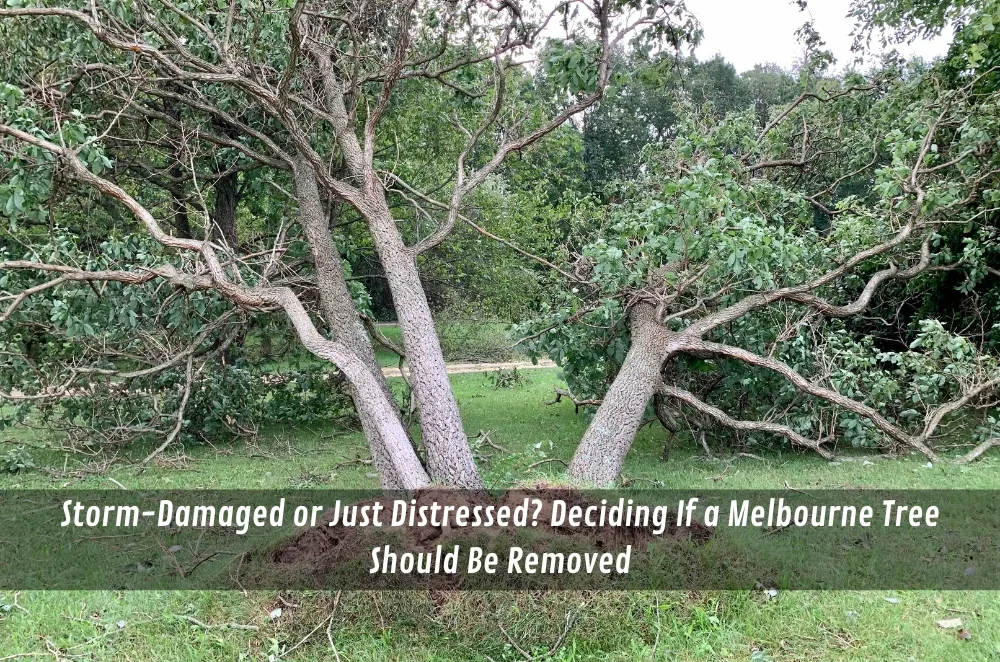

Melbourne’s streets and backyards are lined with red gums, plane trees and liquidambars planted decades ago when block sizes were generous and weather extremes milder. Fast-forward to 2026 and those same trunks now lean over extensions, solar panels and neighbours’ fences. After every summer storm, calls spike for arborists to assess whether a tree is a stubborn survivor worth saving or a hazard waiting to happen. The decision is rarely clear-cut, yet delaying it can escalate both risk and cost.
Reading the Warning Signs in Your Backyard
Most homeowners notice the obvious red flags – a split trunk after high winds, a branch resting on roof tiles – but subtler cues often appear first.
Early indications include:
- Canopy thinning on one side only
- New cracks around the base that widen after rain
- Fine roots surfacing in a sudden circle, hinting at root plate movement
If one or more of these show up, an on-site inspection by specialists in expert local tree removal services is the fastest way to confirm whether corrective pruning, cabling or full removal is warranted. A qualified arborist will factor in species-specific decay patterns, past pruning history and any construction within the critical root zone before recommending next steps.
Homeowners sometimes rely on “healthy-looking leaves” as proof a tree is sound. Unfortunately, many species continue producing foliage long after internal rot has hollowed the heartwood. Trust the structural indicators, not the greenery.
When Removal Becomes the Safer Call
There is a temptation to keep trimming, bracing and hoping for the best – especially when a mature jacaranda shades the living room perfectly each October. Yet several scenarios tip the balance towards removal:
First, structural failure that cannot be stabilised. If a primary union has sheared or the root plate is lifting, mechanical support buys only limited time. Second, repeated canopy reduction. Trees that have endured two or three heavy lops often respond with weakly attached epicormic growth. Each new sprout becomes a potential projectile the next windy afternoon. Third, conflicts with built assets. Townhouse redevelopments close to boundary lines leave little safe clearance for trunks already in the two-metre girth club.
For broader context on circumstances that justify removal over remedial work, see this discussion of safe tree removal solutions. It unpacks real-world cases where holding on carried greater long-term risk than starting fresh with a new planting.
Cost is rarely the only driver
While removal can be more expensive upfront than pruning, the hidden expenses of repeated limb failures – emergency call-outs, cracked roofing, insurance excesses – soon eclipse a one-off felling cost. Factor in the mental load of watching every weather alert and the decision often settles itself.
Comparing Pruning, Bracing and Full Removal
The options below summarise what each approach involves and why residents typically choose one over the others.
| Approach | What it Involves | Impact on Tree Health | Common Reasons to Pick It |
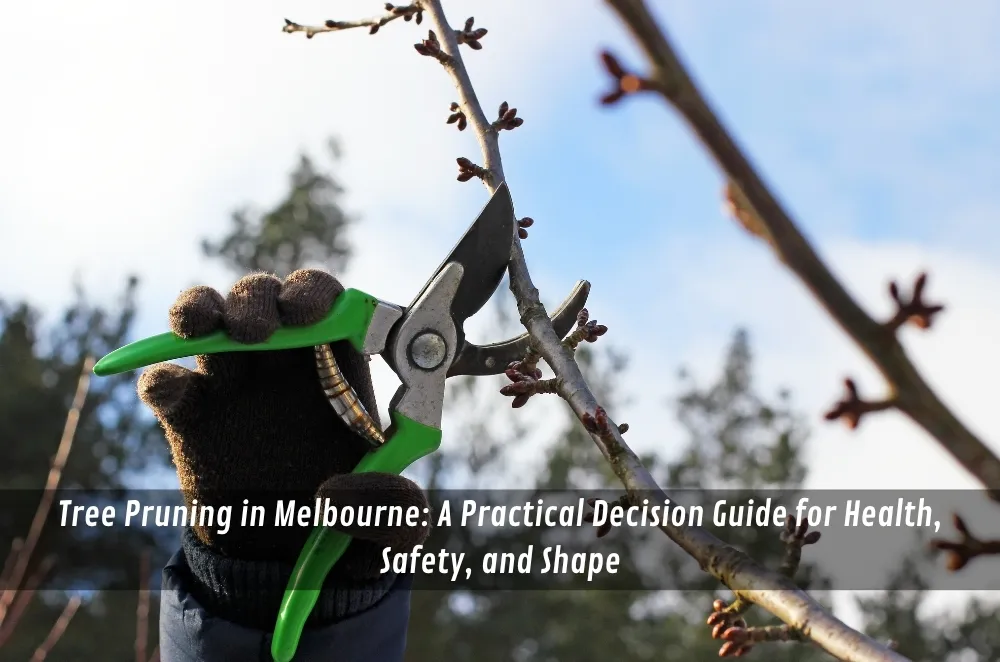
| Fine structural prune | Targeted cuts of small branches ≤50 mm | Low stress when cuts are correct | Improve light, clear service lines |
| Reduction prune | Removing up to 20 % of canopy spread | Moderate stress; recovery takes 1-2 seasons | Reduce weight on over-extended limbs |
| Cabling & bracing | Installing steel or synthetic supports | Minimal pruning; no canopy loss | Preserve heritage specimen with minor defects |
| Complete removal | Dismantling tree to ground and stump grinding | Tree lost; site ready for replanting | Irreparable structural issues or redevelopment |
An experienced arborist will usually run through these choices after inspection. Pay attention to their estimate of how many years a support system is likely to last – temporary fixes spanning only a storm season can add avoidable costs.
Permit Rules and On-Ground Realities
Even when danger feels obvious, felling a tree in metropolitan Melbourne often needs council approval. Overlay controls vary wildly between suburbs: some councils exempt dead or dangerous trees with a photo report; others require an arborist’s risk matrix and a replacement planting plan. Turnaround times can stretch from 48 hours to a month in peak storm season, so build that lag into project planning.
Safety during removal is equally regulated. Crews running chippers and saws must follow WorkSafe Victoria guidance on chainsaw safety, including spotter protocols and exclusion zones. Homeowners who attempt a DIY fell without adequate personal protective equipment may void insurance if damage occurs, and could be fined under OHS legislation if a neighbour or passer-by is hurt.
Urban density raises the stakes
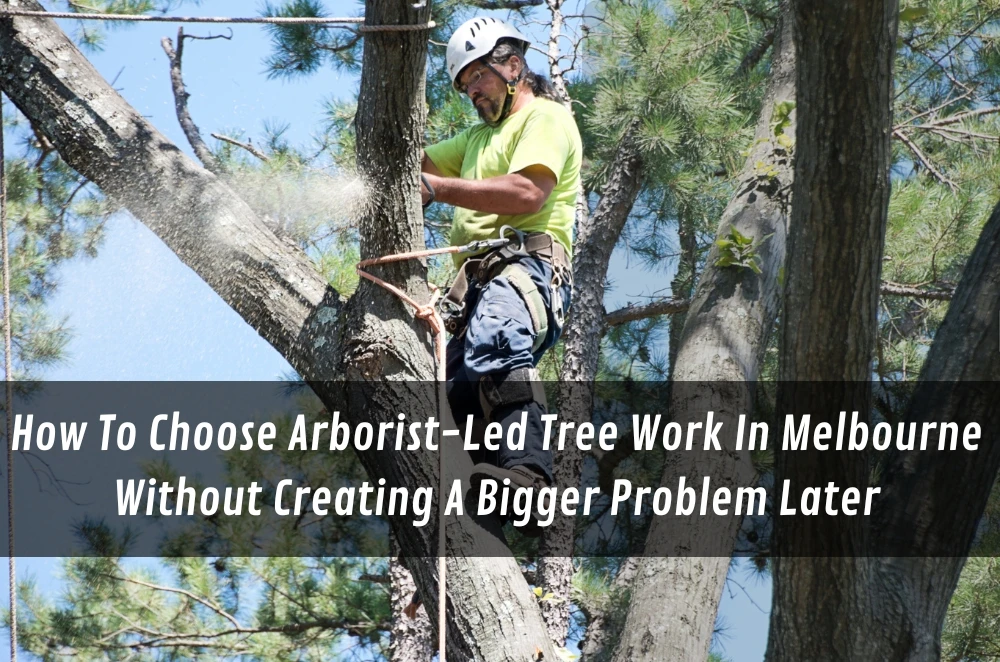
Inner-city block sizes leave scant room for drop zones. Modern arborists often dismantle the canopy in sections using rigging and lowering devices rather than a single directional notch. This method limits shock loading on branches still attached but increases labour hours, further underscoring the benefit of early assessment before a tree grows beyond safe working height.
The Balance Between Shade, Safety and Sentiment
Trees provide cooling, biodiversity and a sense of continuity in suburbs remade by infill housing. Yet living assets become liabilities when structure fails or space tightens. The smartest owners treat inspection reports the same way they read building inspections – a regular health check, not a panic response.
When professional advice shows a tipping point has been reached, moving decisively avoids compounding risk. A fresh advanced specimen planted three metres further from the house can restore shade within a few seasons, often with lower pruning demand. Households that budget for at-least-annual arborist checks catch small defects early, extending the life expectancy of the rest of the garden and sidestepping the financial shock of an unplanned removal down the track.
Melbourne’s canopy is a community asset, but so is public safety. Weigh up both before making the call this storm season.





























Sign in to leave a comment.