
If you, or someone you love, has ever been told about a heart blockage, chances are you were given one of two options: angioplasty or bypass surgery. The majority of us take these as the only two options. But here is the truth that rarely gets to patients soon enough:
There’s a third option. It’s called EECP. But what is EECP, and why are more doctors recommending it?
This story unpacks this lesser-known, non-invasive therapy that is providing heart patients the opportunity to heal without being admitted to the hospital, having surgery, or receiving stents.
What Is EECP?
EECP is the acronym for Enhanced External Counterpulsation.
It’s an outpatient, non-surgical treatment for patients who have heart disease, particularly those with:
- Blockages in coronary arteries
- Chest pain (angina)
- Prior bypass or stent
- Or are simply unable or refuse to have the operation
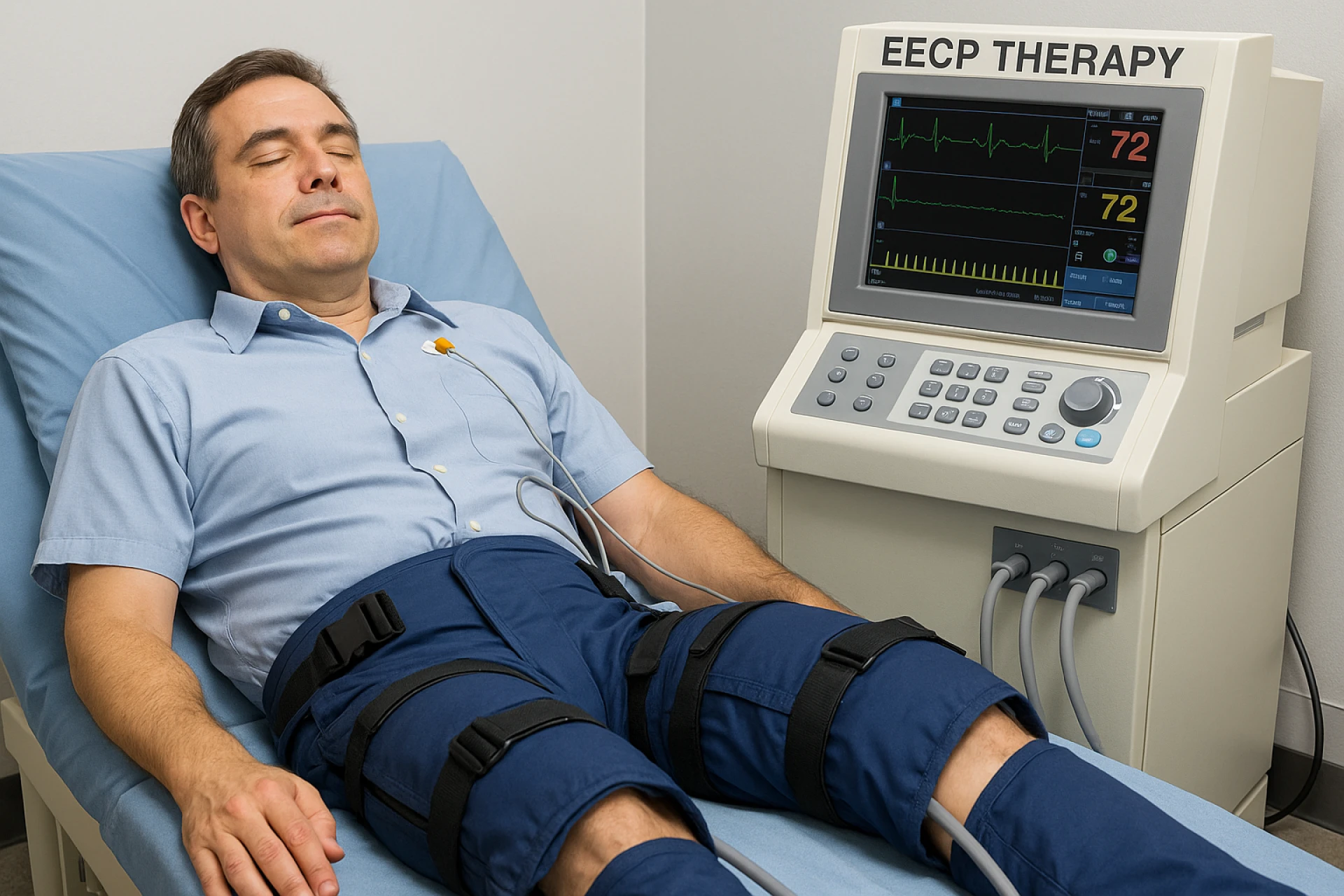
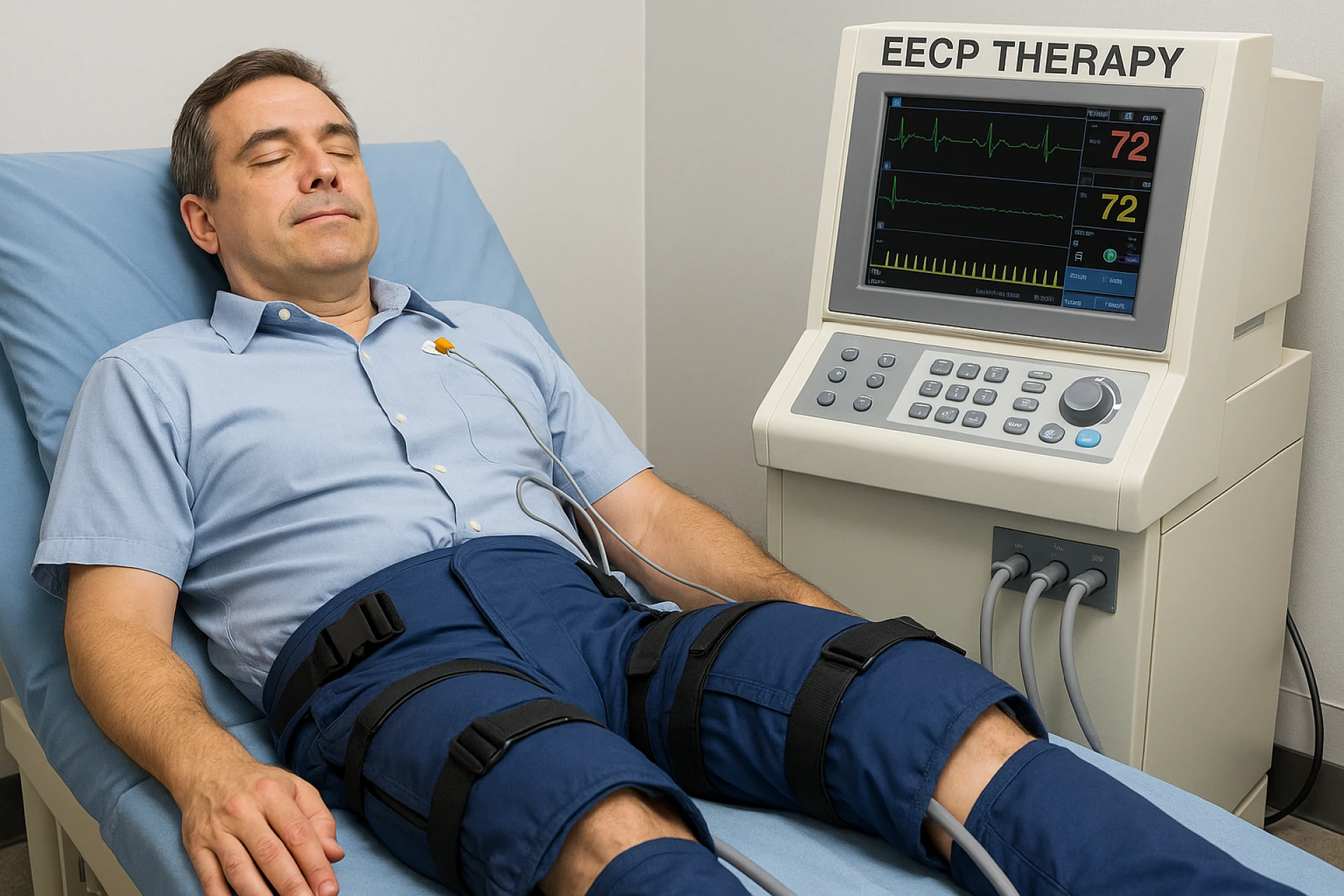
The therapy is conducted with the patient lying on a treatment bed and with the help of special cuffs (like large blood pressure cuffs), which are placed around the legs. These cuffs inflate and deflate in unison with your heartbeat to enhance blood flow to the heart, open collateral arteries, and increase oxygen delivery to the heart muscle.
The best part? No incisions, no hospital stay, no anesthesia.
How Does EECP Work?
What most patients want to know is — how does something happening on my legs affect my heart? Here’s a simplified explanation:
When your heart is at rest between beats (diastole), the EECP cuffs are inflated, pushing blood from your lower body back to your heart. When your heart beats, it contracts (a process called systole), and the cuffs quickly deflate, lessening the work your heart has to do to pump. This mechanical help, in turn, increases the flow of blood to areas of the body not receiving enough oxygen. The body eventually grows new blood vessels (collateral circulation) — similar to building new roads around a traffic jam.
It is like a natural bypass.
Why Is EECP Getting More Popular in India?
In India, we are noticing an emerging trend of heart disease in individuals below 50 years, and quite often without traditional risk factors. Many of these patients:
- Have multiple blockages
- Can’t afford expensive surgeries
- Have diabetes, obesity, or are highly stressed
- Want to eliminate surgery for age or lifestyle reasons
It is really a low-risk, low-cost way to help people, revise their disease course, which people have been struggling with for many years, if combined with an adequate dietary approach, walking, stress management, and then following up properly.
Now, cities such as Delhi, Gurgaon, Pune, and Bangalore have EECP centres in hospitals and integrative heart care clinics like SAAOL, where it is being used as part of a comprehensive non-invasive treatment.
Who Is an Ideal Candidate for EECP?
You may benefit from EECP if:
- You suffer from chronic angina or shortness of breath
- You have already had bypass surgery or angioplasty, but the symptoms recur
- You have a low EF (ejection fraction), and feel tired very quickly
- Another surgery down and out. You don't qualify for another surgery
EECP is also recommended by physicians for heart failure patients to retrain the circulation system and regain stamina.
EECP vs Bypass or Angioplasty: Which is better?
Let's make this clear - EECP is not an emergency therapy. If a patient is in the midst of a heart attack, angioplasty or surgery is required right away.
But for stable patients, especially those already in chronic care, EECP is frequently:
- Safer (non-invasive, no anesthesia)
- Cost-effective
- No downtime, you just walk in and out each day
- It is also efficacious for symptoms (80–85% mention decreased angina)
Stenting helps one blockage, but EECP helps the entire circulation and is useful in case of large blockages or several blockages.
What Are the Side Effects of Risks of EECP?
EECP carries few, if any, side effects.
Most patients experience:
- Mild leg soreness after sessions
- Sometimes, skin bruising occurs in the first few days
- A sense of temporary tiredness (because it’s like a passive workout)
But there are no incisions, no threads, and no hospital risks like infection, bleeding, or anesthesia reactions. It’s safe even for senior citizens, people with diabetes, and those taking blood thinners.
What Does the Science Say About EECP?
Globally, EECP is:
- US FDA-approved
- Backed by multiple clinical studies
- Approved on a case-by-case basis by the European Society of Cardiology
Key research highlights:
- Decreases angina by increasing blood supply to coronary circulation.
- Enhances vitality and endurance
- EECP has been demonstrated to increase ejection fraction in patients with heart failure.
- Effects may persist from 2 to 5 years when lifestyle changes are also involved
How Much Does EECP Cost in India?
The price varies somewhat depending on the city and the team, but the average is:
Per session: ₹2,500–₹4,000
It's still cheaper than the alternative, which is surgery or daily drugs for the rest of your life.
Final Word:
We hear the words “heart blockage” and think: hospital, surgery, fear. But now that you know what EECP is, perhaps that fear can be put aside, at least for now. If your doctor tells you about a third possibility — something that’s safe, tested, and noninvasive — well, consider asking, “Could this be something that works for me?”
You’ve heard of bypass. You’ve heard of stents.
So, now, let your heart know what is EECP.


























Sign in to leave a comment.