

What zero trust means in plain language
Zero trust is a cybersecurity approach built on a simple idea: no user, device, application, or network flow should be trusted automatically, even if it sits inside the traditional corporate perimeter. In older security models, being “inside” the network often came with broad implicit trust. Zero trust challenges that assumption. It treats every access request as something that must be verified, evaluated, and limited according to context.
That does not mean an organization trusts nobody in a human sense. It means systems are designed so that trust is not granted by default. Identity, device health, location, behavior, workload sensitivity, and session risk all matter. Access is narrowed to what is needed, monitored continuously, and re-evaluated as conditions change.
The phrase is often summarized as “never trust, always verify,” but that slogan can be too simplistic if taken literally. In practice, zero trust is less about suspicion for its own sake and more about disciplined verification, least-privilege access, segmentation, strong visibility, and fast response. A user may be authenticated successfully in the morning and still face additional checks later if their device posture changes, if they attempt to reach a sensitive system, or if behavior looks unusual.
For readers who want a broader strategic framing, WriteUpCafe has also covered Zero Trust Security Model Explained: A Comprehensive Guide for 2026 and Top 9 Zero Trust Security Model Principles Explained. Those pieces complement this article by focusing on implementation principles and the 2026 operating environment.
Why zero trust became so important
Zero trust gained momentum because the perimeter-based model became less reliable. Employees work from home, on the road, and across third-party environments. Applications run in SaaS platforms, public cloud, private cloud, and hybrid infrastructure. Contractors, APIs, service accounts, browsers, mobile devices, and AI-enabled workflows all create new pathways to data. In that world, drawing a hard line around a single trusted network is no longer enough.
Attackers also adapted. Credential theft, session hijacking, ransomware, phishing, cloud misconfiguration abuse, and lateral movement techniques all exploit excess trust. If one account or endpoint is compromised, broad internal access can let an attacker move quietly from one system to another. Zero trust tries to reduce that blast radius by forcing more granular controls.
This is one reason current industry coverage increasingly connects zero trust to modern platforms rather than just office networks. Forbes explored that shift in Zero-Trust AI: The New Security Model For Enterprise LLMs, which highlights how enterprise AI use raises new questions about identity, data access, and policy enforcement. SiliconANGLE likewise examined how zero-trust architecture intersects with AI operations in How Zscaler and OpenAI turn zero-trust security into an AI accelerator.
The larger point is not that zero trust is a trend word. It is that organizations now operate in environments where identity and context matter more than location. The old shortcut of “inside equals safe” does not hold up well against present-day threats and business realities.
The core principles behind zero trust
Different vendors and frameworks describe zero trust in slightly different language, but the underlying themes are remarkably consistent. A practical zero-trust program usually includes the following principles.
- Verify explicitly. Decisions should rely on strong identity signals, device posture, workload context, data sensitivity, network conditions, and observed behavior.
- Grant least-privilege access. Users and systems should receive only the minimum permissions needed for a specific task, for the shortest reasonable period.
- Assume breach. Security design should account for the possibility that an attacker may already have a foothold somewhere in the environment.
- Segment resources. Networks, applications, and workloads should be isolated so a compromise in one area does not automatically expose others.
- Monitor continuously. Authentication is not a one-time event. Sessions, transactions, and policy conditions should be reviewed over time.
- Protect data directly. Security should travel with the data through classification, encryption, access control, and usage policy.
These principles sound straightforward, but they force meaningful operational changes. Identity systems must be stronger. Asset inventories must be more accurate. Logging and telemetry must improve. Application access must be redesigned. And leadership must accept that convenience-based shortcuts can create outsized risk.
How zero trust differs from traditional perimeter security
Traditional perimeter security assumed that most valuable systems lived inside a corporate network protected by firewalls, VPNs, and gateway controls. Once a user connected successfully, they were often treated as broadly trustworthy. Security still existed inside the network, of course, but internal traffic frequently faced fewer checks.
Zero trust changes the trust boundary. Instead of focusing mainly on whether traffic crosses the network edge, it asks whether a specific subject should access a specific resource under specific conditions. That distinction matters. A user on a managed laptop in a company office may still be blocked from a payroll database if they do not need it. A contractor on a healthy device may be allowed to reach one SaaS app but nothing else. An administrator may be required to step up with stronger authentication before performing a sensitive action.
In other words, zero trust is resource-centric and context-aware. Traditional perimeter models are often network-centric and location-biased. Most modern security programs blend both approaches to some degree, but the strategic direction is clear: more identity-based, policy-driven, and granular control.
The building blocks of a zero-trust architecture
Identity and access management
Identity is usually the starting point. Organizations need reliable user directories, strong authentication, role design, lifecycle management, and controls for privileged access. Multifactor authentication is often treated as the minimum baseline, not the finish line. Risk-based access decisions may also consider impossible travel, anomalous behavior, new devices, and sign-in patterns.
Service accounts and machine identities matter too. Many breaches involve non-human credentials that are overprivileged, poorly rotated, or insufficiently monitored. A mature zero-trust strategy extends beyond employees to applications, bots, APIs, and workloads.
Device trust and endpoint posture
Zero trust cares not just about who is asking for access, but from what device. Is the operating system patched? Is endpoint protection active? Is disk encryption enabled? Is the browser managed? Has the device been jailbroken or rooted? Is it corporate-owned or bring-your-own?
These checks can determine whether access is allowed, denied, or restricted. A healthy managed device may receive normal access. An unmanaged device may be limited to browser-only sessions, read-only activity, or low-sensitivity resources. A device with known risk signals may be blocked entirely until remediated.
Browser security is becoming especially important as more work happens in SaaS applications. CSOonline addressed this angle in Hardening browser security with zero-trust controls, underscoring that the browser itself is now a major control point for enterprise access.
Application and workload segmentation
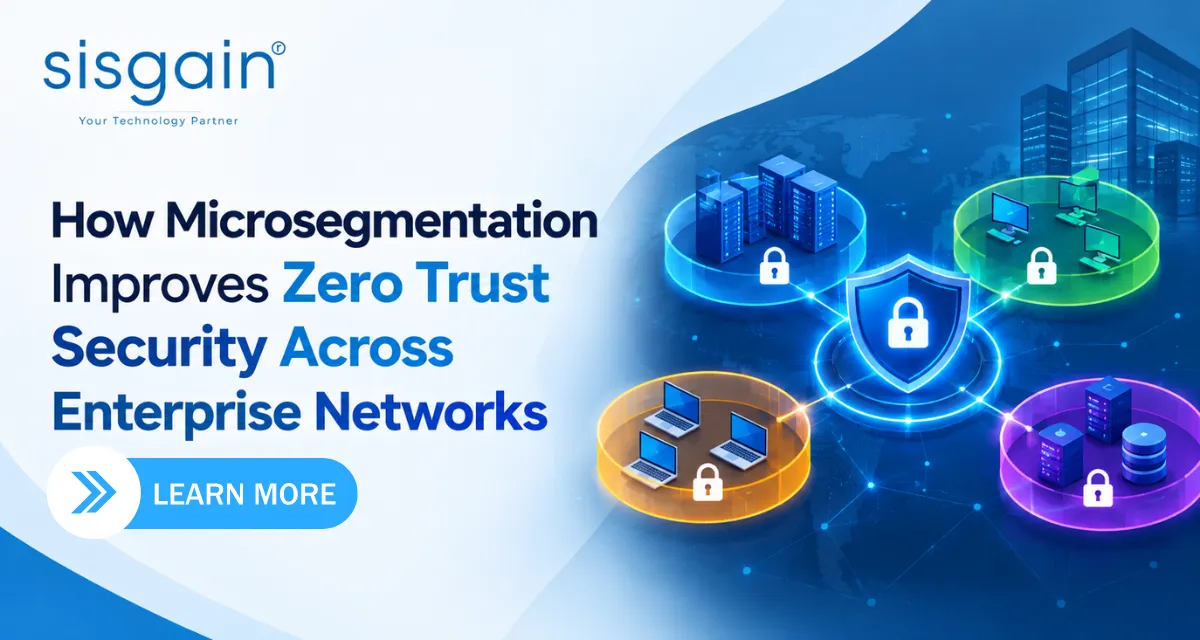
Segmentation limits lateral movement. Instead of placing many systems on a flat network where compromise can spread, zero trust encourages finer boundaries between applications, workloads, and environments. Production systems should be separated from development. Sensitive databases should not be broadly reachable. Administrative paths should be isolated and tightly controlled.
In cloud and hybrid environments, segmentation often happens through identity-aware proxies, software-defined perimeters, microsegmentation rules, workload identities, and policy engines rather than through legacy VLAN design alone.
Data protection
Data is the asset most organizations ultimately care about. Zero trust supports data classification, encryption, rights management, tokenization where appropriate, and policies that align access with sensitivity. It is one thing to protect a network segment; it is another to know which documents, records, prompts, code repositories, or customer files require the strongest controls.
Data-aware policies can prevent users from downloading sensitive information to unmanaged devices, sharing files externally without approval, or moving regulated content into unsanctioned tools.
Visibility, analytics, and response
Zero trust depends on telemetry. Security teams need logs from identity providers, endpoints, cloud platforms, applications, DNS, network flows, and data systems. They also need the ability to correlate those signals. A suspicious login by itself may not justify strong action. But a suspicious login combined with a new device, unusual data access, and privilege escalation is a different story.
Continuous monitoring supports adaptive controls. Sessions can be interrupted. Tokens can be revoked. Access can be downgraded. Devices can be quarantined. This is where zero trust moves from static policy to living defense.
What zero trust is not
Zero trust is often misunderstood, so it helps to clear away a few myths.
- It is not a single product. Vendors sell tools that support zero trust, but no appliance or platform creates zero trust by itself.
- It is not only for large enterprises. Mid-sized organizations can adopt zero-trust principles incrementally, especially around identity, MFA, privileged access, and segmentation.
- It is not just MFA. Multifactor authentication is essential, but zero trust also involves authorization, device posture, telemetry, segmentation, and data controls.
- It is not a promise of perfect security. Zero trust reduces risk and blast radius; it does not eliminate breaches.
- It is not purely a network project. Security, identity, endpoint, cloud, application, compliance, and business teams all have roles to play.
WriteUpCafe readers interested in practical pitfalls should also review Common Mistakes in Zero Trust Security Model Explained, which examines where organizations frequently overestimate maturity or underinvest in basics.
A simple example of zero trust in action
Imagine an employee in finance wants to access a payment approval application. Under a traditional model, they might connect through a VPN and then move relatively freely across internal systems. Under zero trust, the process is more selective.
- The user signs in through a central identity provider.
- Multifactor authentication is required.
- The system checks whether the device is managed, patched, encrypted, and running approved security tools.
- Policy confirms the user belongs to the finance approval group.
- Access is granted only to the payment application, not to unrelated internal resources.
- If the user attempts a high-value transaction, step-up authentication may be triggered.
- If behavior changes sharply, such as a large data export from an unusual location, the session can be challenged or terminated.
Nothing in that example depends on blind faith in the network. The decision is based on identity, device posture, role, transaction sensitivity, and continuous evaluation.
Why least privilege matters so much
Least privilege sounds like common sense, yet it remains one of the hardest parts of zero trust. Over time, users accumulate access that once seemed justified but is no longer necessary. Teams share accounts. Temporary permissions become permanent. Service accounts are granted broad rights because no one wants an application to fail. Administrators keep standing privileges because it feels easier operationally.
Every one of those shortcuts expands attack surface. If an attacker compromises a user with excessive permissions, the consequences can be severe. If a service account has broad access to cloud resources, a single secret leak can open multiple systems. Least privilege is therefore not just an access-management slogan. It is a direct control on breach impact.
Successful organizations usually treat least privilege as an ongoing discipline. They review entitlements regularly, use just-in-time access for administrative tasks, separate duties where needed, and remove dormant privileges aggressively. This can be politically difficult because access removal often meets resistance. But zero trust without least privilege is mostly branding.
Zero trust and the challenge of continuous verification
One of the biggest conceptual shifts in zero trust is that verification does not end after login. A valid session at 9 a.m. does not guarantee safe behavior at 2 p.m. Credentials can be stolen after authentication. Devices can become noncompliant during a session. Users can move from low-risk to high-risk actions. Policies must be able to respond.
Continuous verification can include session risk scoring, token lifetime controls, re-authentication for sensitive actions, anomaly detection, and conditional access updates based on device or network state. The goal is not to harass users with endless prompts. It is to apply friction where risk justifies it and reduce friction where confidence is high.
This is also where user experience matters. If security teams design zero trust poorly, employees will look for workarounds. If they design it well, strong controls can be largely invisible during normal low-risk activity while still providing meaningful protection around sensitive resources.
How zero trust applies to cloud, SaaS, and remote work
Cloud adoption made zero trust more urgent because applications and data now live across many control planes. A company may use Microsoft 365, Google Workspace, Salesforce, AWS, Azure, GitHub, collaboration tools, HR platforms, and dozens of niche SaaS services. Employees may access all of them from home networks, hotels, mobile devices, and partner locations.
That environment rewards identity-centric security. Instead of funneling everything through a corporate network, organizations can apply conditional access at the application layer. They can verify the user, assess the device, check session context, and enforce data policies directly. Remote work is no longer an exception in need of a special tunnel; it is part of the normal operating model.
Zero trust also helps in mergers, acquisitions, and contractor scenarios. Rather than extending broad network trust to outside parties, organizations can expose only the exact applications and data needed, with strong logging and narrow permissions.
Zero trust in the age of AI
AI has added a new dimension to zero trust. Enterprise teams are using large language models, copilots, retrieval systems, and AI-powered automation for coding, support, search, document processing, and analytics. These tools can touch sensitive prompts, proprietary data, customer records, and internal knowledge bases. That raises questions familiar to zero-trust architects: who can access what, from where, under which conditions, and with what guardrails?
The Forbes article on zero-trust AI and the SiliconANGLE coverage of zero trust as an AI accelerator both point toward the same broad reality: AI systems do not remove the need for strong access control. They amplify it. If an AI assistant can retrieve sensitive files, invoke actions, or summarize regulated data, then identity, policy, segmentation, and monitoring become even more important.
Organizations should think carefully about:
- Which datasets AI tools can reach
- Which user groups can use which models
- How prompts and outputs are logged and governed
- Whether unmanaged devices can access AI-enabled workflows
- How service accounts and connectors are permissioned
- How sensitive data is filtered, masked, or restricted
Zero trust does not solve every AI governance problem, but it provides a strong control philosophy for reducing unnecessary exposure.
Common implementation mistakes
Many zero-trust projects disappoint because organizations try to do everything at once or focus too heavily on technology branding. Common mistakes include buying tools before defining access policies, treating MFA as the entire program, ignoring service accounts, failing to inventory sensitive data, and underestimating change management.
Another mistake is assuming that a VPN replacement automatically equals zero trust. Modern access platforms can be valuable, but if users still receive broad standing privileges, if devices are not assessed, or if data controls are weak, the organization may simply have a newer pipe rather than a true zero-trust posture.
A third mistake is neglecting operational ownership. Zero trust crosses many domains. Without clear governance, policies drift, exceptions multiply, and nobody knows who is responsible for reviewing access, device posture, segmentation rules, or telemetry quality.
For a deeper look at practical improvements, see Expert Tips for Zero Trust Security Model Explained. That article pairs well with this one for teams moving from concept to execution.
How to start a zero-trust program realistically
The best zero-trust roadmaps are phased. They begin with high-value gaps and build maturity over time rather than promising a giant transformation in one quarter.
1. Identify critical assets and business processes
Start by determining what matters most: crown-jewel applications, sensitive data stores, privileged administrative paths, regulated systems, and business-critical workflows. Zero trust works best when tied to real priorities rather than abstract architecture diagrams.
2. Strengthen identity foundations
Deploy strong MFA broadly, improve joiner-mover-leaver processes, reduce shared accounts, and review privileged access. If identity is weak, every later control becomes harder.
3. Evaluate device posture
Define what qualifies as a trusted device. Create policies for patching, encryption, endpoint protection, browser management, and mobile security. Then connect those signals to access decisions.
4. Reduce broad network access
Move away from flat access where possible. Expose applications individually, segment sensitive environments, and limit administrative pathways.
5. Apply least privilege and just-in-time access
Review entitlements, remove stale permissions, and introduce temporary elevation for high-risk tasks. This often yields significant risk reduction quickly.
6. Improve telemetry and response
Collect logs from identity, endpoint, cloud, and application layers. Make sure the security team can detect suspicious combinations of events and act quickly.
7. Expand to data-centric controls
Classify data, align access with sensitivity, and control sharing, download, and movement patterns. Data protection is where zero trust becomes materially visible to the business.
This phased approach is more credible than claiming an organization will “implement zero trust” as if it were a switch to flip.
How to measure progress
Zero trust maturity should be measured through outcomes, not slogans. Useful indicators can include:
- Percentage of users protected by phishing-resistant or strong MFA
- Coverage of managed and compliant devices
- Reduction in standing privileged access
- Number of critical applications behind identity-aware access controls
- Extent of segmentation for sensitive workloads
- Time to revoke risky sessions or compromised credentials
- Data classification coverage and policy enforcement rates
- Reduction in successful lateral movement opportunities
Metrics should show whether the organization is actually reducing implicit trust and limiting blast radius. If dashboards look impressive but broad access still exists everywhere, the program is not mature.
What leaders should remember
Executives sometimes hear zero trust as a purely technical initiative. That is a mistake. It is also a governance and operating-model decision. Leaders must support tighter access discipline, fund identity and visibility improvements, accept some redesign of legacy processes, and back teams when convenience conflicts with security.
At the same time, leaders should avoid treating zero trust as a silver bullet. It works best when paired with secure software practices, user awareness, incident response readiness, resilience planning, and sound third-party risk management. It is an organizing framework for reducing unnecessary trust, not a replacement for the rest of cybersecurity.
Zero trust is strongest when it is translated from a slogan into daily operational decisions about identity, devices, applications, data, and response.
Final takeaway
Zero trust security is best understood as a practical response to modern complexity. Users work anywhere. Applications run everywhere. Attackers exploit overtrust wherever they find it. In that environment, organizations need a model that verifies explicitly, grants minimal access, monitors continuously, and assumes that compromise is possible.
If you remember only one thing, let it be this: zero trust does not ask whether someone is “inside” or “outside.” It asks whether this specific request to this specific resource should be allowed right now under these exact conditions. That shift in thinking is why zero trust remains central to modern security strategy in 2026.
Readers looking for a current-era companion piece can also explore Zero Trust Security Model Explained: Essentials for 2026, which focuses on the latest priorities shaping adoption this year.

























Sign in to leave a comment.