🧭 Introduction
In the age of rapid urbanization and growing environmental awareness, managing wastewater has become not just a necessity but a responsibility. Whether it’s a residential apartment, a commercial complex, a school, a hospital, or an industrial zone — untreated sewage poses serious health and environmental risks.
That’s where Sewage Treatment Plants (STPs) come in.
This article offers a deep dive into what a sewage treatment plant is, how it works, and why it’s an essential solution for eco-friendly living and sustainable infrastructure in India.
💧 What Is a Sewage Treatment Plant?
A Sewage Treatment Plant (STP) is an engineered system that removes contaminants from domestic and commercial wastewater. The primary goal of an STP is to make wastewater clean and safe enough to be either reused or released into the environment without causing harm.
STPs are designed to handle black water (from toilets) and grey water (from kitchens, bathrooms, and washing machines). By systematically treating this water, these plants prevent the spread of diseases, reduce water pollution, and promote water reuse.
🔬 How Does a Sewage Treatment Plant Work?
A modern sewage treatment plant follows a multi-stage process. Let’s break it down step-by-step:
1. Inlet Chamber (Preliminary Treatment)
- Raw sewage enters the plant and is screened for large particles like plastics, cloth, sand, and grit.
- This step prevents blockages in pipes and damage to mechanical equipment.
2. Primary Treatment (Sedimentation)
- The wastewater enters a sedimentation tank.
- Heavier solids settle at the bottom as sludge, while oils and grease float to the surface.
- About 60% of suspended solids are removed at this stage.
3. Secondary Treatment (Biological Process)
- This stage uses natural bacteria to digest organic matter.
- Most plants use the Activated Sludge Process, where air is blown into aeration tanks to support aerobic bacteria.
- These microbes consume harmful pollutants, converting them into harmless byproducts.
- The water is then sent to a secondary clarifier, where remaining sludge settles out.
4. Tertiary Treatment (Polishing Stage)
- The nearly-clean water goes through additional filters (like sand, carbon, or membrane filters).
- Disinfection methods like chlorination or UV treatment are applied.
- The result is clear, odorless, non-toxic water ready for reuse.
5. Sludge Treatment
- The leftover sludge from earlier stages is treated separately.
- It can be dried, composted, or used to produce biogas through anaerobic digestion.
🌏 Why STPs Are Essential in 2025
1. Environmental Protection
Untreated sewage contaminates rivers, lakes, and groundwater. STPs prevent pollution, protecting aquatic life and natural ecosystems.
2. Public Health
Diseases like cholera, typhoid, and dysentery spread through contaminated water. By treating sewage, STPs safeguard communities from waterborne infections.
3. Water Conservation
Treated water from STPs can be reused for:
- Toilet flushing
- Gardening
- Landscaping
- Cooling towers
- This reduces dependence on freshwater sources, which are already under stress.
4. Legal Compliance
Under the Central and State Pollution Control Boards, it is mandatory for:
- Apartment complexes with over 20 units
- Educational institutions
- Hospitals
- Commercial buildings
- Industries
- to install and maintain functioning sewage treatment systems.
🏙️ Applications of STPs Across Sectors
🔹 Apartments & Gated Communities
STPs help manage waste from hundreds of families. They offer water reuse for gardens and flushing, reducing the monthly water bill and ensuring regulatory compliance.
🔹 Schools & Colleges
Institutions with large student populations generate substantial wastewater. Installing STPs helps manage waste responsibly while also serving as a learning model for sustainability.
🔹 Hospitals
Hospital wastewater contains pathogens and harmful chemicals. A specialized STP ensures that toxic waste is neutralized before discharge, protecting both humans and the environment.
🔹 Resorts & Hotels
Tourism properties located near beaches, forests, or hills must preserve the ecosystem. Compact STPs treat sewage without creating noise or odor, ensuring a pleasant guest experience.
🔹 Industrial Estates
Factories produce wastewater with oils, metals, and toxins. STPs in these environments often include pre-treatment and chemical neutralization steps to meet discharge standards.
🔹 Office Buildings & IT Parks
With thousands of employees, office parks generate a mix of sewage and greywater. Installing STPs helps in green certification, cost savings, and brand reputation.
🔄 Future-Ready Technologies in Sewage Treatment
In 2025, innovative STPs are moving away from traditional, power-hungry systems. Some key trends include:
- Bio STPs: These systems mimic the human digestive system and work without electricity or chemicals.
- Membrane Bioreactors (MBR): Offer ultra-filtration for high-quality reuse.
- Decentralized STPs: Small plants for individual buildings or zones, reducing infrastructure costs.
- Smart STPs: IoT-enabled systems allow remote monitoring, automatic pH checks, and real-time alerts.
🌱 Benefits of Installing a Sewage Treatment Plant
Benefit
Description
✅ Cost Saving
Reuse water for flushing and gardening, reducing water bills.
✅ Zero Pollution
Prevents harmful effluents from entering drains, lakes, or rivers.
✅ Eco-Friendly
Protects biodiversity and contributes to a greener planet.
✅ CPCB/SPCB Approved
Helps you comply with mandatory environmental norms.
✅ Sustainable Branding
Enhances your property’s image among customers and investors.
🛠️ How to Choose the Right STP?
When choosing a sewage treatment plant, consider the following:
- Capacity: Based on population or number of users.
- Technology: Activated Sludge Process, MBBR, SBR, or Bio STP.
- Footprint: Some systems are underground or modular to save space.
- Operation Cost: Consider power, chemicals, and maintenance.
- Water Quality Output: Must meet CPCB discharge standards.
- Odor Control: Essential for residential and public spaces.
🤝 Let’s Build a Greener India, Together
Whether you're building a new facility or upgrading an old one, investing in a sewage treatment plant is a powerful act of environmental stewardship. It ensures compliance, saves water, and supports a cleaner tomorrow.
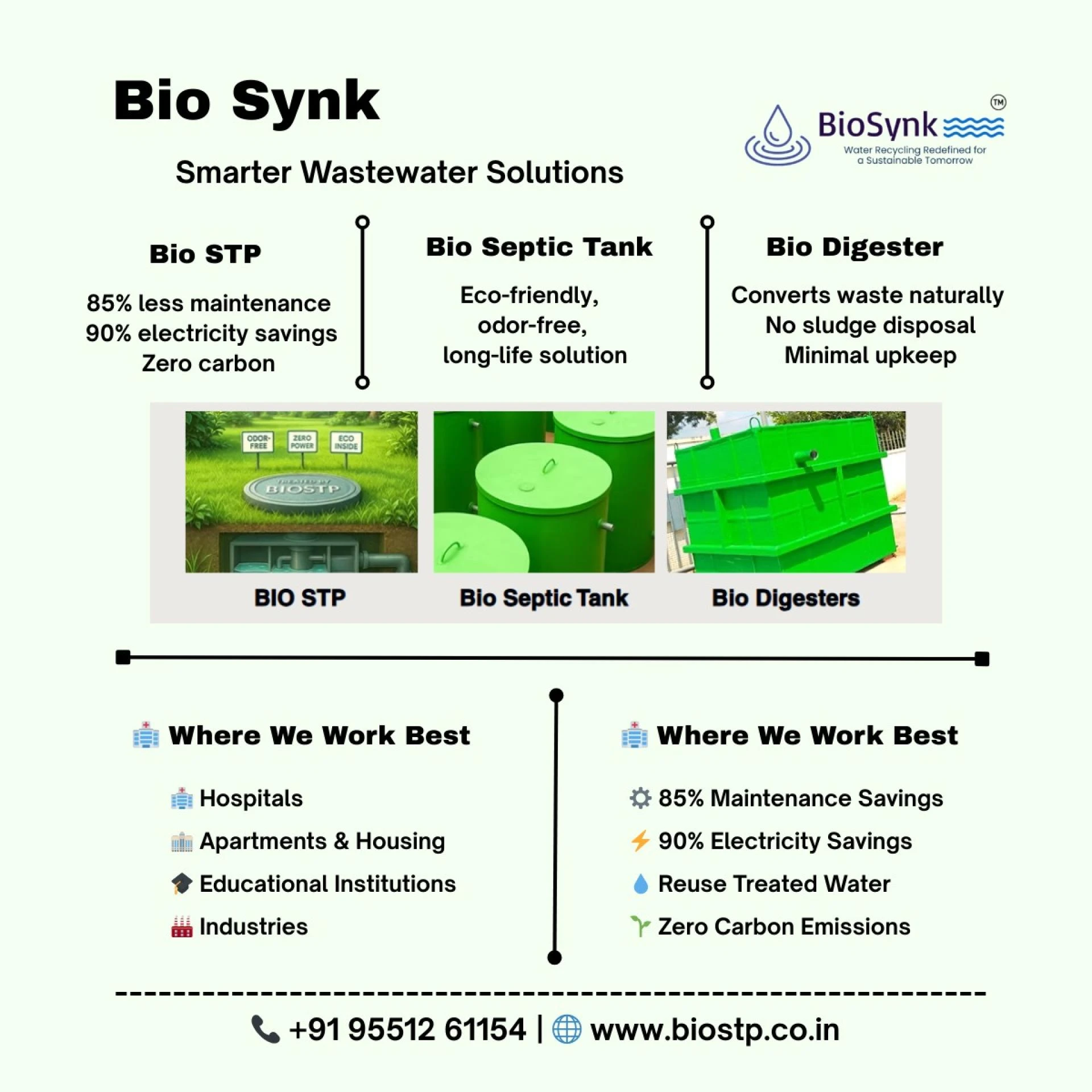
If you’re looking for a compact, eco-friendly, and cost-effective solution—there are advanced Bio STPs available today that offer silent operation, zero electricity usage, and reusable water with minimal maintenance.
📝 Final Words
Sewage treatment isn’t just a technical function — it’s a civic duty. From sprawling metro cities to remote towns, every drop of water treated makes a difference. By understanding how STPs work and implementing the right solution, we take a step toward a self-sufficient, sustainable, and Swachh Bharat.
Need help selecting the right STP for your project?
We provide custom solutions for apartments, hospitals, schools, resorts, and more. Let’s design your future-ready, eco-compliant system — contact us today!


















Sign in to leave a comment.