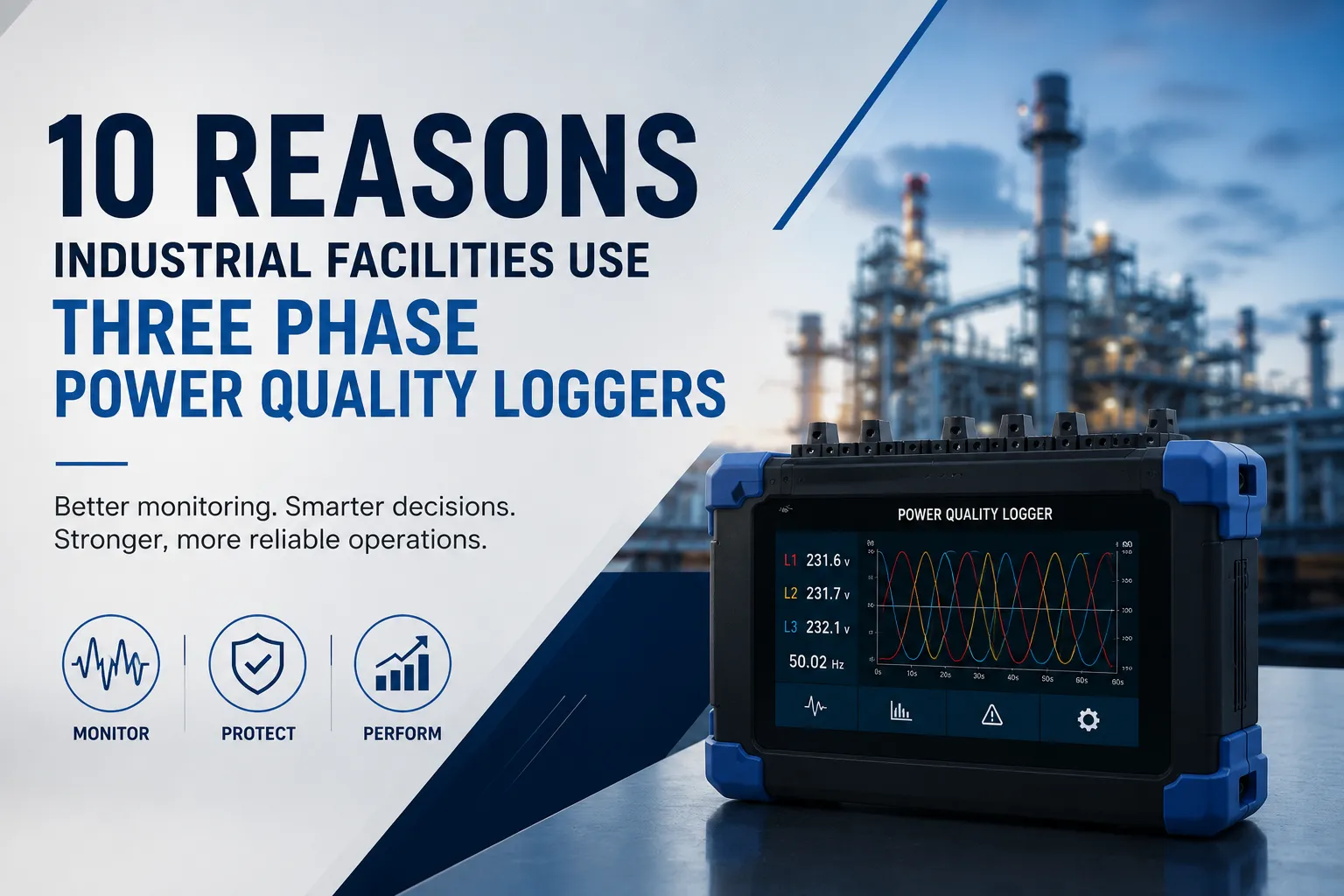
Modern industrial facilities rely on a stable electrical supply to keep operations running efficiently. However, power quality issues such as voltage sags, harmonics, transients, and phase imbalance can reduce equipment performance, increase energy costs, and lead to unexpected downtime.
A Three Phase Power Quality Logger continuously records electrical data, helping engineers detect hidden issues, investigate faults, and make informed maintenance decisions. As electrical systems become more complex, continuous monitoring has become essential for improving reliability and protecting critical assets.
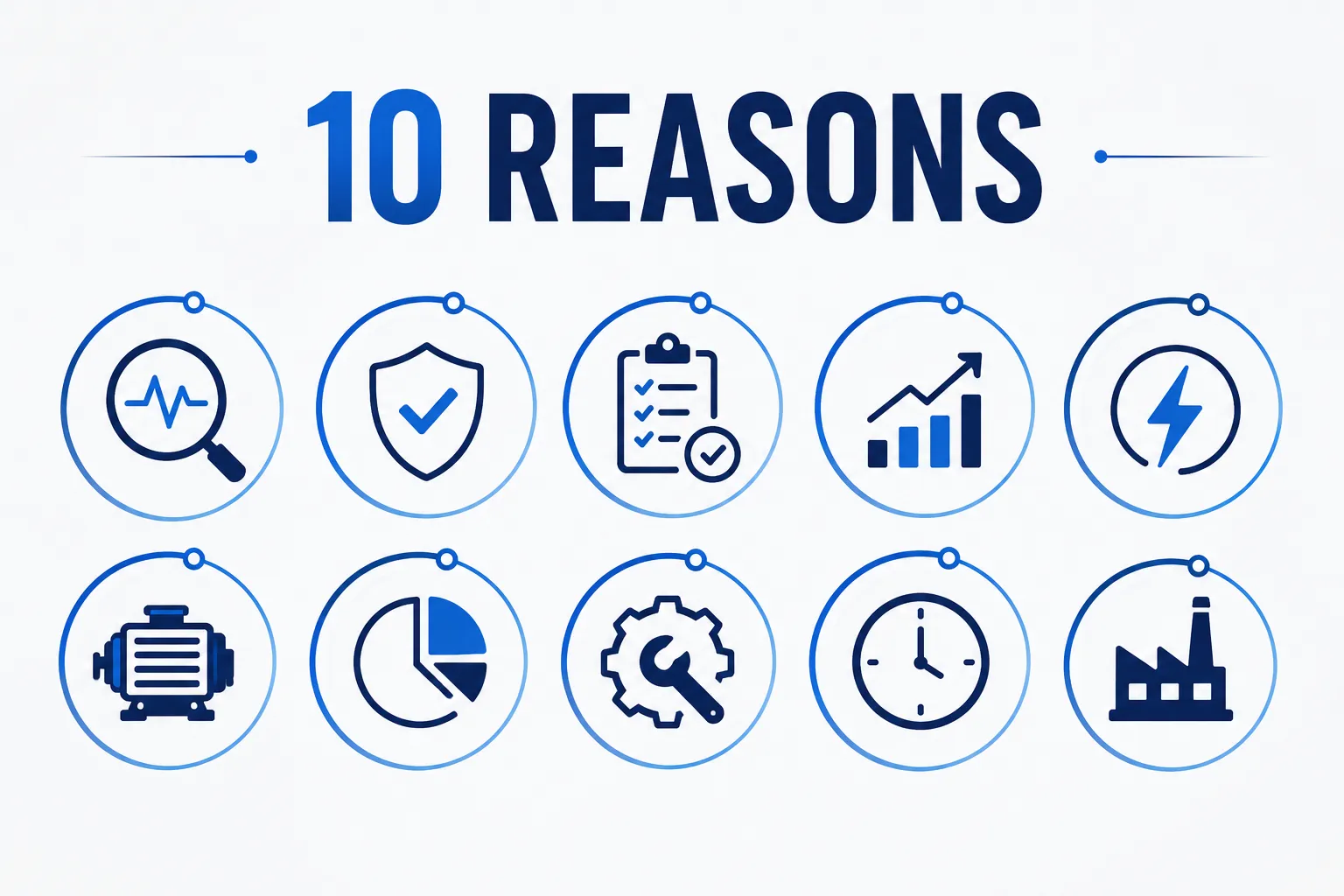
Here are 10 reasons why industrial facilities rely on a Three Phase Power Quality Logger.
Why Continuous Power Quality Monitoring Matters
Industrial electrical systems rarely operate under the same conditions all day. Production schedules change, machinery starts and stops, and electrical loads constantly fluctuate. These variations can create issues such as voltage imbalance, harmonics, and transient events that are difficult to capture during a short inspection.
A Three Phase Power Quality Logger records electrical data over extended periods, allowing maintenance teams to identify recurring patterns and investigate intermittent faults. Continuous monitoring also helps verify the performance of a 3 phase power quality system, making it easier to maintain stable operations and improve long-term electrical reliability.
1. Detects Hidden Electrical Problems Before They Escalate
Not every electrical problem causes an immediate equipment failure. Many issues develop gradually and remain unnoticed until they begin affecting production or damaging expensive assets.
A Three Phase Power Quality Logger continuously monitors voltage, current, harmonics, frequency, and other electrical parameters. This allows engineers to detect abnormal conditions such as voltage sags, phase imbalance, harmonic distortion, or switching transients before they become serious problems.
Early detection gives maintenance teams time to investigate the root cause, schedule repairs, and prevent costly breakdowns. Instead of reacting to failures, facilities can take corrective action before equipment reliability is affected.
2. Minimises Unplanned Equipment Downtime
Unexpected downtime is one of the biggest operational challenges for industrial facilities. A single electrical disturbance can stop production, delay deliveries, and increase maintenance costs.
Using a power quality logger allows engineers to review recorded electrical events whenever an unexpected shutdown occurs. Instead of guessing what caused the problem, they can analyse historical data and identify the exact conditions leading up to the fault.
Faster troubleshooting reduces repair time and helps prevent the same issue from happening again. Over time, continuous monitoring contributes to more reliable operations and improved equipment availability.
3. Supports Preventive Maintenance Programs
Preventive maintenance is more effective when decisions are based on actual operating conditions rather than fixed schedules.
A Power Quality Logger provides continuous electrical data that helps maintenance teams identify gradual changes in system performance. Trends such as increasing harmonics, unstable voltage, or changing load conditions can indicate developing equipment issues long before failure occurs.
Using this information, facilities can schedule maintenance at the right time, reduce unnecessary servicing, and improve the overall reliability of critical electrical assets.
4. Improves the Performance of a 3 Phase Power Quality System
A balanced 3 phase power quality system is essential for efficient industrial operations. When loads become uneven across phases, equipment may experience overheating, reduced efficiency, or premature wear.
Continuous monitoring helps engineers identify voltage imbalance, current imbalance, and load distribution problems that affect overall system performance.
With accurate electrical data, maintenance teams can rebalance loads, improve power quality, and optimise the performance of motors, transformers, and other critical equipment while reducing unnecessary energy losses.
5. Helps Meet Industry Compliance Requirements
Many industrial facilities are required to verify electrical performance during commissioning, troubleshooting, or compliance audits.
A Class A power quality logger provides highly accurate measurements that support detailed power quality investigations and compliance reporting. These instruments are designed to deliver consistent and reliable data, making them suitable for applications where measurement accuracy is essential.
Accurate records also make it easier to demonstrate system performance, investigate customer complaints, and validate improvements after maintenance or electrical upgrades.
6. Simplifies Electrical Fault Investigations
Finding the root cause of an electrical fault can be challenging, especially when problems occur only occasionally. Without recorded data, engineers often spend valuable time trying to reproduce the issue.
A power analyser with logging capabilities captures detailed electrical events as they happen. Engineers can review voltage changes, current variations, harmonics, and disturbances to understand exactly what caused the fault. This speeds up troubleshooting and helps implement long-term solutions.
7. Improves Energy Efficiency
Poor power quality often leads to higher energy consumption and unnecessary operating costs. Harmonics, low power factor, and voltage imbalance can reduce the efficiency of electrical equipment.
A Three Phase Power Quality Logger helps identify these issues by providing accurate, long-term monitoring data. Engineers can use this information to optimise system performance, improve power factor, and reduce avoidable energy losses. Better power quality often results in improved equipment efficiency and lower operating costs.
8. Protects Critical Industrial Equipment
Industrial facilities rely on motors, transformers, drives, PLCs, UPS systems, and other sensitive equipment to maintain production. Poor power quality can reduce the lifespan of these assets and increase maintenance requirements.
Continuous monitoring helps identify abnormal electrical conditions before they damage equipment. By addressing voltage disturbances and other power quality issues early, facilities can improve equipment reliability and extend asset life while reducing unexpected repair costs.
9. Provides Reliable Data for Better Decision-Making
Maintenance and investment decisions should be based on accurate information rather than assumptions. Historical electrical data provides valuable insights into how a system performs under different operating conditions.
A power quality logger allows engineers to compare trends, evaluate maintenance results, and identify recurring issues. These insights support better planning for equipment upgrades, electrical expansions, and long-term maintenance strategies while reducing unnecessary costs.
10. Suitable for a Wide Range of Industrial Applications
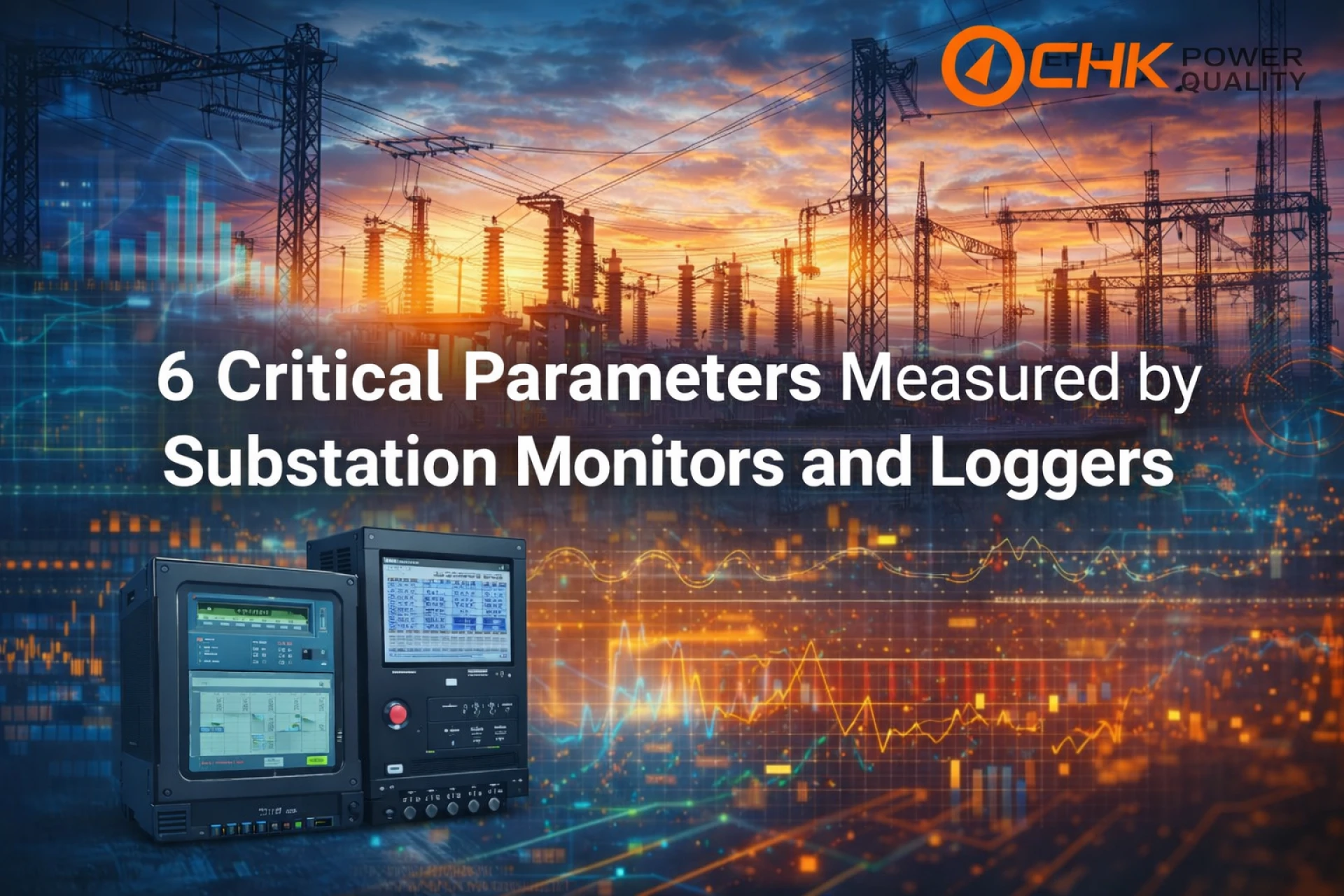
A Three Phase Power Quality Logger is used across many industries where reliable electrical performance is essential. Manufacturing facilities use it to reduce downtime, while utilities monitor distribution networks and substations to improve system reliability.
These instruments are also widely used in renewable energy projects, mining operations, commercial buildings, hospitals, water treatment plants, and data centres. Continuous monitoring provides the information needed to maintain safe, efficient, and reliable electrical systems in demanding environments.
How to Choose the Right Three Phase Power Quality Logger
Not all monitoring equipment offers the same performance or functionality. Choosing the right Three Phase Power Quality Logger depends on your application, monitoring requirements, and the level of measurement accuracy needed.
Look for features such as long-term data logging, waveform capture, harmonic analysis, event recording, and user-friendly reporting software. If compliance testing is required, selecting a Class A power quality logger ensures measurements meet recognised international standards.
Many organisations also prefer instruments that combine the capabilities of Power Quality Analysers and a power analyser in one device. This provides greater flexibility for troubleshooting, commissioning, and preventive maintenance while reducing the need for multiple instruments.
Working with an experienced power quality technology provider can also help ensure the selected solution matches your operational requirements and future monitoring needs.
Conclusion
Reliable monitoring is the foundation of effective power quality management. Choosing accurate monitoring equipment helps engineers identify electrical issues sooner, improve maintenance planning, and maintain system reliability. CHK Power Quality combines industry expertise with advanced power quality monitoring technologies to support informed decisions across industrial and commercial electrical systems.
Frequently Asked Questions
What is a Three Phase Power Quality Logger?
A Three Phase Power Quality Logger is a monitoring instrument that continuously records electrical parameters such as voltage, current, frequency, harmonics, power factor, and power quality events to help identify electrical issues over time.
Why is a Class A power quality logger important?
A Class A power quality logger provides highly accurate measurements that comply with recognised international standards, making it suitable for compliance testing, detailed investigations, and professional reporting.
How is a power quality logger different from a power analyser?
A power quality logger focuses on continuous monitoring and event recording, while a power analyser is commonly used for detailed measurement and analysis during testing. Many modern instruments combine both functions.
Which industries use Three Phase Power Quality Loggers?
They are commonly used in manufacturing, utilities, renewable energy, mining, commercial buildings, hospitals, water treatment plants, substations, and data centres.
What can a Three Phase Power Quality Logger measure?
It measures voltage, current, frequency, harmonics, power factor, energy consumption, voltage imbalance, transients, flicker, and other power quality parameters that affect electrical system performance.



























Sign in to leave a comment.