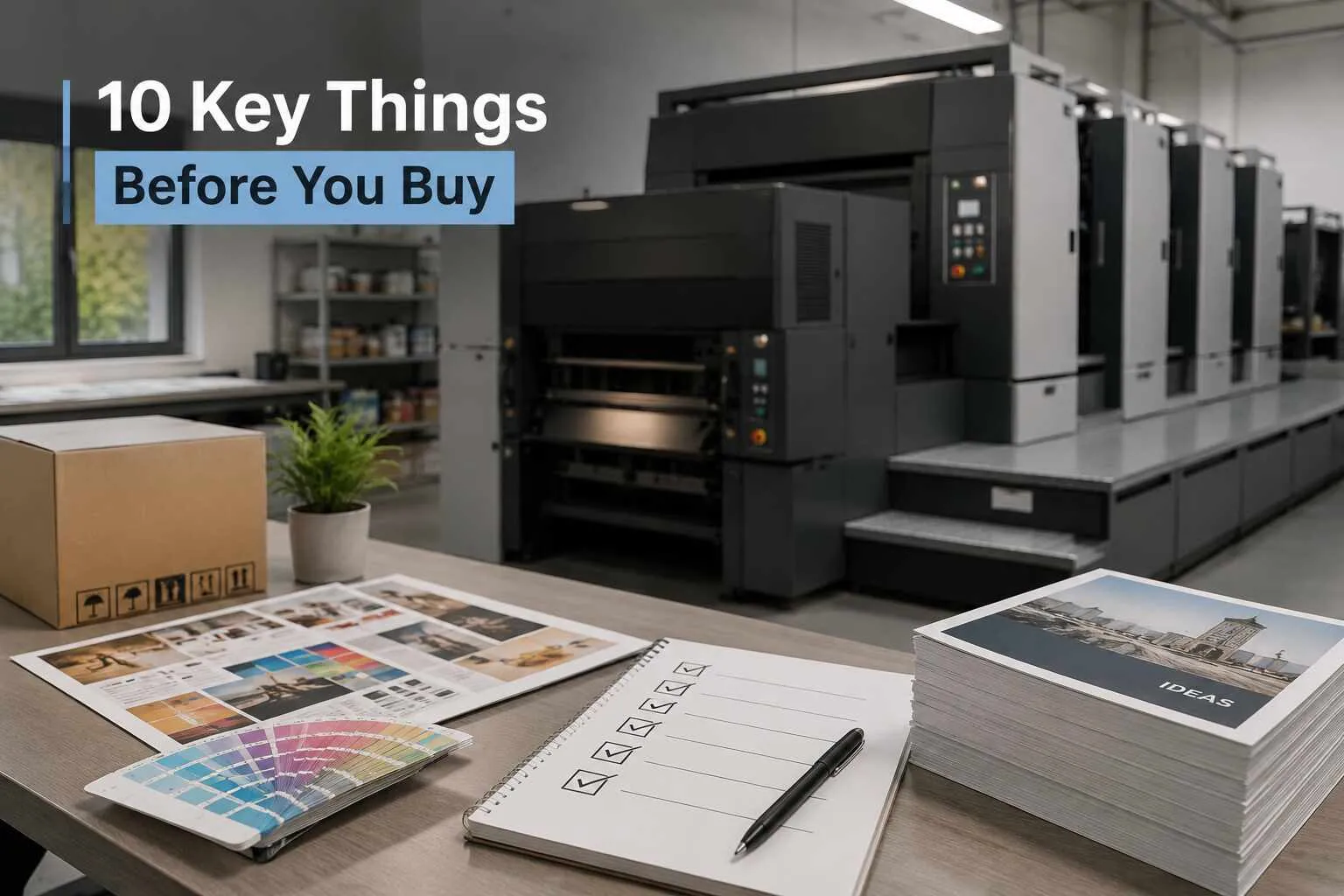

The right printing equipment can make a huge difference. It affects print quality, efficiency, production speed, and the costs incurred. However, with numerous technologies, features, and commercial printing equipment options available in the market, choosing the most suitable solution can be a challenging task.
Read The Following Points To Make An Informed Decision Before Investing
Hunt for a reliable Van Son ink supplier
Ink determines the quality and impact of your print projects. When evaluating a Van Son ink supplier, consider inventory, customer support offered, delivery timelines, and industry reputation. This is important to reduce downtime.
Understand your print volume
It is important to get ruthlessly clear on what you actually print. High-volume offset presses are inefficient for short runs. Similarly, digital presses are costly per unit at scale. Getting clear on this aspect helps avoid unnecessary expenses.
Calculate the entire cost of ownership
There is a lot of hidden cost involved in the process. Factor in consumables (inks, plates, blankets, maintenance kits), service contracts, operator labor, facility costs (power draw, ventilation, floor space), and the cost of downtime.
Map the full production workflow
Printing goes beyond just transferring an image onto a substrate. Before buying equipment, check the compatibility with ERP systems, color management setup, and post-printing procedures like cutting, folding, binding, and anything else. All the steps need to be preplanned to avoid challenges.
Financing and tax options
Commercial printing equipment in the US qualifies for Section 179 expensing or bonus depreciation, which can dramatically change the effective cost in your first year. Keeping an eye on such relaxation can cut the initial investment costs.
Leasing vs buying
When investing in printing equipment, it is important to evaluate whether leasing or purchasing is the better option. Leasing can be the smarter choice in rapidly evolving commercial printing, where technology cycles are short. However, certain equipment has a long operational lifespan and continues to deliver value for many years. Purchasing may offer a better return on investment.
Consider physical space
The printing equipment often requires a significant amount of floor space. Make sure the workspace actually fits all the equipment you plan to bring in. Leave enough space for setting things up, running the equipment every day, handling routine maintenance, and future expansion, too.
Include automation features
AI has impacted the printing industry significantly. Today, there are multiple printing operations that can be automated. For instance, color calibration. Invest in equipment with built-in AI and automation capabilities to increase productivity.
Print Quality Requirements
Not all industries need the same level of print precision. Look closely at aspects like resolution, the finishing options, and more before you pick your equipment. That way, you'll end up with tools that actually fit your work.
Think ahead
The commercial print market continues to evolve, and there might be a shift to sustainable substrates. Choose equipment with upgrade paths that align with where the market is headed.
It is clearly evident that selecting the right commercial printing equipment requires careful planning and forward thinking. A machine that's ideal today but can't adapt in three years may not be the right long-term investment. So take time to plan and invest right!
FAQs:
How to get customers for a printing business?
You can start by asking friends and family around and asking them to spread the word. Formally, there are a lot of digital marketing companies available that can help you with scaling the business.
What difference does a top-notch van son ink supplier make?
Even the most advanced printing equipment cannot deliver optimal results if the inks are inconsistent or unavailable when needed. So all of it boils down to choosing the right supplier.
Frequently Asked Questions
What should I consider when choosing a printing equipment supplier?
When selecting a printing equipment supplier, it's crucial to evaluate their reputation, customer support, inventory reliability, and delivery timelines. A reliable supplier can significantly reduce downtime and ensure you have the necessary materials for your projects.
How do I determine my print volume needs?
Understanding your print volume is essential for selecting the right equipment. High-volume offset presses work best for large runs, while digital presses may be more cost-effective for shorter runs. Analyzing your specific needs can help you avoid unnecessary expenses.
What are the hidden costs of owning printing equipment?
Hidden costs can include consumables like inks and maintenance kits, service contracts, labor costs, and facility expenses such as power and space. It's important to calculate these factors to understand the total cost of ownership fully.
Should I lease or buy my printing equipment?
Deciding between leasing and buying depends on your business needs and equipment lifespan. Leasing may be preferable for rapidly evolving technology, while purchasing can offer long-term value for equipment that remains relevant over many years.
How can automation improve my printing operations?
Incorporating automation features, such as AI-driven color calibration, can enhance productivity by streamlining various printing processes. Investing in equipment with built-in automation capabilities allows you to reduce manual tasks and improve efficiency.
What print quality requirements should I consider for my industry?
Different industries have varying print quality standards. When choosing equipment, evaluate the necessary resolution, finishing options, and overall quality to ensure it aligns with your specific business needs and customer expectations.
Why is it important to plan for future printing trends?
The commercial printing market is continuously evolving, with shifts towards sustainable practices and new technologies. Selecting equipment with upgrade paths allows your business to adapt to future trends and remain competitive in the long run.
How can I find customers for my printing business?
You can start by leveraging your personal network—ask friends and family to spread the word about your services. Additionally, consider hiring a digital marketing firm to help you reach a broader audience and scale your customer base effectively.











![The Benefits of Using a CNC Touch Probe [Infographic]](https://writeupcafe.com/data/post/1677697/bfdf3e040e67936848aa232d2dfe3d03.jpg.webp)










Sign in to leave a comment.