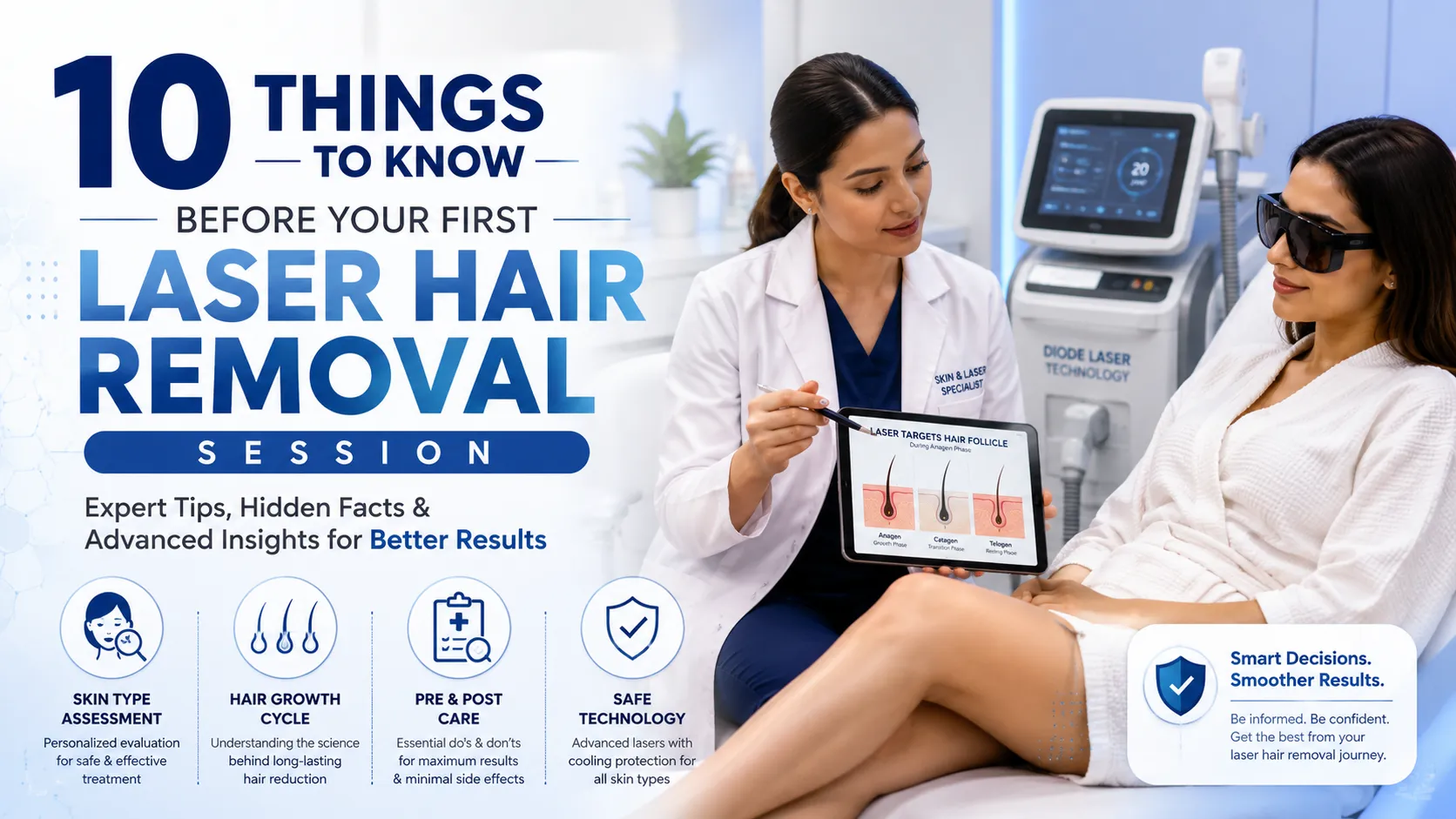

Laser hair removal is no longer just a cosmetic luxury. It has become one of the most effective methods for long-term hair reduction. However, many people walk into their first session expecting instant results and permanent hair removal after a single treatment. The reality is more scientific and understanding how the process works can help you achieve better outcomes.
Here are 10 important things most clinics don't explain in detail before your first laser hair removal session.
1. The Laser Targets Hair in a Specific Growth Phase
Not all hairs are actively growing at the same time. Human hair goes through three stages:
- Anagen (active growth)
- Catagen (transition)
- Telogen (resting)
Laser energy is most effective when the hair is in the anagen phase because the follicle contains the highest amount of pigment connected to the root. Since only a percentage of hairs are in this phase during each session, multiple treatments are necessary.
2. Shaving Before Treatment Improves Results
Many people mistakenly believe leaving visible hair helps the laser work better.
In reality, shaving 12 to 24 hours before treatment is often recommended because:
- Energy reaches the follicle more efficiently
- Surface hair does not absorb excessive heat
- Risk of skin irritation decreases
- Treatment becomes more comfortable
Avoid waxing, threading, or plucking for several weeks before your appointment because these methods remove the follicle that the laser needs to target.
3. Different Lasers Work Better for Different Skin Types
One of the biggest factors influencing results is the type of laser being used.
Common technologies include:
- Diode Laser
- Nd:YAG Laser
- Alexandrite Laser
Advanced clinics often select settings based on skin tone, hair thickness, treatment area, and sensitivity rather than using a single setting for everyone.
4. Hair Thickness Matters More Than Hair Density
A common misconception is that people with more hair always get better results.
The truth is that laser responds best to:
- Dark hair
- Coarse hair
- High pigment concentration
Very fine, light, grey, white, or red hairs may show reduced responsiveness because they contain less melanin for the laser to detect.
5. Shedding Is a Sign the Treatment Worked
Many patients think hair is growing back after treatment.
What actually happens is called "delayed shedding."
Over the next 1 to 3 weeks:
- Treated hairs gradually loosen
- Follicles push out damaged hairs
- Hair appears to regrow before falling out
This process is often mistaken for treatment failure when it is actually part of the expected response.
6. Hormones Can Influence Long-Term Results
Laser hair removal reduces existing active follicles, but hormones can stimulate dormant follicles in the future.
Conditions that may affect results include:
- PCOS
- Thyroid disorders
- Hormonal imbalances
- Certain medications
People with hormonal hair growth may still achieve excellent reduction, but maintenance sessions may be required over time.
7. Sun Exposure Can Affect Treatment Safety
Recent tanning increases melanin levels in the skin.
This creates two challenges:
- Higher risk of pigmentation changes
- Reduced contrast between hair and skin
Many laser specialists recommend limiting excessive sun exposure before and after treatment, particularly on exposed areas such as the face, arms, and legs.
8. Cooling Technology Is Just as Important as the Laser
Most people focus only on the laser brand.
However, cooling systems play a major role in:
- Comfort during treatment
- Skin protection
- Reduced redness
- Improved safety for darker skin tones
Modern devices often incorporate contact cooling, cryogen spray, or advanced cooling tips to protect the surrounding skin while targeting hair follicles.
9. Results Are Measured in Hair Reduction, Not Hair Elimination
The medical term used by most experts is "laser hair reduction" rather than "laser hair removal."
Why?
Because some follicles may eventually produce finer or lighter hair over time.
Most patients experience:
- Significant reduction in hair density
- Slower regrowth
- Finer hair texture
- Easier long-term maintenance
Understanding this distinction helps set realistic expectations from the beginning.
10. Session Timing Is Critical for Maximum Results
One of the biggest reasons people need extra sessions is inconsistent scheduling.
Each body area has a different hair growth cycle.
Typical intervals may include:
- Face: Every 4 to 6 weeks
- Underarms: Every 4 to 8 weeks
- Bikini: Every 6 to 8 weeks
- Legs: Every 8 to 12 weeks
Treating too early or too late can reduce efficiency because fewer hairs may be in the optimal growth phase.
Bonus Insight: The "Paradoxical Hair Growth" Phenomenon
A rarely discussed topic in laser hair reduction is paradoxical hypertrichosis.
In rare cases, low-energy treatments on hormonally sensitive areas may stimulate fine hair growth instead of reducing it.
This is uncommon but highlights why:
- Proper laser selection matters
- Experienced practitioners matter
- Individualized treatment planning matters
Patients with facial hair linked to hormonal conditions should especially seek professional evaluation before starting treatment.
Final Thoughts
Successful laser hair removal depends on much more than simply pointing a laser at unwanted hair. Factors such as hair growth cycles, skin type, hormonal influences, laser technology, cooling systems, and treatment timing all contribute to the final outcome.
Understanding these details before your first session helps you set realistic expectations, improve treatment effectiveness, and make informed decisions throughout your laser hair reduction journey.























Sign in to leave a comment.