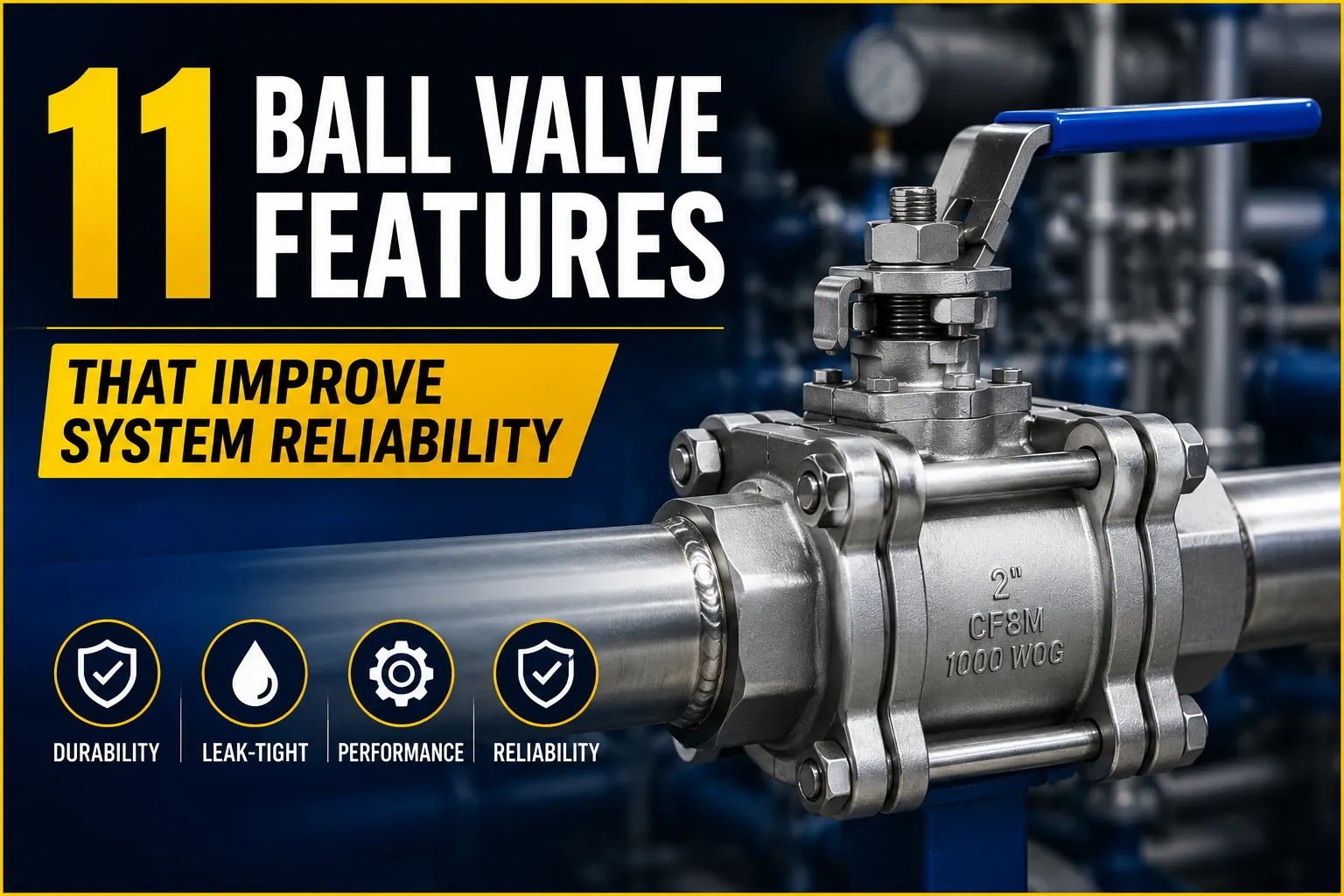

A valve is often one of the smallest components in an industrial piping system, yet it can have a major influence on how reliably the entire operation runs. When a valve leaks, becomes difficult to operate, or fails unexpectedly, the consequences can range from lost production time to costly maintenance work.
That is one reason the ball valve remains a popular choice across many industries in the UAE. Its simple quarter-turn design, dependable sealing, and versatility make it suitable for everything from water systems and HVAC installations to oil and gas, chemical processing, and manufacturing applications.
However, not all ball valves are built the same. Certain design features can make a noticeable difference in performance, service life, and overall system reliability.
1. Full Bore Design
A full bore ball valve has an internal passage that closely matches the pipe diameter. This allows fluid to pass through with minimal restriction.
Lower pressure loss can help systems operate more efficiently, particularly where maintaining flow is important. Full bore valves are commonly selected for applications involving liquids, gases, and even certain pigging operations.
2. High-Quality Ball and Seat Materials
The ball and seat are at the heart of the valve's sealing performance.
A well-machined ball combined with suitable seat materials can provide dependable shut-off over many operating cycles. Material selection should always match the fluid, pressure, and temperature of the application.
For example, different seat materials may be required for water, hydrocarbons, chemicals, or high-temperature services.
3. Anti-Blowout Stem
An anti-blowout stem is designed to remain retained within the valve body, even if unusual pressure conditions occur.
This feature adds an extra level of mechanical security and is commonly found in industrial ball valves where safety and reliability are priorities.
4. Low Operating Torque
A valve that requires excessive force to operate can become a maintenance issue over time.
Low operating torque makes manual operation easier and also helps when the valve is fitted with an electric or pneumatic actuator. Smooth operation reduces unnecessary stress on actuators and other connected components.
5. Robust Body Construction
The valve body must withstand the pressure and environmental conditions of the installation.
Forged or high-quality cast bodies, when properly designed and manufactured, can provide strength and durability. The correct body material should be selected based on the service fluid and surrounding environment.
In UAE industrial facilities, outdoor installations may also need to withstand heat, dust, and other demanding conditions.
6. Fire-Safe Design
For certain oil, gas, and petrochemical applications, fire-safe construction is an important requirement.
A fire-safe ball valve is designed with features intended to maintain a level of sealing performance under specified fire-test conditions. Where required by the application or project specifications, this feature can contribute to overall plant safety.
7. Reliable Stem Sealing
Stem leakage is a common concern with many valve types.
A well-designed stem sealing arrangement, often using multiple seals or packing systems, helps reduce the possibility of leakage around the operating stem. This is particularly valuable in applications involving expensive, hazardous, or environmentally sensitive fluids.
8. Corrosion-Resistant Materials
Choosing materials that are compatible with the process fluid and the surrounding environment helps maintain performance over time. Stainless steel, duplex stainless steel, and specialised alloys are often considered where corrosion resistance is required.
For coastal or offshore UAE installations, this factor deserves particular attention.
9. Easy Maintenance
Some ball valves are designed so that seals and internal components can be inspected or replaced more easily than others.
Maintenance-friendly designs can reduce downtime and make servicing more efficient. Over the life of a plant, this can have a noticeable impact on operating costs.
10. Actuator Compatibility
Many industrial systems require automated valve operation.
A ball valve with a standard mounting arrangement can be paired with electric or pneumatic actuators, allowing it to become part of a larger automation system.
This flexibility is useful when facilities expand or upgrade their control systems.
11. Consistent Shut-Off Performance
Ultimately, a valve's most important job is to control flow reliably.
Consistent shut-off helps prevent leakage, protects downstream equipment, and keeps processes operating as intended. Quality manufacturing, suitable materials, and correct installation all contribute to dependable long-term performance.
Why These Features Matter in the UAE
Industries across the UAE operate in a wide range of environments. A valve installed inside a temperature-controlled facility faces different challenges from one used outdoors at a refinery, desalination plant, or marine facility.
High ambient temperatures, dust, humidity, corrosive environments, and continuous operation can all influence valve selection.
That is why engineers should evaluate the complete application rather than simply choosing a valve based on size and price. A well-specified ball valve can often provide longer service life and fewer maintenance interruptions than a lower-cost option that is not suited to the operating conditions.
Final Thoughts
System reliability often depends on getting the small details right. Features such as corrosion-resistant materials, dependable sealing, low operating torque, and robust construction can all contribute to a valve that performs consistently over its service life.
For UAE businesses selecting a ball valve for a new installation or replacement project, reviewing these features alongside the actual operating conditions can help avoid unnecessary maintenance and downtime.
Looking for the right ball valve for your application? Speak with an experienced industrial valve supplier to compare suitable designs, materials, and automation options before making your final selection.
FAQs
Why are ball valves widely used in industrial systems?
Ball valves provide quick quarter-turn operation, dependable shut-off, and are available in a wide range of sizes, materials, and pressure ratings.
What is the difference between full bore and reduced bore ball valves?
Full bore valves have an internal passage close to the pipe diameter, resulting in lower flow restriction. Reduced bore valves have a smaller internal passage and may be suitable where a compact design or lower cost is preferred.
Can ball valves be automated?
Yes. Many industrial ball valves are designed to accept electric or pneumatic actuators for remote or automatic operation.
How do I choose the right ball valve?
Consider the fluid, pressure, temperature, pipe size, material compatibility, environmental conditions, maintenance requirements, and whether manual or automated operation is needed.

























Sign in to leave a comment.