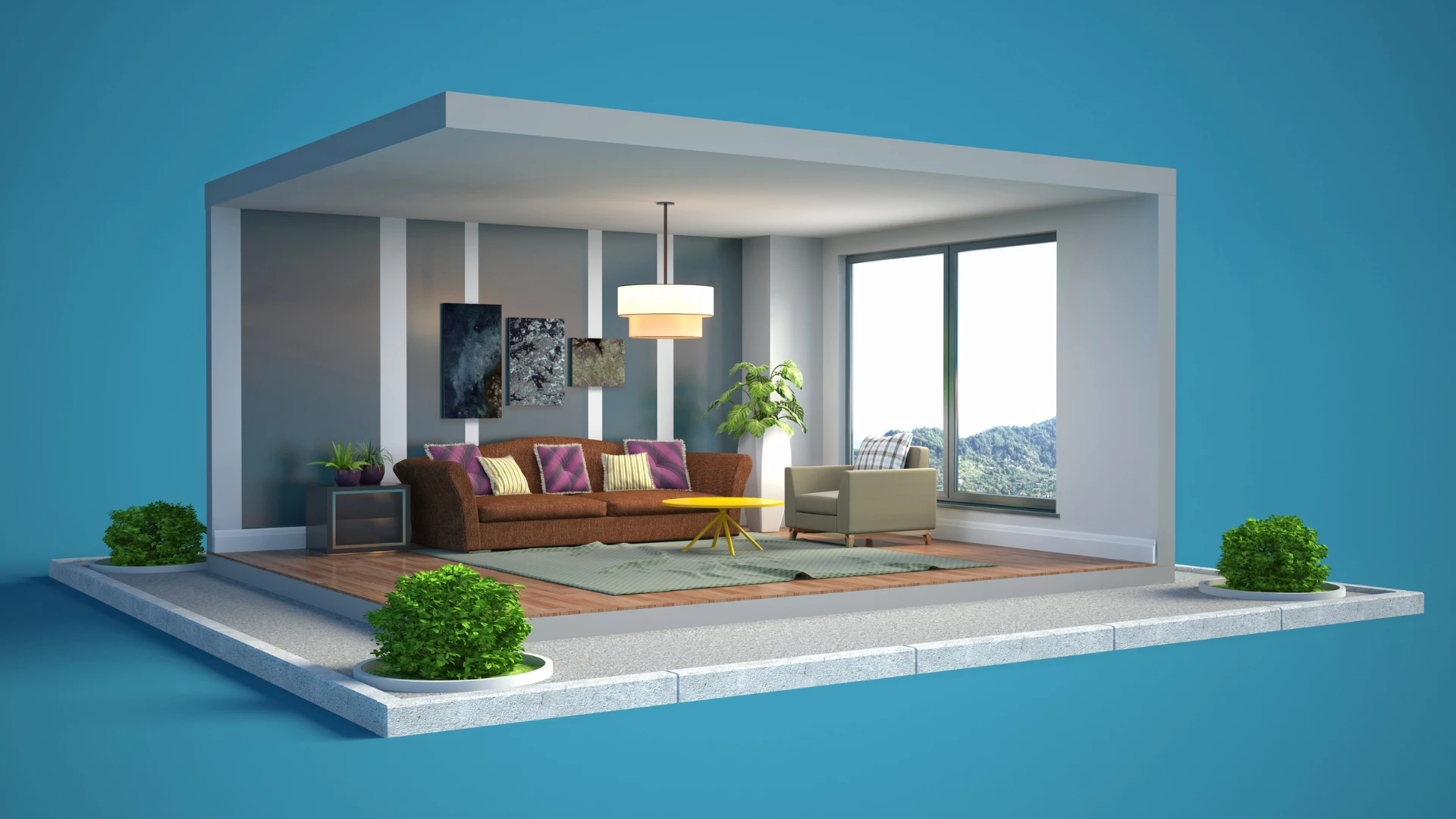
Interior designers face constant pressure to deliver concepts that resonate with clients quickly and effectively. Traditional methods, such as sketches or mood boards, often leave room for misinterpretation, leading to prolonged discussions and multiple revisions. In contrast, advanced tools like 3D living room visualization bring designs to life in a way that bridges the gap between imagination and reality. These digital representations allow clients to step into proposed spaces virtually, fostering immediate understanding and enthusiasm.
The shift toward 3D living room rendering has become essential in a competitive industry where time equals opportunity. Clients today expect immersive experiences that go beyond flat drawings, and designers who adopt this technology gain a distinct advantage. By presenting lifelike models, professionals can address concerns on the spot, minimizing back and forth exchanges that delay projects. This approach not only streamlines the approval process but also builds trust, as clients feel more involved in the creative journey.
Moreover, the precision of 3D living room visualization empowers designers to experiment with elements like lighting, textures, and furniture arrangements without physical prototypes. Such capabilities reduce costly errors and align expectations from the outset. As the design field evolves, embracing these visualizations ensures that projects move forward swiftly, satisfying both artistic vision and practical timelines.
The Impact on Client Communication
Effective communication stands at the heart of successful interior design projects. 3D living room visualization serves as a powerful medium to convey complex ideas clearly. Clients often struggle to visualize how a space will function based on two dimensional plans alone. With realistic renderings, designers can demonstrate spatial flow, color schemes, and material interactions in a tangible format.
This technology eliminates ambiguity by offering interactive views. For instance, clients can rotate perspectives or zoom into details, gaining a comprehensive grasp of the design. Such engagement leads to quicker feedback loops, where approvals happen in days rather than weeks. Designers report that these tools transform hesitant discussions into confident decisions, as clients see the potential of their living rooms materialized.
Furthermore, 3D living room rendering adapts to diverse client preferences. Whether incorporating modern minimalism or classic elegance, the visualizations provide customizable options. This flexibility encourages open dialogue, allowing adjustments in real time during meetings. As a result, the approval phase becomes collaborative and efficient, setting the stage for seamless project execution.
Streamlining the Design Workflow
Incorporating 3D living room visualization into workflows revolutionizes how designers operate. From initial concepts to final presentations, this method accelerates every step. Software tools enable rapid iterations, where changes to layouts or finishes appear instantly. This speed cuts down on manual redraws and enhances productivity across teams.
Designers benefit from integrated features that simulate real world conditions. Natural light effects, shadow play, and even virtual walkthroughs make proposals more compelling. Clients approve faster when they experience these immersive elements, reducing the need for extensive explanations. In practice, projects that once lingered in review stages now advance promptly, freeing up resources for new ventures.
Additionally, 3D living room rendering supports remote collaborations. With cloud based sharing, clients review visualizations from anywhere, expediting approvals without in person meetings. This adaptability proves invaluable in global markets, where time zones and distances pose challenges. Overall, the workflow gains momentum, delivering high quality outcomes with less effort.
Real World Advantages for Designers
Practical examples highlight the transformative role of 3D living room visualization. In residential projects, designers have shortened approval timelines by up to 50 percent through detailed renderings. Clients who previously requested numerous revisions now sign off after a single session, impressed by the accuracy and realism.
Commercial applications show similar gains. For hotel lobbies or office lounges adapted as living spaces, visualizations clarify multifunctional designs. Stakeholders appreciate the ability to foresee user experiences, leading to swift endorsements. These successes underscore how the technology minimizes risks and maximizes client satisfaction.
Beyond approvals, 3D living room rendering boosts marketing efforts. Designers showcase portfolios with stunning visuals, attracting more business. The competitive edge lies in presenting polished, professional concepts that stand out. As adoption grows, those leveraging this tool position themselves as industry leaders.
Best Practices for Implementation
To maximize benefits, designers should select user friendly software that aligns with their expertise. Training ensures smooth integration, allowing focus on creativity rather than technical hurdles. Starting with simple projects builds confidence before tackling complex ones.
Collaboration with skilled renderers enhances output quality. Outsourcing specialized 3D living room visualization tasks can save time while maintaining high standards. Regular client input during the rendering process refines results, ensuring alignment with expectations.
Monitoring trends in visualization technology keeps practices current. Updates in virtual reality integrations offer even more immersive experiences, further speeding approvals. Consistent application of these practices yields lasting improvements in efficiency and client relations.
Key Conclusion and Analysis
The adoption of 3D living room visualization marks a pivotal advancement in interior design, where efficiency meets innovation to redefine client interactions. By providing vivid, interactive representations, this technology not only hastens approvals but also elevates the entire creative process. Designers equipped with these tools navigate challenges with greater ease, turning potential obstacles into opportunities for excellence.
As the industry continues to prioritize speed and precision, those who integrate 3D living room rendering stand to thrive in an increasingly demanding landscape. Ultimately, the result is more than just faster projects, it fosters deeper client connections and inspires designs that truly resonate in everyday living spaces. This evolution promises a future where visions become realities with unprecedented swiftness and clarity.































Sign in to leave a comment.