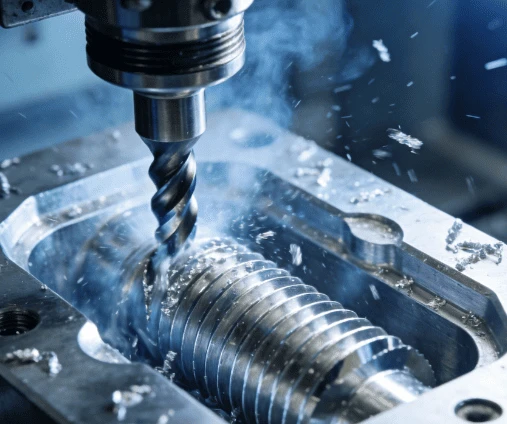

Transitioning from 3-axis to 5-axis machining is not just an equipment upgrade; it is a fundamental shift in manufacturing capability. For complex aerospace and medical components, 5-axis technology eliminates multiple setups, drastically reducing cumulative error and labor costs.
In this analysis, we leverage production insights from Baosheng Industry to evaluate the world’s leading machine tool builders. You will learn how to match specific machine architectures—from trunnion tables to swivel heads—to your specific part geometries and precision requirements.
1. The Trunnion vs. Swivel Head Dilemma
Before selecting a manufacturer, you must determine which 5-axis configuration suits your parts.
- Trunnion Style (Table-Table): Best for heavy-duty cutting and smaller, high-precision parts. Because the table handles the rotation, the spindle remains more rigid. This is the preferred setup for complex medical implants.
- Swivel Head (Head-Table): Ideal for large, heavy components that would be difficult to tilt on a table. This allows for greater flexibility when machining long aerospace spars.
- The Precision Factor: Always verify the "Simultaneous 5-axis" capability. Some entry-level machines offer "3+2" (positional) machining, which lacks the fluid motion required for complex organic surfaces like turbine impellers.
2. High-Performance Leaders: Mazak and DMG MORI
When "zero-failure" is the requirement, Japanese and German engineering set the global benchmark.
- Mazak (Integrex Series): Mazak is a pioneer in Multi-Tasking technology. Their machines are known for their user-friendly "MAZATROL" CNC, which allows for conversational programming on the shop floor, reducing the bottleneck in the CAM department.
- DMG MORI (DMU Series): Known for extreme thermal stability. Their cooling systems are integrated into the machine frame, ensuring that the tool tip remains accurate to within microns even during 24-hour production cycles.
- Expert Resource: For a deeper dive into the specific model ranges and technical comparisons of these Tier-1 brands, see our complete 5-Axis CNC Machining Center Manufacturers Guide.
3. Reliability and Scale: Haas and Okuma
For shops looking to scale production without the ultra-premium price tag of European machines, these manufacturers offer incredible value.
- Haas Automation (UMC Series): Haas revolutionized the 5-axis market by making the technology accessible. Their UMC-750 is the "workhorse" of modern job shops, offering a seamless learning curve for operators moving up from 3-axis milling.
- Okuma (MU Series): Okuma is unique because they build their own motors, drives, and encoders. This "mechatronics" approach means the hardware and software are perfectly synced, resulting in superior surface finishes on 3D contoured parts.
- Industry Trap: Don't just look at the machine price. Consider the "Service Footprint." A machine is only an asset if it’s running; ensure your chosen manufacturer has local technicians who can arrive within 24 hours.
4. Maximizing ROI through CAM and Tooling
The machine is only as good as the code that drives it. 5-axis ROI is heavily dependent on your software ecosystem.
- Collision Avoidance: Unlike 3-axis, 5-axis machining has a high risk of "crashes" between the spindle and the table. Using high-end simulation software like Vericut or integrated CAM modules is mandatory to protect your investment.
- Tool Reach Optimization: 5-axis allows you to use shorter, more rigid tools by tilting the part. This improves tool life by up to 40% and allows for much higher feed rates than a 3-axis setup using long, vibrating extensions.
Conclusion
Selecting a 5-axis CNC manufacturer is a long-term partnership. Whether you prioritize the absolute precision of DMG MORI or the accessible scalability of Haas, your choice should align with your part complexity and your team's technical maturity.


























Sign in to leave a comment.