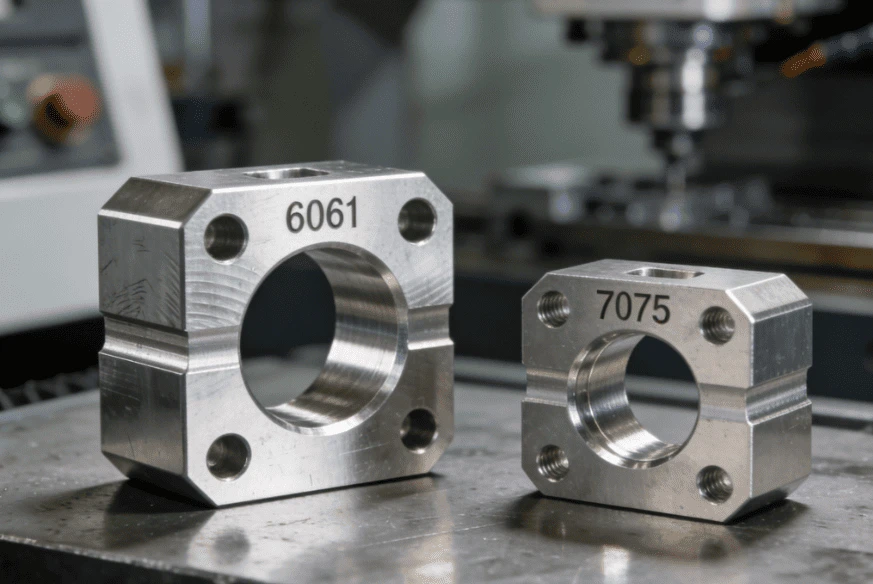

In high-speed machining, the difference between a tool that lasts for 1,000 cycles and one that fails at 100 often comes down to the tungsten-molybdenum balance. Choosing M2 tool steel is a strategic move for those who need a "workhorse" material that doesn't compromise on toughness.
This guide, supported by the metallurgical data from Baosheng Industry, breaks down why M2 has become the industry standard for power saws, drill bits, and cold-work dies. You will learn the exact heat treatment parameters and tempering cycles required to unlock its maximum hardness without inducing brittleness.
1. The Chemical Edge: Why the Molybdenum-Tungsten Ratio Matters
M2 is a molybdenum-type high-speed steel (HSS) that offers a more uniform carbide distribution than the older T1 tungsten-type steels.
- Carbide Uniformity: The presence of approximately 5% Molybdenum and 6% Tungsten creates a fine-grained structure. This means the tool edge stays sharper for longer, even under the intense heat generated by high-velocity cutting.
- Vanadium for Abrasion: With about 2% Vanadium, M2 develops extremely hard vanadium carbides. This provides the "grit" needed to cut through abrasive materials that would quickly dull standard carbon steels.
- The Technical Balance: To explore how these chemical properties compare to other HSS grades like M35 or M42, see this comprehensive M2 Tool Steel Material Guide.
2. Heat Treatment: Precision Hardening to 64-66 HRC
The performance of M2 is forged in the furnace. A slight deviation in temperature can lead to decarburization or grain growth, ruining the tool's integrity.
- The Pre-Heating Phase: Never skip the double pre-heat. Heating to $850\text{°C}$ before the final austenitizing temperature prevents thermal shock and ensures uniform expansion.
- Hardening Temperatures: For maximum red hardness, M2 should be heated to $1220\text{°C} - 1240\text{°C}$. Staying at this "soak" temperature for too long, however, will coarsen the grains and make the tool prone to chipping.
- Quenching Logic: Oil quenching is standard, but for complex die shapes, salt bath quenching or vacuum quenching with high-pressure nitrogen is preferred to minimize dimensional distortion.
3. Triple Tempering for Maximum Toughness
M2 tool steel is notoriously brittle after the initial quench. Achieving the perfect balance of hardness and impact resistance requires a rigorous tempering cycle.
- The 560°C Sweet Spot: Tempering at $540\text{°C} - 560\text{°C}$ triggers "secondary hardening," where the hardness actually increases as martensite is stabilized.
- The Rule of Three: We recommend triple tempering. Each cycle should last at least 2 hours. This ensures that any retained austenite is converted, preventing the tool from cracking under the cyclical stress of industrial punching or milling.
- Industry Trap: Cutting corners with a single temper might save time, but it leaves the material with internal stresses that lead to catastrophic failure during the first high-speed run.
4. Machinability and Surface Treatment Optimization
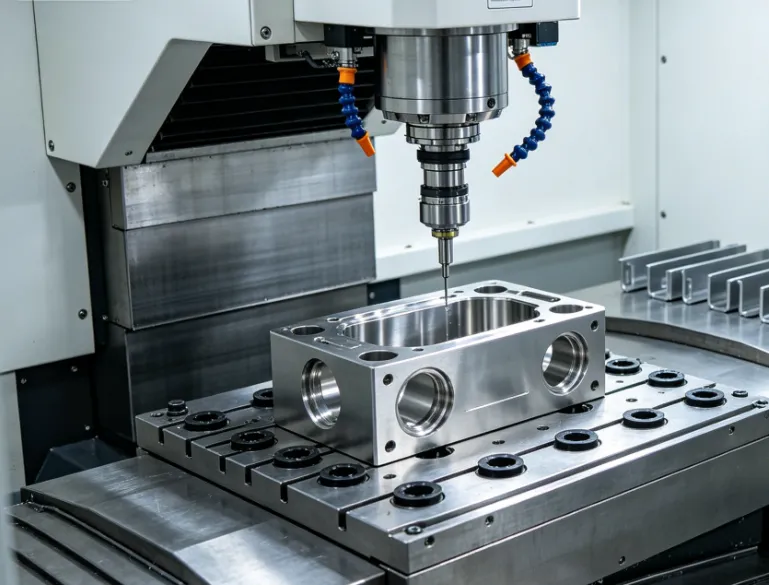
While M2 is "tough," it is surprisingly workable in its annealed state ($<250\text{ HB}$).
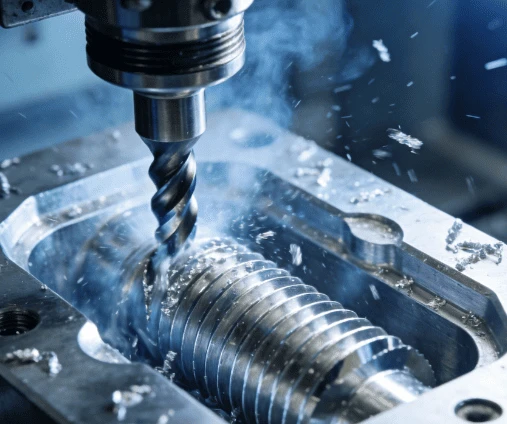
- Grinding Safety: Because M2 is sensitive to overheating during grinding, use a soft-bond wheel and plenty of coolant. "Grinding burns" create localized soft spots that will be the first point of failure on a cutting edge.
- Coating Compatibility: M2 is an excellent substrate for TiN (Titanium Nitride) or TiAlN coatings. These coatings work in synergy with M2’s red hardness to allow for cutting speeds 30% higher than uncoated HSS.
Conclusion
M2 tool steel remains the gold standard for high-speed applications because it balances wear resistance with enough toughness to handle interrupted cuts. By mastering the heat treatment and tempering phases, you can ensure your tooling outlasts the competition in even the most demanding environments.


























Sign in to leave a comment.