
The college or university campus experience is more than just attending classes; it's a multifaceted journey of learning, socializing, and personal growth. In today's digital age, technology plays a significant role in shaping this experience. One such technology that can greatly enhance the campus environment is digital signage software. Digital signage is a dynamic and versatile tool that can be used to inform, engage, and connect students, faculty, and visitors. We will explore five ways to enrich your campus experience with digital signage software.
Real-time Information Dissemination:
Digital signage software provides an efficient and engaging way to disseminate real-time information across campus. Whether it's news updates, event schedules, emergency alerts, or weather forecasts, digital signage can ensure that students are always well-informed.
Event Announcements: One of the most common applications of digital signage on campuses is to promote upcoming events, such as lectures, sports games, and club meetings. These displays can feature event details, time, location, and even live updates, creating a buzz around campus happenings.
Emergency Notifications: During critical situations, digital signage can be used to relay vital information. Emergency alerts, weather warnings, and evacuation procedures can be instantly displayed, ensuring the safety of students and staff.
News and Updates: Campus news, academic announcements, and the latest achievements of the institution can be showcased, keeping the campus community in the loop about important developments.
Interactive Learning Opportunities:
Digital signage can transform traditional learning environments into interactive and engaging spaces. Professors and students can leverage this technology to enhance the learning experience.
Interactive Lectures: Professors can use digital signage to display lecture materials, multimedia content, and real-time quizzes, allowing students to actively participate in the learning process. Interactive touchscreens or QR code-based interactions can make lectures more engaging.
Wayfinding and Maps: Interactive campus maps can help new students navigate the campus, while offering detailed information about each building, department, and facility. It's a valuable resource for students trying to find their way around the campus.
Language Learning: Digital signage can be used to teach foreign languages, displaying vocabulary words, pronunciation guides, and interactive exercises to enhance language skills.
Building Community and Engagement:
One of the most important aspects of the campus experience is building a sense of community and fostering engagement among students and staff. Digital signage can play a pivotal role in achieving this goal.
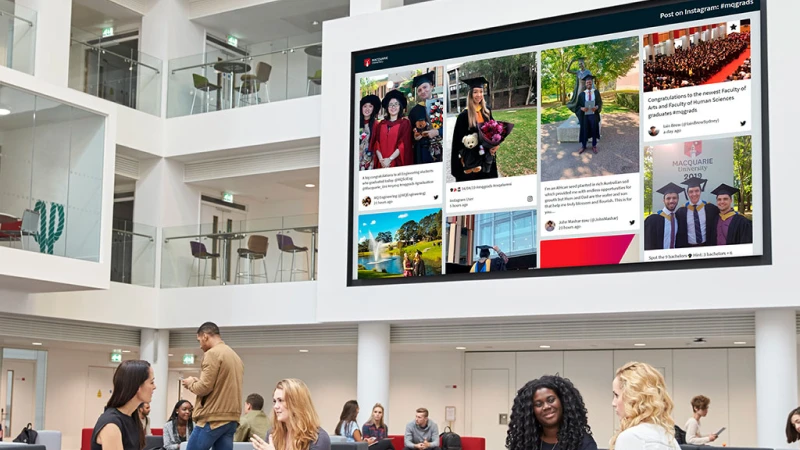
Social Media Integration: Displaying social media feeds and hashtags on digital signage screens can encourage students to connect online and share their experiences and thoughts about campus life.
Event Promotion: To encourage participation in clubs and organizations, digital signage can be used to promote club meetings, workshops, and events. This increases the sense of community and belonging.
Student Spotlights: Recognizing outstanding students, faculty, and staff through digital signage can instill a sense of pride and recognition, fostering a positive campus culture.
Sustainability Initiatives:
Many educational institutions are taking steps to reduce their environmental footprint. Digital signage software aligns with sustainability initiatives by reducing the need for printed materials, minimizing energy consumption, and promoting eco-friendly practices.
Reduced Printing: Campus-wide digital signage can drastically reduce the need for paper posters and flyers, saving resources and reducing waste.
Energy Efficiency: Modern digital signage displays are designed to be energy-efficient, using LED technology and automatic brightness adjustment to conserve energy.
Sustainability Tips: Digital signage can be used to educate the campus community about sustainable practices, from recycling tips to information about green initiatives on campus.
Targeted Communication:
One of the key advantages of digital signage software is its ability to deliver content based on specific criteria, such as location, time, or audience. This targeted approach can make communication more effective.
Customized Messages: By tailoring content to the audience, digital signage can be used to display personalized messages for students, faculty, and visitors. For example, the library might show announcements related to research, while the student center promotes social events.
Emergency Alerts: With the capability to target specific screens, emergency alerts can be sent only to the areas affected, preventing unnecessary panic and confusion elsewhere on campus.
Admission Tours: For prospective students and their families, digital signage can be used to provide guided tours, highlighting the strengths and unique features of the institution.
Conclusion:
Digital signage software has the potential to greatly enrich the campus experience in numerous ways. From providing real-time information and interactive learning opportunities to building a sense of community, supporting sustainability initiatives, and delivering targeted communication, digital signage is a versatile tool that can enhance the educational journey for students, faculty, and visitors. Embracing this technology can lead to a more informed, engaged, and connected campus community, ultimately creating a more fulfilling and enriching educational experience.

























Sign in to leave a comment.