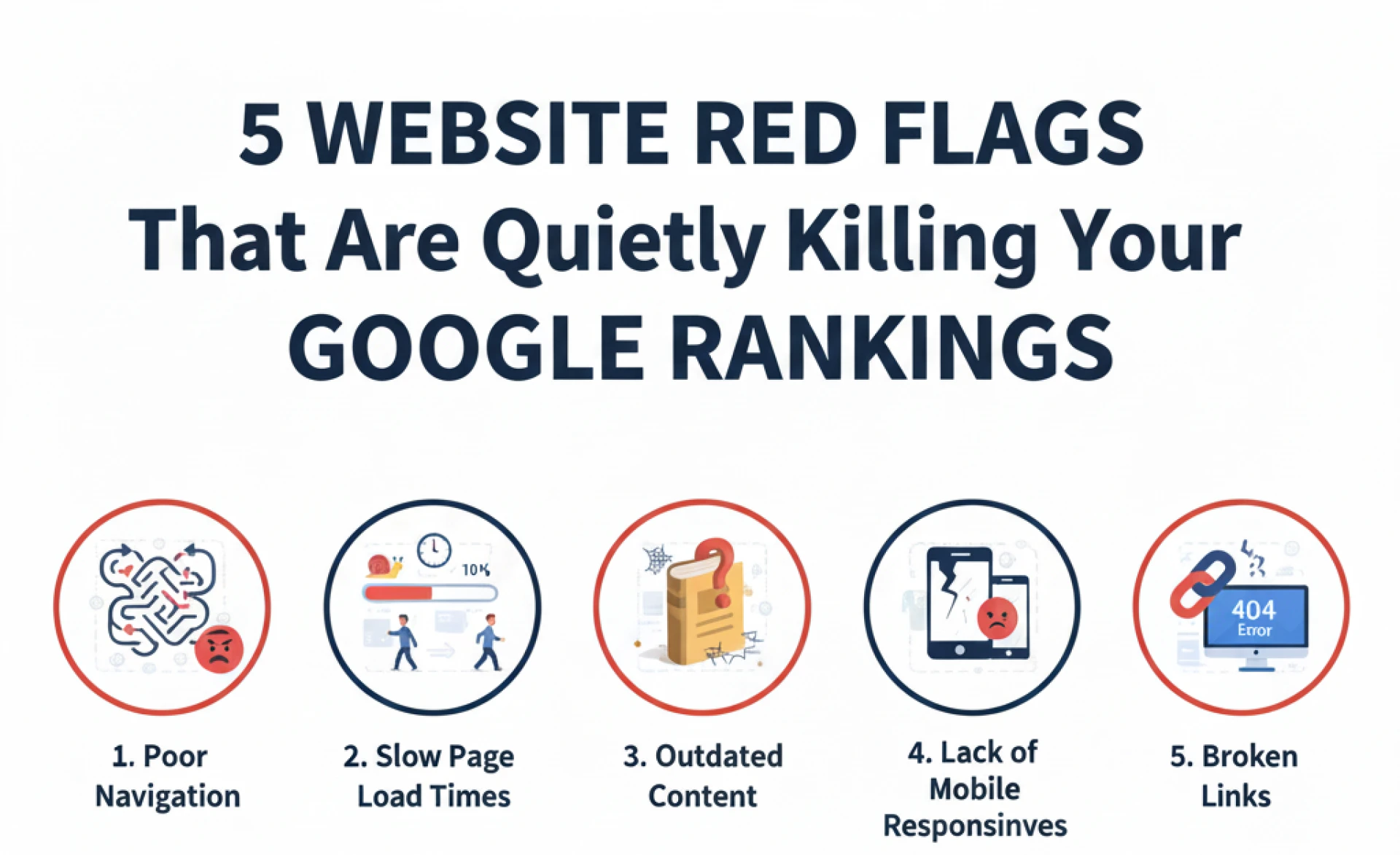

Five critical web design issues can silently hurt Google rankings. Poor user experiences, like confusing navigation, lead users to leave quickly. Slow page load times frustrate visitors, causing them to abandon sites.
Outdated or irrelevant content fails to engage users and diminishes search visibility. Lack of mobile responsiveness means potential visitors might not have a good experience on their devices. Finally, broken links and error pages can drive up bounce rates.
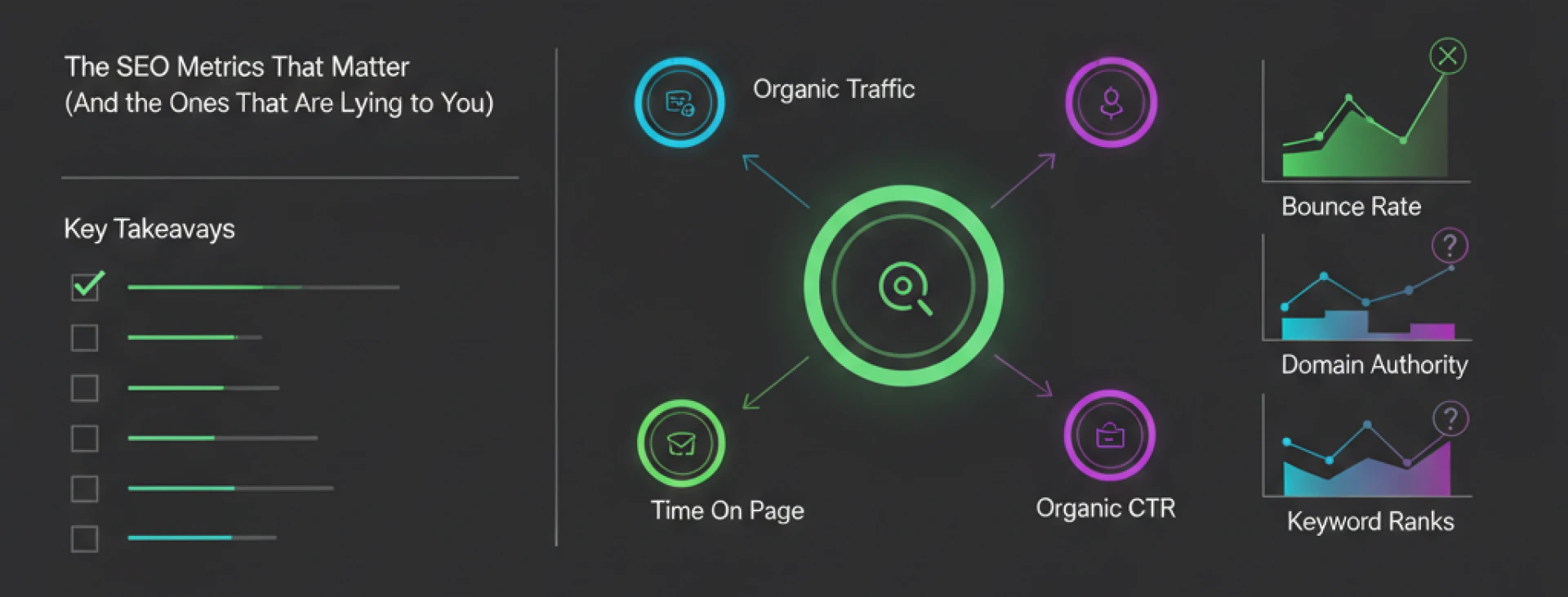
Key Takeaways
- Poor navigation frustrates users, increasing bounce rates and negatively impacting your Google rankings.
- Slow page load times lead to abandoned visits, harming overall website performance and search visibility.
- Outdated or irrelevant content decreases user interest and negatively affects search engine rankings.
- Lack of mobile responsiveness frustrates mobile users, leading to quick exits and diminished traffic.
- Broken links and error pages create a poor user experience, sending negative signals to search engines and harming rankings.
Poor User Experience
Website visitors often encounter poor user experience, which can greatly impact a site’s Google rankings without a proper UX audit to identify usability issues. When users struggle to navigate a website, they quickly lose interest.
Navigation simplicity is essential; if visitors cannot find what they need easily, they are likely to leave. An intuitive design helps guide users seamlessly through the site, making their experience enjoyable.
A cluttered layout or confusing menus can frustrate users and lead to higher bounce rates. Ultimately, a website that prioritizes user experience not only keeps visitors engaged but also enhances its chances of ranking higher in search engine results, benefiting overall visibility.
Slow Page Load Times
A notable number of visitors abandon websites due to slow page load times. When users experience delays, they often choose to leave, leading to decreased website performance. This loss of traffic can greatly impact a site's Google rankings. Speed optimization is essential for keeping visitors engaged and satisfied.
Websites that load quickly not only retain users but also improve their overall search engine visibility. Factors like image sizes, server response times and excessive scripts can slow down a site. By prioritizing speed optimization, website owners can enhance user experience and ultimately boost their rankings on Google, creating a win-win situation.
Outdated or Irrelevant Content
Visitors may quickly lose interest in a site if they find outdated or irrelevant content. Websites need to prioritize content freshness through ongoing content optimization to engage users effectively. When information becomes stale, it not only frustrates visitors but also impacts search engine rankings.
Google rewards sites that regularly update their content, as it signals relevance and authority. Moreover, keyword optimization can suffer when content is no longer applicable, making it harder for potential visitors to find the site.
Regularly updating content helps maintain interest, boosts search visibility and guarantees that users receive the most accurate and useful information, enhancing the overall website experience.
Lack of Mobile Responsiveness
When a website does not adapt to mobile devices, it risks losing a significant number of potential visitors. A lack of mobile responsiveness can lead to frustration, causing users to leave quickly. Implementing mobile optimization strategies, such as responsive design, guarantees that a website looks good and functions well on all devices. The responsive design benefits include improved user experience and better search engine rankings. Google prioritizes mobile-friendly sites, making this aspect vital for online success. In a world where many users browse on smartphones, embracing mobile responsiveness is not just an option; it is essential for maintaining visibility and attracting traffic.
Broken Links and Error Pages
Numerous websites suffer from broken links and error pages, which can greatly harm their Google rankings. When users encounter these issues, they may leave the site quickly, increasing the bounce rate.
This sends a negative signal to search engines about the website’s quality. To combat this, website owners should invest in link monitoring, error tracking and proactive site health monitoring. These tools help identify and fix broken links, ensuring a smoother user experience.
By maintaining a healthy link structure, websites can improve their SEO performance, attract more visitors and ultimately enhance their chances of ranking higher in Google search results.
































Sign in to leave a comment.