
As industries evolve and safety regulations become stricter, the role of a Workplace Safety and Health (WSH) professional has fundamentally shifted. They are no longer just "rule enforcers"—they are strategic coordinators who bridge the gap between upper management’s policies and the frontline workers' daily habits.
If you are stepping into the role of a WSH Coordinator or looking to advance your career in workplace safety Singapore, possessing technical knowledge is only half the battle. To truly excel, protect your team, and stand out to top employers, you need to master a diverse set of core competencies.
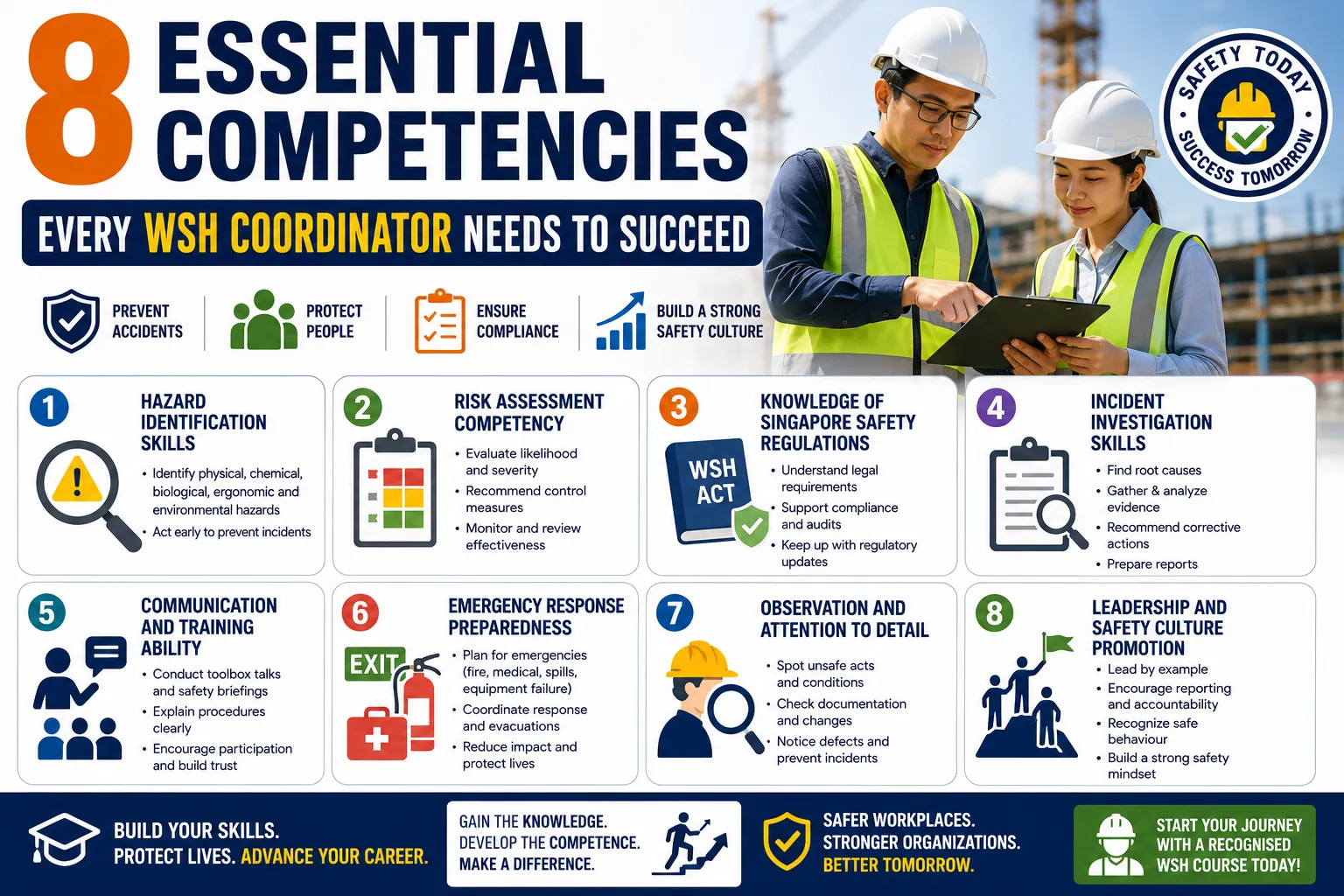
Here are the 8 essential competencies that define a highly successful coordinator.
1. In-Depth Regulatory Literacy
You cannot enforce safety protocols if you do not understand the legal framework behind them. A successful coordinator must thoroughly grasp the Workplace Safety and Health (WSH) Act, its subsidiary regulations, and local Approved Codes of Practice (ACOP). Knowing how to interpret these legal mandates ensures your job site stays fully compliant and audit-ready at all times.
2. Analytical Hazard Identification & Risk Assessment
True safety is entirely proactive. A competent coordinator doesn’t just spot obvious trip hazards; they look for hidden operational risks, chemical exposure vulnerabilities, and ergonomic strains. Mastering risk assessment methodologies allows you to apply the Hierarchy of Controls effectively, neutralizing a danger before it can cause harm.
3. Clear Cross-Tier Communication
A coordinator must speak two completely different "languages" on a single shift. You need to be able to explain technical compliance metrics to corporate executives in the boardroom, and then pivot to deliver clear, practical, and engaging safety protocols during an early morning toolbox talk with multi-national frontline workers.
4. Methodical Incident Investigation
When an incident or a near-miss occurs, a great coordinator stays objective and analytical. Rather than looking for a quick scapegoat, you must possess the competency to conduct a thorough root-cause analysis (RCA). Finding out why a failure occurred allows you to implement systemic fixes that prevent it from ever happening again.
5. Thorough Equipment & Site Inspection
Regular site walkabouts are a staple of the job, but they require a structured eye. You need the technical capability to perform meticulous inspections on heavy machinery, scaffolds, and personal protective equipment (PPE)—such as full-body harnesses or respirators—to spot micro-tears, mechanical defects, or structural wear.
6. Dynamic Emergency Response Coordination
When a crisis strikes—whether it is a fire, a chemical spill, or a fall from height—panic is the enemy. A top-tier coordinator must be competent in developing, testing, and executing emergency response plans. You must know how to direct crowds, administer initial protocols, and coordinate seamlessly with external emergency services.
7. Strategic Data Tracking & Documentation
In the safety sector, if it isn't documented, it didn't happen. Maintaining meticulous safety logs, incident records, and meeting minutes is vital for legal compliance. Beyond storage, a modern coordinator should be able to analyze safety data trends—like recognizing a sudden spike in near-misses on a specific shift—and take preemptive action.
8. Cultivating a Proactive Safety Culture
The ultimate goal of any coordinator is to build an environment where safety is an organic habit, not a forced chore. This requires empathy, active listening, and strong leadership skills. When workers feel safe bringing up safety concerns without fear of reprisal, you have successfully built a thriving, self-sustaining safety culture.
🚀 Professional Development Tip
Looking to formally secure these competencies? Earning your WSQ Advanced Certificate in Workplace Safety and Health (Level B) is the most widely recognized pathway in Singapore to unlock these skills. It qualifies you for formal coordination roles and serves as the essential stepping stone toward becoming a fully registered WSH Officer.
Advance Your Safety Career Today
Mastering these eight competencies doesn't just protect the lives of your colleagues—it dramatically elevates your professional profile in an incredibly competitive market. If you are ready to formally upgrade your skillset, look for accredited training providers like GreenSafe Singapore to explore upcoming Level B intakes and corporate training funding options!



























Sign in to leave a comment.