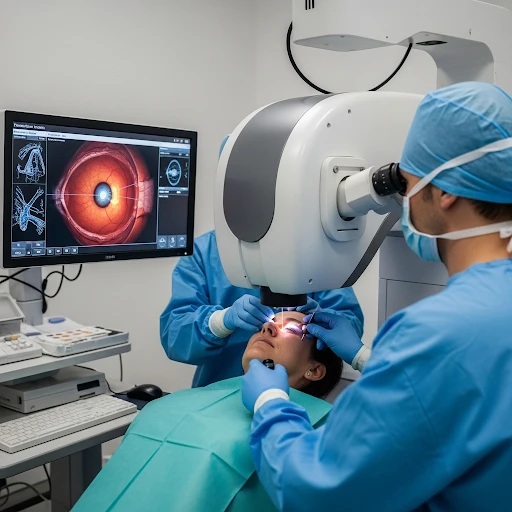

Cataracts can feel like a slow-dimming light, gradually clouding the vibrant world around you. For millions, this common age-related condition used to mean a significant disruption to their quality of life. Today, advancements in ophthalmology have transformed treatment, with laser cataract surgery leading the charge. This innovative procedure offers a level of precision and safety that is fundamentally changing how we approach vision restoration.
The journey to clear sight involves removing the eye's clouded natural lens and replacing it with an artificial one. While traditional methods have been effective for decades, the introduction of laser technology has brought a new era of customization and accuracy.
This post will explore how this sophisticated technique works, its key benefits, and why it is considered a revolutionary step forward in vision care.
What is Laser-Assisted Cataract Surgery?
Laser-assisted cataract surgery, also known as femtosecond laser-assisted cataract surgery (FLACS), uses an advanced laser to perform some of the most critical steps of the procedure. Unlike traditional surgery, which relies on handheld instruments, the laser provides image-guided, computer-controlled precision.
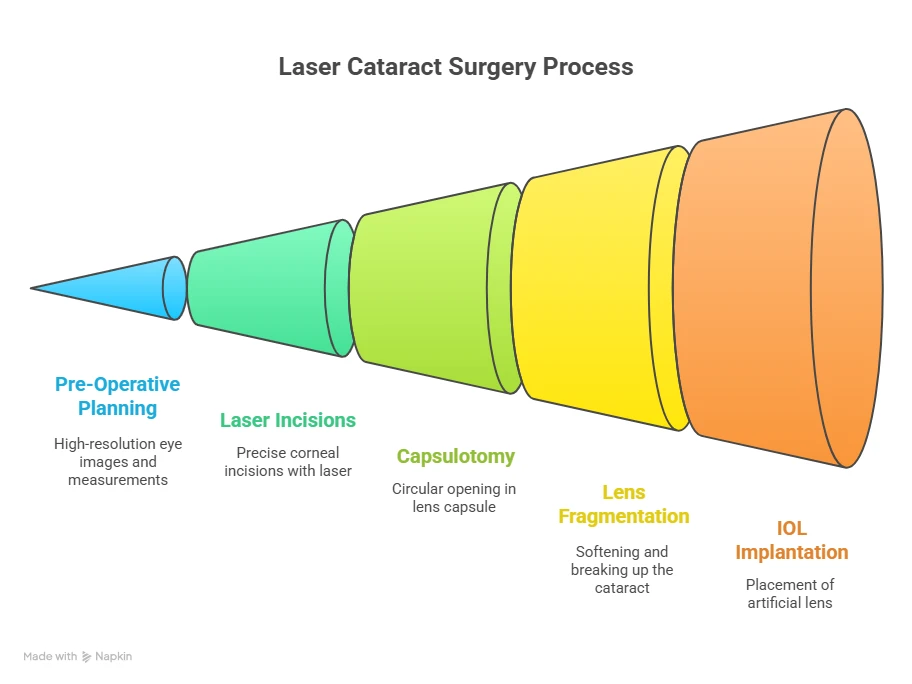
Experts in the field, like Dr. Scot C. Holman, a Laser Cataract & Lens Replacement Surgeon, utilize this technology to enhance outcomes. The laser can create precise incisions, soften the cataract, and correct astigmatism, all with unparalleled accuracy. This technology helps surgeons deliver a more predictable and gentle procedure.
The Key Steps Enhanced by Laser Technology
- Corneal Incisions: The laser creates self-sealing incisions in the cornea, the eye's transparent outer layer. These incisions are perfectly shaped and placed, reducing the risk of infection and promoting faster healing.
- Anterior Capsulotomy: One of the most delicate steps is creating an opening in the capsule that holds the lens. The laser makes a perfectly circular opening, which is crucial for the ideal placement and stability of the new intraocular lens (IOL).
- Lens Fragmentation: Before removal, the cataractous lens must be broken into smaller, more manageable pieces. The laser softens and fragments the lens, requiring less ultrasonic energy to remove it. This gentler approach reduces stress on the eye's delicate structures.
Quick Fact: The femtosecond laser used in this surgery operates at incredible speeds, with each pulse lasting only a few quadrillionths of a second. This speed allows for extremely precise tissue interaction without transferring heat to surrounding areas.
Traditional vs. Laser: A Comparison
To appreciate the revolution, it helps to understand the differences between the traditional and laser-assisted methods of cataract eye surgery.
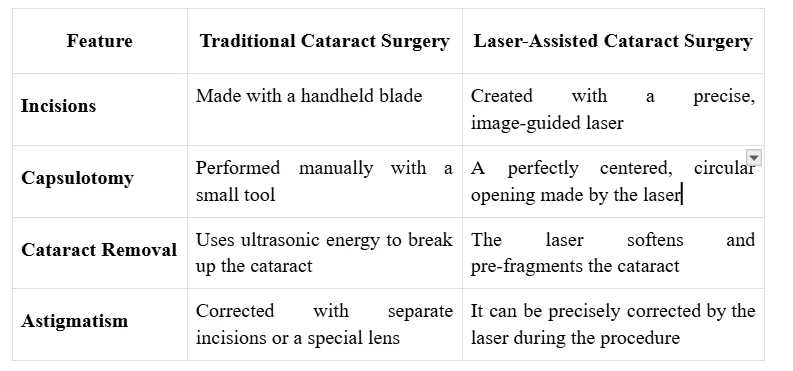
While traditional surgery is still a safe and effective option, the laser-assisted approach offers a higher degree of control and predictability, which can be particularly beneficial for patients seeking the best possible visual outcomes, especially those opting for premium IOLs.
The Core Benefits of Choosing Laser Technology
Patients and surgeons alike are turning to laser cataract surgery for its distinct advantages. The procedure is not just about adopting new technology; it’s about improving patient experiences and outcomes.
Enhanced Precision and Accuracy
The human hand is skilled, but it cannot replicate the micron-level precision of a computer-guided laser. As explained by Dr. Scott R. Wehrly, a Laser Cataract & Lens Replacement and Corneal Surgeon, this accuracy is critical for the capsulotomy and IOL placement, which directly impact the final quality of vision. A well-centered IOL provides a clearer, more stable visual result.
A Gentler Procedure
By pre-softening the cataract, the laser reduces the amount of ultrasonic energy needed to remove it. This minimizes trauma to the eye, leading to less inflammation and a quicker recovery period for many patients.
Better Astigmatism Correction
Astigmatism, a common imperfection in the eye's curvature, causes blurred vision. The femtosecond laser can make precise Limbal Relaxing Incisions (LRIs) on the cornea to correct mild to moderate astigmatism during the surgery itself. This integrated approach helps reduce or eliminate the need for glasses for distance vision after the procedure.
Potential for Improved Visual Outcomes
The culmination of these benefits is the potential for better vision. By optimizing every step of the surgery, from incision to lens placement, patients are more likely to achieve their desired visual target. This is especially true for those who choose advanced technology IOLs, such as multifocal or extended depth of focus lenses, which demand a higher level of surgical precision to function optimally.
Pro Tip: Discuss your lifestyle and visual goals with your surgeon. If you lead an active life and want greater independence from glasses, a premium IOL combined with laser surgery might be the ideal solution for you. Your surgeon can help you weigh the costs and benefits.
Who is a Good Candidate for Laser Cataract Surgery?
Most people who are candidates for traditional cataract surgery are also eligible for the laser-assisted option. A thorough examination by a cataract specialist is necessary to determine the best course of action. Surgeons like Dr. Vinay Gutti evaluate factors such as the density of the cataract, the health of the cornea, and the presence of other eye conditions.
You may be an excellent candidate if:
- You have astigmatism that can be corrected during the procedure.
- You are opting for a premium IOL that requires precise placement.
- You want the most advanced and predictable technology available for your vision.
The decision is a collaborative one. Getting a Cataract specialist's insights is the most important step in understanding if this advanced procedure aligns with your personal health needs and vision goals.
Pro Tip: Don't hesitate to ask detailed questions during your consultation. Inquire about the surgeon's experience with the technology, what you can expect during and after the procedure, and what makes you a good candidate for this specific approach.
The Patient Journey: What to Expect
The process of undergoing laser cataract surgery is streamlined and patient-focused.
- Consultation: Your journey begins with a comprehensive eye exam and a discussion about your vision goals.
- Pre-Operative Planning: High-resolution images and detailed measurements of your eye are taken and uploaded to the laser's computer, allowing your surgeon to plan a procedure tailored to your unique eye anatomy.
- The Procedure: On the day of surgery, you will first be positioned under the femtosecond laser. The laser portion takes only a minute or two. You are then moved to the operating microscope, where the surgeon completes the surgery by removing the cataract and implanting the IOL. The entire process is typically completed in 15-20 minutes.
- Recovery: You can go home the same day. Most patients report improved vision within 24 hours, with continued improvement over the following days and weeks. You will be given eye drops to prevent infection and reduce inflammation.
Final Words
Laser cataract surgery represents a significant leap forward in vision care. By integrating image-guided laser technology, surgeons can perform the most critical steps of the procedure with a level of precision that was previously unattainable.
Key Takeaways:
- Precision: The femtosecond laser offers unparalleled accuracy in creating incisions, opening the lens capsule, and fragmenting the cataract.
- Gentleness: Using less ultrasonic energy results in a gentler procedure, which can lead to less inflammation and a quicker recovery.
- Customization: The technology allows for the correction of astigmatism and the precise placement of advanced IOLs, leading to better visual outcomes.
- Expertise is Key: The success of the surgery relies on the skill of experienced surgeons who are adept at using this advanced technology.
This revolutionary procedure is helping more people regain clear, vibrant vision and reduce their dependence on glasses, truly transforming their quality of life.
The American Academy of Ophthalmology highlights that laser cataract surgery is particularly beneficial for individuals seeking optimal vision correction. Explore the American Academy of Ophthalmology's guidelines on cataract treatment.
FAQs
1. Is laser cataract surgery painful?
No, the procedure is not painful. Your eye will be numbed with anesthetic drops, and you may be offered a mild sedative to help you relax. Patients typically feel only light pressure during the surgery.
2. How long does the improvement in vision last?
The results of cataract surgery are permanent. The artificial intraocular lens (IOL) that replaces your natural lens is designed to last a lifetime and will not cloud over like a natural lens.
3. Does insurance cover laser cataract surgery?
Most insurance plans, including Medicare, cover the cost of traditional cataract surgery. The laser-assisted portion and the cost of premium IOLs are often considered elective and may incur out-of-pocket expenses. It's best to check with your insurance provider and the surgical center for specific details.



























Sign in to leave a comment.