

Decentralized finance, or DeFi, is one of the clearest examples of how blockchain has moved beyond simple token transfers. It uses smart contracts to recreate financial services such as trading, lending, borrowing, payments, and yield generation without relying on a traditional bank or broker to control every step. Ethereum explains this plainly: in DeFi, a smart contract replaces the financial institution in the transaction and runs according to code once it is live.
The sector is no longer a niche experiment. DeFiLlama currently tracks more than 7,000 DeFi protocols across 500-plus chains, with total value locked around $91.743 billion at the time of writing. That scale matters because it shows DeFi is not just a concept for developers. It is now a major part of the blockchain economy, with active users, real liquidity, and production-grade infrastructure.
For beginners, however, “DeFi development” can sound broader and more technical than it really is. At a basic level, it means building blockchain-based applications that let users interact with financial services through wallets and smart contracts. The challenge is not only writing code. It is designing systems that are transparent, secure, usable, and economically sound.
What DeFi Development Actually Means
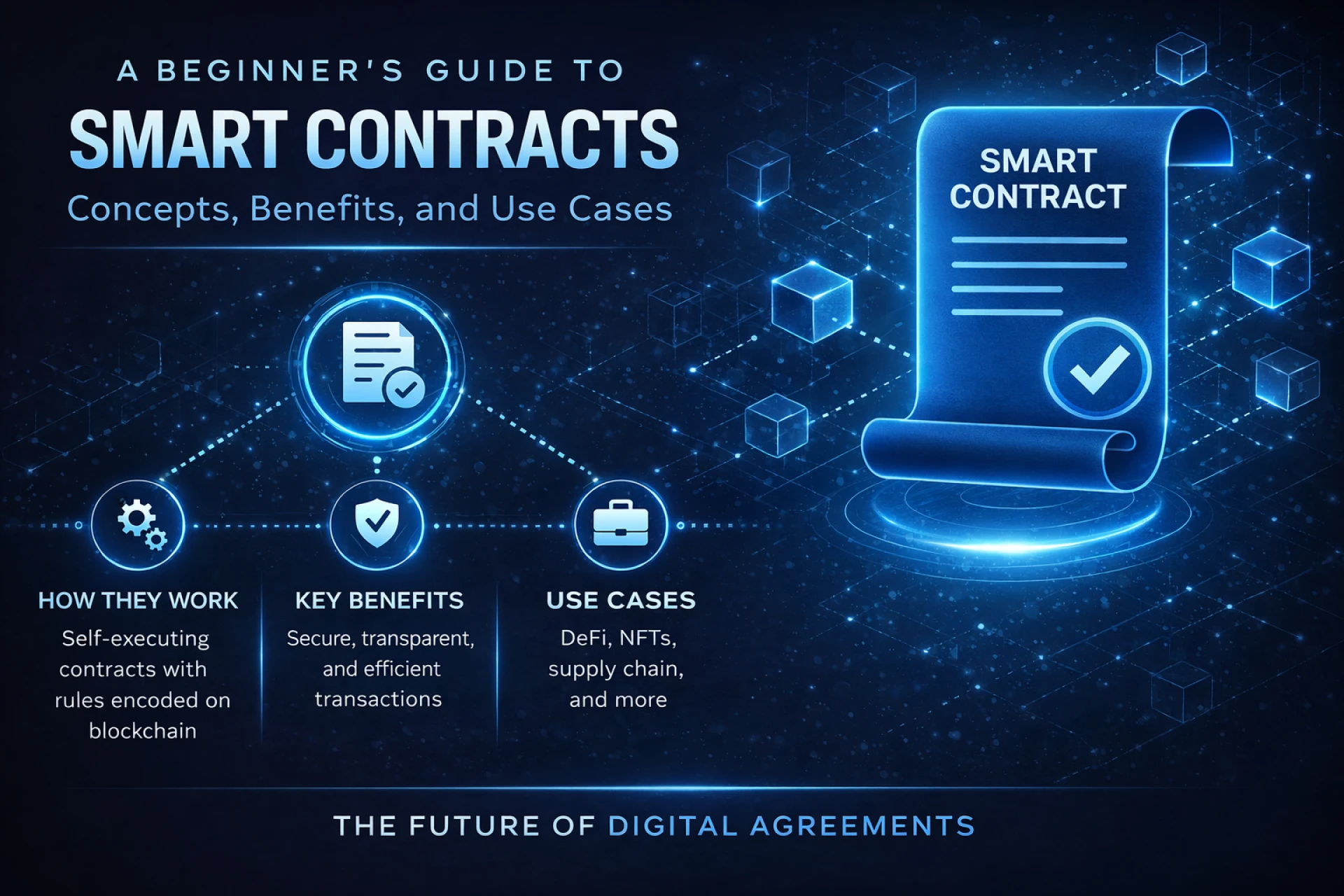
DeFi development is the process of creating decentralized financial applications on blockchain networks. These applications usually depend on smart contracts, wallet connections, on-chain data, and user interfaces that allow people to supply assets, swap tokens, borrow funds, or manage positions without turning control over to a central platform. Ethereum’s developer docs describe smart contracts as programs that run at a blockchain address and execute when they receive transactions. That is the technical base on which most DeFi products are built.
This means DeFi development is not one product category but a broad design space. A team might build a decentralized exchange, a lending market, a yield product, a derivatives platform, or an analytics dashboard that sits on top of existing protocols. In every case, the core job is to translate financial logic into software that can run on-chain and interact safely with user funds.
That is why defi software development is usually more complex than ordinary app development. A Web2 finance app may store balances in a private database and manage permissions centrally. A DeFi app has to work through smart contracts, public state, wallet signatures, network fees, and irreversible transactions. That changes both the engineering process and the product mindset.
The Main Building Blocks of a DeFi Application
Most DeFi products are built from a few core pieces. The first is the smart contract layer. This is where the actual financial logic lives. The contract may hold liquidity, calculate rewards, enforce collateral rules, or process token swaps. Ethereum’s docs emphasize that deploying a smart contract is itself a blockchain transaction, which highlights that DeFi logic is stored and executed directly on the network.
The second layer is the user interface. Even the best contract design will struggle if ordinary users cannot understand how to interact with it. A DeFi app needs wallet connectivity, clear transaction flows, readable balances, and helpful feedback around approvals, gas fees, and execution status. Ethereum’s developer portal treats tools, deployment, and smart contract workflows as part of a broader builder stack, which reflects how much of DeFi development depends on the surrounding experience, not just raw contract code.
The third layer is data and integration. DeFi apps often need price feeds, protocol data, liquidity states, or analytics from on-chain sources. Many also connect to existing protocols rather than reinventing every primitive. A lending dashboard may integrate Aave. A swap interface may route through Uniswap. A new product may combine several protocols into one user journey.
DeFi Development Through Real Examples
A decentralized exchange is one of the easiest examples to understand. Uniswap describes its protocol as a peer-to-peer system for exchanging ERC-20 tokens on Ethereum, designed to work without trusted intermediaries. Instead of using a centralized exchange database and order matching engine, it uses smart contracts and liquidity pools.
A lending platform is another clear example. Aave describes itself as a decentralized, non-custodial liquidity protocol where suppliers provide liquidity to markets and borrowers access funds by providing collateral that exceeds the borrowed amount. That model shows how DeFi applications can recreate a basic financial function like lending without requiring a bank to approve loans manually.
These examples matter because they show that DeFi development is not theoretical. It is already used to build working systems for swapping, supplying, borrowing, and managing digital assets. The strongest beginner mindset is to look at these protocols not only as products, but as technical patterns. They show how financial services can be rebuilt with transparent logic and modular infrastructure.
How Developers Design a DeFi Product
The first step in DeFi development is deciding what financial problem the product solves. Some apps are built to enable token exchange. Others are designed for borrowing, staking, synthetic exposure, or treasury management. This product decision matters because every use case creates a different contract design, different risk profile, and different user journey. Aave’s documentation, for example, centers its architecture on supply and borrow operations, while Uniswap focuses on swapping and liquidity provision.
The second step is choosing the protocol model. A swap app may use AMM pools. A lending app may need collateral logic, liquidation rules, and utilization-based interest rates. Uniswap’s documentation explains that a pool begins as a contract with zero token balances until liquidity providers seed it, and that the initial provider sets the first price. That single design choice shapes how the whole exchange works.
The third step is choosing the blockchain environment. Ethereum remains a core DeFi network, but DeFiLlama’s chain rankings show activity across hundreds of chains. Developers often choose networks based on liquidity, security assumptions, fee levels, and user base. A product meant for high-value institutional flows may prioritize one chain, while a consumer-friendly app may prefer lower-cost environments.
Smart Contracts and Financial Logic
The heart of decentralized finance development is turning financial rules into executable code. In a lending protocol, the contract has to track deposits, borrowing capacity, repayments, and liquidation conditions. In a DEX, it has to handle liquidity, pricing, and token transfers. Ethereum’s smart contract documentation explains that contract logic lives at a blockchain address and executes through transactions. That makes correctness essential because the contract is not just storing data; it is moving real value.
That is also why security and testing matter so much in DeFi. Once a contract is deployed, the cost of mistakes can be very high. Builders usually need development frameworks, testing tools, and careful deployment workflows. Ethereum’s builder tools section specifically lists smart contract development toolchains, deployment tools, and security resources as core parts of the builder environment.
For beginners, it helps to think of DeFi contracts as both software and infrastructure. They are software because developers write and update them. But they are infrastructure because other users and applications may depend on them after launch. Good DeFi development therefore needs engineering discipline, not just creative product ideas.
Why Liquidity Matters So Much
Liquidity is one of the defining concerns in DeFi development. A DeFi app can have elegant code and a polished interface, but if users cannot trade, borrow, or withdraw efficiently, the product will feel broken. Uniswap’s pool documentation shows how liquidity providers seed pools and make trading possible. Its fee documentation also shows that pool design includes fee tiers, which directly affect how markets function for different asset types.
Aave’s lending model shows the same principle from another angle. Suppliers provide the liquidity that borrowers draw from, and the protocol manages this movement through smart contracts rather than through a centralized balance sheet. That means liquidity is not a side detail. It is the operational foundation of the service.
This is one reason defi platform development has become more sophisticated over time. Builders no longer think only about a contract doing one job. They think about how to attract liquidity, manage pricing, offer useful integrations, and keep the product viable under real market conditions. Recent protocol evolution, such as Uniswap v4 hooks and Aave v4 liquidity hub architecture, shows how much DeFi platforms are now optimizing for flexibility and capital efficiency.
Risks Beginners Should Understand
DeFi development is promising, but it comes with real challenges. One is technical risk. Poorly designed smart contracts can fail, lock funds, or create exploit paths. Another is economic risk. A protocol can work exactly as coded but still behave badly if its incentives, fee model, or liquidity structure are weak. The gap between code correctness and product robustness is one of the most important lessons in DeFi.
There is also the challenge of usability. Wallet connections, gas fees, and transaction approvals can confuse new users. Aave’s effort to provide AaveKit for React, TypeScript, and API integrations shows that even large protocols recognize the need to make DeFi infrastructure easier to embed into consumer-facing products.
Finally, there is the problem of fragmentation. DeFiLlama’s chain data makes clear that the ecosystem is spread across many chains and thousands of protocols. That creates opportunity, but it also makes product design harder because users and liquidity are not all in one place.
Conclusion
DeFi development is the process of building financial applications on blockchain through smart contracts, wallet-based access, and on-chain liquidity. Ethereum provides the core technical foundation, while protocols like Uniswap and Aave show how swapping, lending, and liquidity management can work without traditional intermediaries. The size of today’s DeFi market shows that this is no longer an experiment at the edge of blockchain. It is now one of the main ways blockchain technology is used in practice.
For beginners, the clearest way to understand DeFi development is to focus on the essentials. Smart contracts replace manual financial execution. Liquidity makes services usable. Interfaces connect ordinary users to on-chain infrastructure. Strong products combine all three. Once those basics are clear, DeFi stops looking like a collection of buzzwords and starts looking like what it really is: a new way to build financial systems in software.


























Sign in to leave a comment.