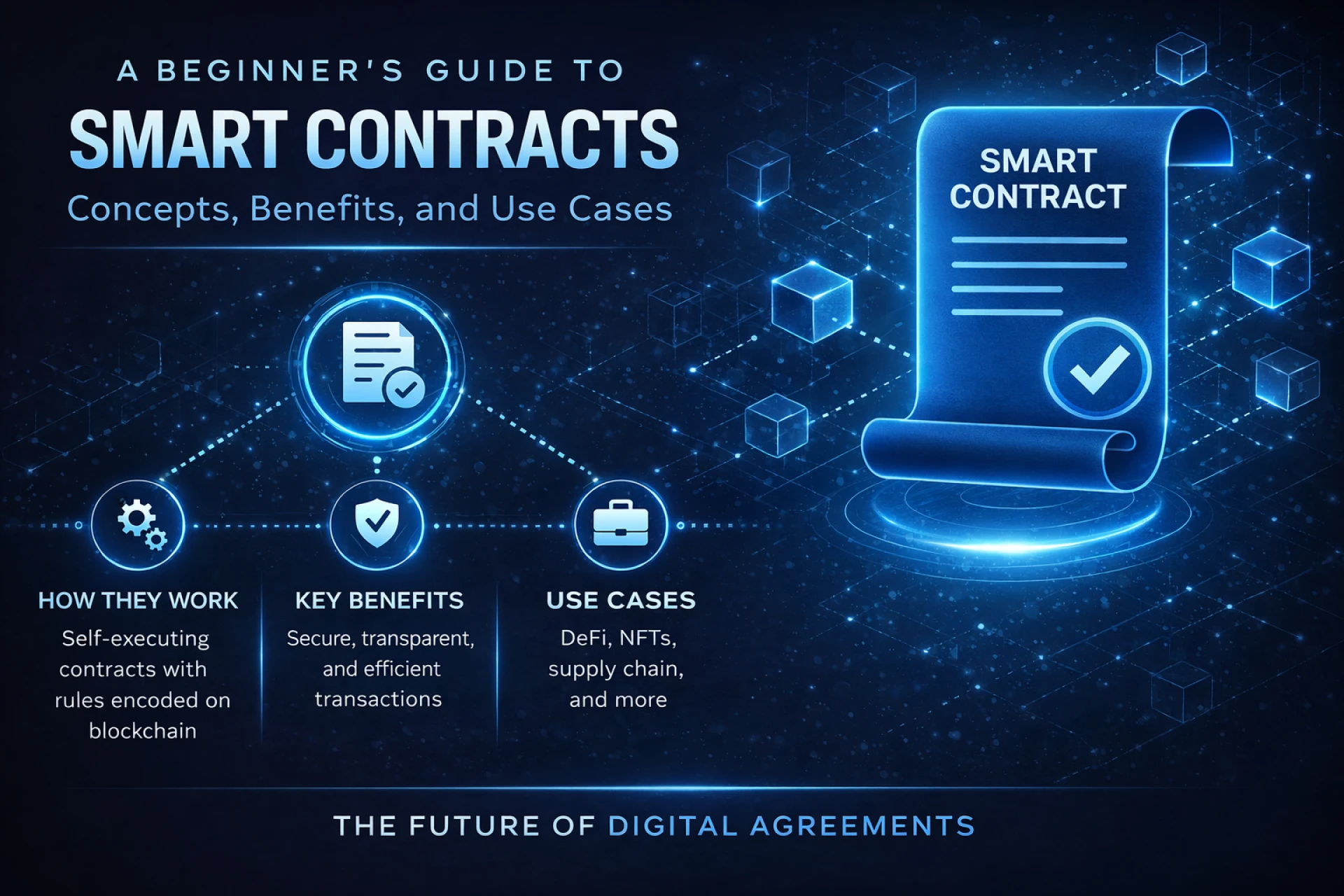

Smart contracts are one of the most important innovations to come out of blockchain technology. In simple terms, a smart contract is a program stored on a blockchain that runs when specific conditions are met. Ethereum’s developer documentation describes a smart contract as code and data that live at a blockchain address and execute according to predefined rules. NIST similarly explains smart contracts as collections of code and data deployed through cryptographically signed transactions and executed by nodes across the network.
That basic definition matters because it explains why smart contracts have attracted so much attention. They are not just digital documents. They are executable systems. Instead of relying entirely on a bank, platform operator, broker, or administrator to carry out a transaction, parties can use blockchain-based code to automate actions such as transferring assets, releasing payments, verifying conditions, or enforcing permissions. On Ethereum, smart contracts form the foundation of the application layer that powers decentralized finance, digital collectibles, tokenized assets, and many other blockchain use cases.
For beginners, the concept can sound more complicated than it really is. A smart contract is best understood as a rules engine. If the required condition is met, the programmed action happens. If it is not met, nothing happens, or the transaction fails. The power comes from where that code runs: on a distributed ledger where participants share the same record and the same contract logic. That creates a system that can be transparent, tamper-resistant, and consistent across multiple parties.
What a Smart Contract Actually Is
The phrase “smart contract” often creates confusion because it suggests both legal intelligence and complete autonomy. In reality, most smart contracts are neither. They are software programs that automate clearly defined actions on a blockchain. They can hold data, expose functions, and update their own internal state. Ethereum’s documentation explains that smart contracts are made up of code and data and can execute when they receive transactions.
The key characteristic is determinism. Given the same input and the same conditions, the contract should always produce the same output. This predictability is essential because blockchain nodes independently execute or validate transactions and must agree on the outcome. NIST’s work on blockchain systems emphasizes this deterministic nature as one of the reasons smart contracts can be trusted to enforce logic consistently across a decentralized network.
A simple example is a token transfer. A contract may state that if a user owns enough tokens and signs a valid transaction, a certain number of tokens will move to another address. A more advanced example is a lending protocol, where the contract checks collateral levels, calculates interest, and may trigger liquidation if the loan becomes undercollateralized. In both cases, the contract is not making subjective decisions. It is following logic that was defined in advance.
This is why smart contracts are often compared to vending machines. A vending machine follows an exact sequence. Insert the correct amount, make a valid selection, and the machine releases the item. A smart contract works in a similar way, except the “machine” is blockchain infrastructure and the output may be a payment, a record update, a digital asset transfer, or a governance action.
How Smart Contracts Work
The lifecycle of a smart contract usually begins with development. A programmer writes the contract in a blockchain-oriented language such as Solidity, which is the most widely used language for Ethereum smart contracts. Solidity’s documentation shows that contracts can define variables, functions, permissions, inheritance, and interactions with other contracts.
Once written, the contract is compiled into bytecode and deployed to the blockchain. Deployment creates a permanent contract address that users and other applications can interact with. After deployment, the contract remains available on the network and can be called by transactions that trigger its functions. Because the contract runs on the blockchain, every relevant node processes the same rules and arrives at the same state transition.
A beginner-friendly way to think about this is to imagine three layers. The first layer is the code, which defines the business logic. The second layer is the blockchain, which stores the contract and verifies its execution. The third layer is the user or application interface, which allows people to interact with the contract without needing to read raw code. When someone uses a decentralized application to swap a token, vote in a governance proposal, or mint a digital asset, they are often interacting with a smart contract through that interface.
In real projects, Smart Contract Auditing becomes important before deployment because even small logic flaws can create serious vulnerabilities. Since blockchain contracts often manage financial value directly, testing and review are not optional extras. They are part of responsible engineering.
Core Concepts Every Beginner Should Know
To understand smart contracts well, it helps to grasp a few foundational concepts.
The first is immutability. Once a contract is deployed, its logic is often difficult or impossible to change directly. Ethereum’s public-facing smart contract overview states that smart contracts are guaranteed to execute according to their code and notes that the rules cannot easily be changed once created. This creates trust, but it also raises the cost of mistakes.
The second is state. A smart contract stores information. That may include account balances, ownership data, votes, whitelist entries, vesting schedules, or other variables. When a user interacts with the contract, the state may change if the transaction meets the required conditions.
The third is gas or execution cost. On networks like Ethereum, executing a smart contract consumes computational resources, which users pay for through transaction fees. This creates an economic limit on complexity and discourages abusive or wasteful computation. Ethereum documentation explains that transaction execution is tied to network resource usage, which is why contract efficiency matters.
The fourth is composability. Smart contracts can interact with each other. This feature is one of the reasons blockchain ecosystems grow quickly. A single application may pull pricing data from an oracle, use a token contract for asset transfers, and call a treasury contract for settlement. That modular architecture allows developers to build layered systems from reusable pieces.
Benefits of Smart Contracts
The biggest benefit of smart contracts is automation. They reduce the need for manual processing by executing logic automatically once predefined conditions are satisfied. This can cut delays, lower administrative effort, and reduce the number of intermediaries involved in a transaction. NIST notes that smart contracts can automate procedures, support more complex transactions, and record outcomes directly on-chain.
Another major benefit is transparency. Because the contract logic and transaction history are stored on a blockchain, participants can inspect how the system works and verify what happened. This is especially useful in environments where multiple parties need a shared record but do not fully trust a central administrator.
Reliability is also important. A smart contract performs the same way every time if the same conditions are met. That consistency makes it suitable for rule-based business processes such as escrow, token issuance, vesting, claims handling, or automated royalty payments.
Cost efficiency is another reason businesses pay attention to this technology. By reducing manual reconciliation and repetitive administrative steps, smart contracts can lower operational friction. NIST’s blockchain work notes that such systems can reduce reconciliation costs and shorten transaction times in some business-to-business scenarios.
For teams exploring blockchain products, Smart Contract Audit practices help preserve these benefits by catching issues that could otherwise undermine trust, security, and efficiency after launch.
Real-World Use Cases
The most visible smart contract use case is decentralized finance, or DeFi. Lending protocols, decentralized exchanges, derivatives systems, and staking applications all rely on smart contracts to manage user funds and apply market rules. These platforms automate activities that would normally require centralized financial infrastructure. Ethereum explicitly identifies smart contracts as the foundation for many decentralized applications.
Another major use case is tokenization. Smart contracts can represent ownership rights, transfer restrictions, supply controls, and compliance rules for digital assets. That makes them useful in stablecoins, security tokens, loyalty systems, gaming assets, and tokenized real-world assets.
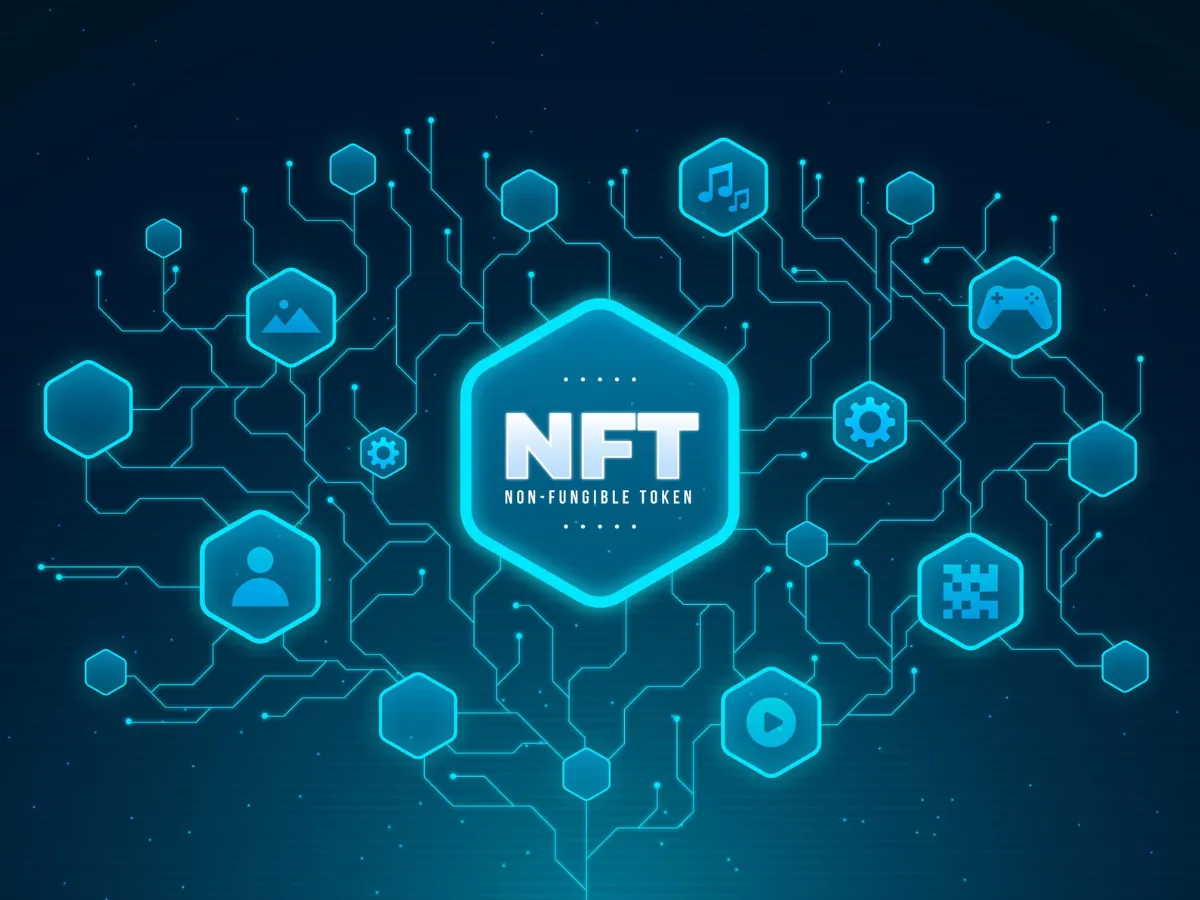
NFTs are another familiar example. A smart contract can define the ownership, transferability, and metadata relationships of a non-fungible token. But NIST also points out an important limitation: while a smart contract can technically establish who owns the token record, broader legal questions about rights to the underlying asset may still depend on off-chain frameworks.
Supply chain automation is often discussed as well. In such systems, a contract might release payment when goods are confirmed delivered or update a shared record when a product passes through a checkpoint. This does not eliminate all trust issues, especially when physical-world data must be introduced from outside the blockchain, but it can improve traceability and coordination.
Insurance is another promising category. Parametric insurance products, for example, can use trusted external data to trigger automatic payouts when specified conditions occur, such as a weather threshold or travel delay. In these cases, the value of the contract lies in its ability to reduce manual claims friction in narrow, rules-based scenarios.
Challenges and Limitations
Smart contracts are powerful, but they also have real constraints. The first is that they only do what they are programmed to do. They do not understand business intent beyond the literal code. If the developer expresses the logic incorrectly, the contract may still execute perfectly from a technical perspective while producing an undesirable business result.
The second challenge is external data. Blockchains are excellent at verifying internal state, but they cannot natively know what happened in the outside world. To connect real-world events to on-chain logic, smart contracts depend on oracles or similar data feeds. That creates additional trust and security considerations. NIST’s blockchain research highlights that data from outside a blockchain introduces important design tradeoffs.
The third challenge is security. Solidity’s own security guidance warns that even when code appears correct, vulnerabilities can still exist in design, dependencies, compilers, or platform assumptions. Common problems include reentrancy risks, improper access control, arithmetic mistakes in older patterns, and unsafe external calls.
These risks are not hypothetical. Chainalysis reported that $2.2 billion was stolen from crypto platforms in 2024, and its 2025 reporting showed that stolen funds continued rising, illustrating how serious the broader security environment remains for blockchain applications.
That is why many organizations seek support from a specialized Smart Contract Audit Company before launching production systems.
Best Practices for Beginners and Businesses
For beginners, the best approach is to start small. Learn the basic logic of blockchain state, transactions, and contract functions before trying to understand highly complex decentralized applications. Read verified documentation, test simple contracts on development environments, and study common attack patterns alongside coding patterns.
For businesses, success depends on discipline more than hype. A strong contract project needs clear specifications, limited complexity, multiple rounds of testing, secure libraries, deployment controls, and post-launch monitoring. It also needs realistic expectations. Smart contracts are best used where rules are clear, execution should be automated, and a shared ledger creates genuine value.
Conclusion
Smart contracts are not just a blockchain buzzword. They are programmable systems that automate trust-sensitive digital processes through code. For beginners, the core idea is straightforward: predefined rules are written into blockchain software, and when those rules are met, the software executes the agreed action. That simple mechanism enables powerful outcomes across finance, digital assets, governance, insurance, and supply chains.
Their importance comes from the combination of automation, transparency, and shared execution. At the same time, their limitations are equally important to understand. Smart contracts need secure design, careful testing, reliable data inputs, and governance around updates and legal interpretation. When used thoughtfully, they can become a foundational tool for digital coordination. When used carelessly, they can create expensive technical and operational risk.
For anyone starting out, the right mindset is to see smart contracts not as magic, but as precise infrastructure. Once that becomes clear, the technology becomes far easier to understand and far more meaningful to evaluate.




























Sign in to leave a comment.