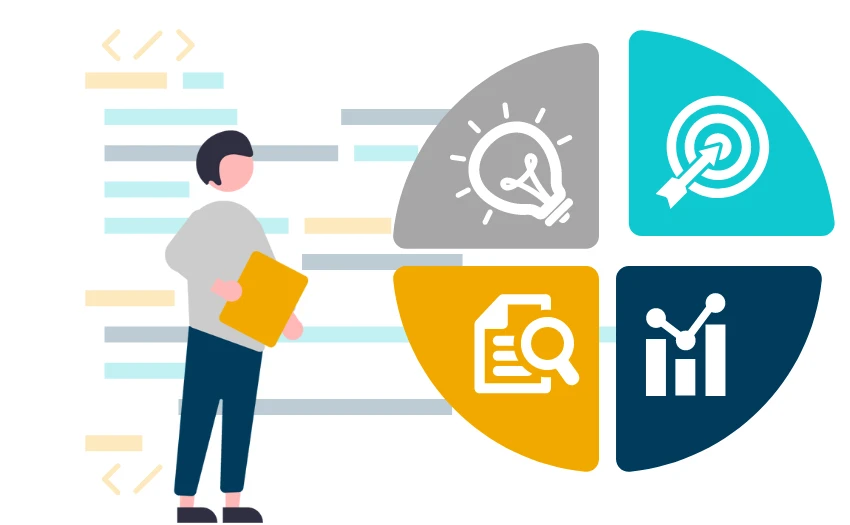

As a non-technical founder, the journey from a brilliant idea to a live SaaS product can feel like navigating a dense, fog-filled forest. The technical jargon, the seemingly endless stages, and the pressure to build something that people will actually pay for can be overwhelming. But here’s the secret: your role isn’t to write a single line of code. It’s to be the chief architect of the vision, the relentless advocate for the user, and the conductor of the team. The heart of this role is mastering the principles of product design, ensuring that every user interaction is intuitive and valuable.This focus on experience is what ultimately differentiates a product in a crowded market.
This roadmap is your compass. It demystifies the process by breaking down the journey into five critical, manageable stages, focusing on exactly what you, the non-technical founder, need to do at each one.
Stage 1: The Blueprint — Deep Dive Market Validation
Before a single dollar is spent on development, your most crucial task is to validate your idea. Think of this as laying the foundation of your future product.
Your Role: Chief Investigator.
Solve a Real Problem: Don't build a product and then look for a problem to solve. Go in the opposite direction. Identify a pain point in a specific market and immerse yourself in it. Conduct interviews with your target audience - the more specific, the better. Ask open-ended questions: "What is the most frustrating part of your workday?" or "If you could wave a magic wand and fix one thing in your process, what would it be?"
Study the Landscape: Analyze your competitors. What are they doing well? What are their weaknesses? Your goal isn’t to replicate them, but to identify a unique angle or a feature they've missed. Your product should offer a clear advantage.
Synthesize and Define: Based on your research, create a crisp, one-sentence problem statement. This becomes your North Star. Then, define your Minimum Viable Product (MVP)—the smallest set of features that solves the core problem and delivers value. This is your most important document, preventing you from overbuilding and wasting precious time and resources.
Stage 2: The Wireframe & Prototype — Your Visual Storyboard
This is where your vision takes a tangible form. You don't need to be a designer, but you need to be the one dictating the user’s journey through the product.
Your Role: The User Experience (UX) Storyteller.
Sketch It Out: Using simple tools like Figma, Miro, or even a pen and paper, create a wireframe. This is a skeletal, low-fidelity layout of your product’s screens. Don’t worry about colors or fonts; focus on the flow. How does a user sign up? How do they perform the core action? What happens next?
Build an Interactive Prototype: Convert your wireframes into a click-through prototype. This is an interactive version that allows you to simulate the user experience without any code. It’s your chance to see if the flow makes sense and to get crucial feedback before you hire a developer.
Gather Feedback: This prototype is a powerful tool for your next round of user interviews. Show it to your target audience and watch them use it. Don’t prompt them; simply observe. Their feedback will be invaluable for refining the product flow and preventing costly changes later on.
Stage 3: The Build — Hiring and Managing the Technical Team
This is the stage that most non-technical founders fear, but it doesn’t have to be. Your job is not to build, but to guide and manage the builders.
Your Role: The Project Manager & Vision Keeper.
Find the Right Partner: Whether you hire a freelance developer, an agency, or a co-founder, look for someone who understands your vision and is a good communicator. Ask for case studies, speak with their past clients, and ensure they are comfortable working with a detailed product roadmap. Don't be afraid to hire a fractional CTO to help you vet technical candidates and guide the technical decisions.
Establish a Communication Rhythm: Set up a clear, predictable communication cadence. Weekly check-in meetings and a project management tool (like Jira or Trello) are non-negotiable. Your role is to ensure the team is on track and that they have everything they need to proceed.
Avoid the 'Tech Debt' Trap: Be wary of shortcuts. While speed is important, so is building a scalable foundation. Trust your developer's recommendations on architecture and don't push for features that will create long-term problems. A stable, well-built product will save you headaches down the line.
Stage 4: The Beta Launch - Your Product's First Impression
Your MVP is ready. This isn’t the grand unveiling; it’s a controlled release to a small group of early adopters.
Your Role: The User Advocate & Data Analyst.
Recruit Your Beta Testers: Go back to the people you interviewed in Stage 1 and offer them early access. This is your chance to get feedback from a committed, enthusiastic group.
Set Clear Goals: What do you want to learn from this beta? Do you want to test a core feature? Do you want to measure user engagement? Define success metrics beforehand.
Gather Unfiltered Feedback: Create a dedicated feedback channel (e.g., a Slack group or a survey) and encourage testers to report bugs and suggest improvements. This feedback is gold. It will inform the final polish before your public launch.
Stage 5: The Market Launch - The Big Day
All the pieces are in place. You’re ready to introduce your product to the world.
Your Role: The Marketer & Growth Strategist.
Craft Your Story: Based on your initial market research, define your core message. Your landing page and marketing materials should clearly state the problem you solve and the value you provide.
Launch and Listen: Choose a launch platform like Product Hunt or a specific industry forum. Get the word out, but more importantly, be present. Respond to every comment, address every question, and use this opportunity to build your initial community.
Prepare for What's Next: The launch is not the end; it's the beginning. You must be ready to collect feedback, track key metrics, and plan for your next set of features. A successful launch is about a smooth transition into the continuous cycle of iteration and growth.
By focusing on these five stages, you can navigate the path from MVP to market with confidence and without the stress of technical complexity. Your strengths - your business acumen, your vision, and your ability to connect with users - are all you need to lead your product to success.



























Sign in to leave a comment.