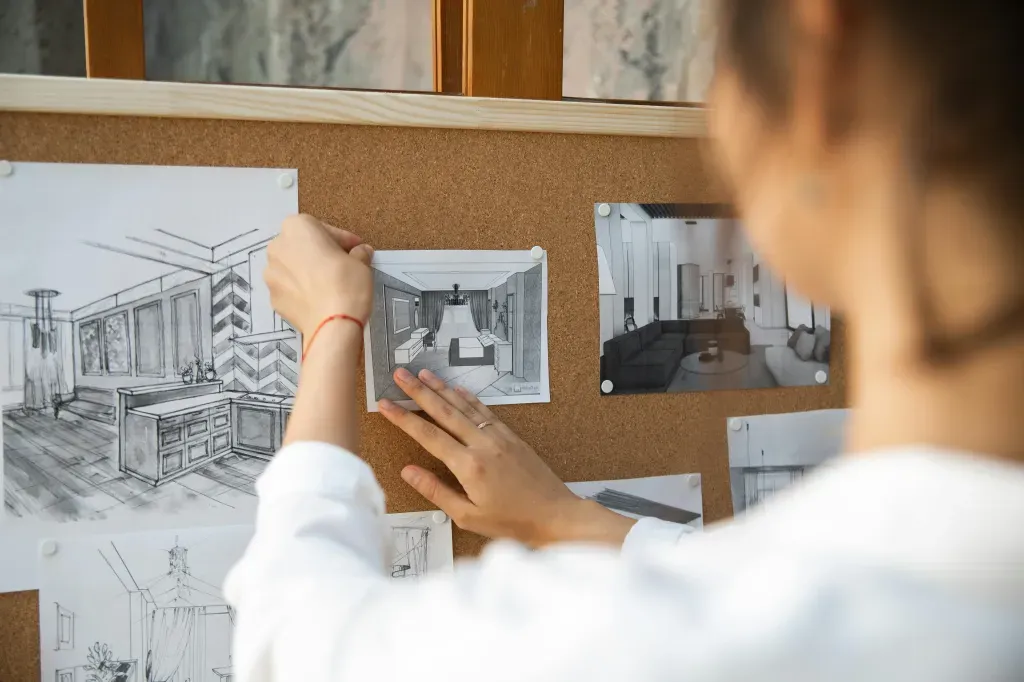

There is a rule in classical architecture called the Golden Ratio, a proportion approximately equal to 1:1.618, that appears with unusual frequency in structures human beings find beautiful. The Parthenon’s facade fits it. So does the nautilus shell, the spiral of a galaxy, and, according to some analyses, the dimensions of a well-proportioned room. Whether the ratio is truly universal or a pattern humans are primed to find is debated. What is not debated is that space affects people, consistently and measurably, in ways they rarely consciously register.
This is the quiet foundation beneath interior design as a discipline. It is not decoration. It is the deliberate manipulation of how a person feels when they occupy a space, and the science behind it is older and more rigorous than most people assume.
Why Ceiling Height Changes How You Think
A study published in the Journal of Consumer Research found that people in rooms with higher ceilings performed better on tasks requiring abstract, creative thinking, while lower ceilings favoured detail-oriented, focused work. The researchers called it the Cathedral Effect. The physical volume of a space above your head appears to influence the cognitive mode your brain defaults to expansive space, expansive thinking.
Lighting compounds this further. Bright, cool light increases alertness and is associated with analytical thinking. Warm, dim light reduces perceived ambient temperature and encourages relaxation and social openness. This is why the lighting design of a restaurant is not an aesthetic afterthought; it is a calculated influence on how long guests stay and how much they order. Interior designers working at a professional level are, in a very real sense, environmental psychologists with a drafting table.
Colour adds another layer entirely. Warm colours, reds, oranges, yellows advance visually, making walls feel closer, and spaces feel more intimate. Cool colours recede, expanding the perceived size of a room. A narrow corridor painted deep terracotta feels intentionally cosy. The same corridor in pale sage feels like it belongs in a larger building. Neither is a trick. Both are tools.
From Sketch to Space

What separates professional interior design from instinct is the ability to translate an understanding of these principles into technical execution. A furniture layout is not just about what fits; it is about traffic flow, sightlines, focal points, and the relationship between functional zones. A colour scheme has to account for how natural light changes through the day and how artificial light shifts the undertones of every surface after dark. Material selection involves understanding texture, reflectivity, acoustic properties, and durability alongside visual effect.
The technical side, drawing, drafting, spatial planning, and computer-based presentation, is the vocabulary that makes it possible to communicate a design idea clearly enough that it can actually be built. Creativity without that vocabulary stays in the sketchbook.
If the relationship between space and human experience and the craft of shaping one to affect the other feels like something worth spending a year learning seriously, the Diploma in Interior and Exterior Space Designing at St. Teresa’s College (Autonomous), Ernakulam, is a programme where that instinct gets professional form.


























Sign in to leave a comment.