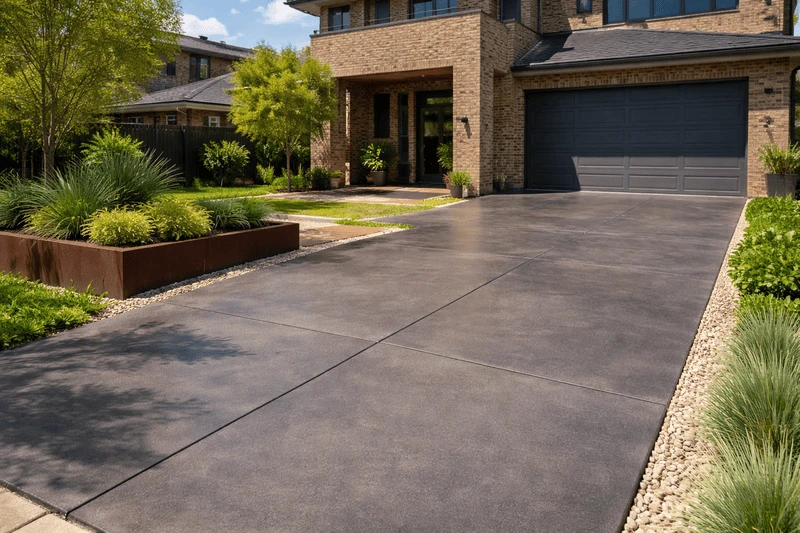

Coloured concrete has moved well beyond its early use as a simple decorative alternative to standard grey slabs. Today, it plays a meaningful role in residential and commercial construction across Australia, offering durability while contributing to the visual character of a property. From suburban driveways to urban courtyards and large-scale commercial pavements, tinted concrete surfaces are increasingly chosen for their ability to combine strength with design flexibility.
This article explores how coloured concrete works, where it is most commonly used, what influences its longevity, and why professional installation often determines long-term performance.
What makes coloured concrete different?
At its core, coloured concrete is structurally similar to traditional concrete. The difference lies in the addition of pigments or oxides that alter the tone of the mix. These pigments may be blended throughout the entire slab or applied to the surface during finishing, depending on the intended effect.
Integral colouring, where pigment is mixed through the concrete before pouring, creates consistent colour depth even if the surface experiences minor wear. Surface-applied colour hardeners provide rich tones and increased abrasion resistance but rely more heavily on correct finishing technique.
Unlike painted surfaces, the colour in properly installed concrete becomes part of the material itself. This distinction matters when considering durability, as painted coatings may peel or chip under traffic and weather exposure.
Why coloured finishes suit Australian conditions
Australian climates vary significantly, from Melbourne’s cooler winters to high UV exposure during summer. Concrete surfaces are frequently subjected to temperature changes, moisture and direct sunlight. When installed correctly, coloured concrete may withstand these conditions without losing structural integrity.
Lighter shades can help reduce heat absorption in outdoor spaces, making them suitable for patios and pool surrounds. Earthy tones often complement native landscaping and architectural materials such as brick, timber and steel.
In cities like Melbourne, where both heritage homes and contemporary builds coexist, tinted concrete allows homeowners to balance durability with design coherence.
Popular applications across residential settings
Coloured concrete is widely used in driveways, pathways, alfresco areas and garage floors. Its appeal lies in its adaptability. Subtle charcoal tones may suit modern facades, while warm terracotta shades can complement traditional homes.
Driveways benefit particularly from integral colouring, as traffic wear does not easily expose a contrasting base layer. Similarly, garden paths and courtyards gain visual continuity when concrete tones align with surrounding landscaping elements.
When researching examples of installation quality, property owners often encounter references to coloured concrete by Cube Concreting within broader discussions of material selection and finish consistency. These mentions typically appear in the context of illustrating how professional mixing and finishing influence colour uniformity rather than as direct endorsements.
Commercial and public space use
Beyond residential projects, coloured slabs are frequently used in commercial developments, educational facilities and retail environments. Large paved areas benefit from defined zones or subtle colour variations that assist with wayfinding or aesthetic differentiation.
In public spaces, concrete tones can soften the appearance of expansive paved surfaces. Muted browns, greys and sand colours often integrate more comfortably into urban landscapes than plain grey expanses.
Because commercial installations typically experience heavier traffic, correct mix design and curing processes become even more important. The choice of pigment concentration and finishing method directly affects wear resistance and long-term appearance.
The role of installation technique
Achieving consistent colour requires careful planning. Variations in water content, mixing time and curing conditions can all affect final appearance. Even environmental factors such as sudden rainfall or rapid drying during hot weather may influence colour outcome.
Experienced installers control these variables by adjusting mix ratios and monitoring surface conditions during placement. When homeowners explore options such as coloured concrete in Melbourne by Cube Concreting, the focus often centres on examples of uniform finish and clean edge detailing rather than colour alone.
Surface preparation and curing play a major role in performance. Proper curing reduces the risk of cracking and ensures pigments bond evenly within the slab.
Maintenance and longevity
Coloured concrete is generally low maintenance, though periodic cleaning and resealing may help preserve vibrancy. Dirt accumulation and organic staining can dull the appearance of lighter shades, particularly in shaded or damp environments.
Resealing protects against moisture penetration and surface wear. In high-traffic areas such as driveways, sealants may reduce tyre marking and minor abrasion.
Unlike surface paints, integral colour does not require reapplication. However, consistent maintenance supports overall visual appeal and extends service life.
Colour selection and design considerations
Choosing the right shade involves more than personal preference. Surrounding materials, roofing colour, fencing and landscaping all influence how the finished slab appears. Natural light conditions also affect perception; the same tone may appear warmer or cooler depending on time of day.
Neutral tones remain popular for their versatility. Charcoal, slate and sandstone hues complement a wide range of architectural styles. Bolder colours may suit feature areas but require careful consideration to avoid overpowering adjacent elements.
Sampling small sections before full installation helps visualise the final outcome. This process allows adjustments to pigment concentration or finish texture if necessary.
Surface textures and finishing options
Coloured concrete can be finished in various textures, from smooth trowelled surfaces to broom finishes that improve slip resistance. Exposed aggregate techniques combine tinted cement with visible stone fragments, creating additional depth and variation.
Slip resistance is particularly relevant for pool surrounds and outdoor entertaining areas. Texture selection should align with intended use to balance safety and visual appeal.
Environmental considerations
Concrete production carries environmental implications, yet modern mix designs increasingly incorporate supplementary cementitious materials to reduce embodied carbon. While pigmentation does not significantly alter environmental impact, selecting durable finishes reduces the need for premature replacement.
Long-lasting surfaces contribute to sustainability by minimising material consumption over time. Proper installation further supports longevity by reducing the likelihood of structural repair.
Cost factors and long-term value
Coloured concrete typically costs more than plain grey slabs due to pigment addition and finishing requirements. However, the visual improvement may offset the need for additional surface treatments such as pavers or tiles.
When assessing value, durability should be weighed alongside upfront expense. A well-installed coloured slab may maintain structural integrity and appearance for many years with minimal intervention.
Why professional involvement matters
Consistency, structural stability and finish quality depend heavily on experience. Incorrect water ratios or rushed finishing can result in uneven shading or premature cracking. Professional installers understand how environmental conditions affect curing and adjust accordingly.
While small DIY projects may be manageable, larger surfaces benefit from coordinated mixing and placement to maintain colour uniformity across the entire area.
Conclusion
Coloured concrete offers a practical balance between structural strength and design flexibility. Its adaptability across residential and commercial settings makes it a widely chosen material in Australian construction. When carefully planned and professionally installed, tinted concrete surfaces contribute to cohesive outdoor environments that withstand daily use and environmental exposure.
Thoughtful colour selection, proper curing and routine maintenance support long-term performance. Whether used for driveways, patios or commercial pavements, coloured concrete continues to demonstrate how functional materials may also shape visual character.


























Sign in to leave a comment.