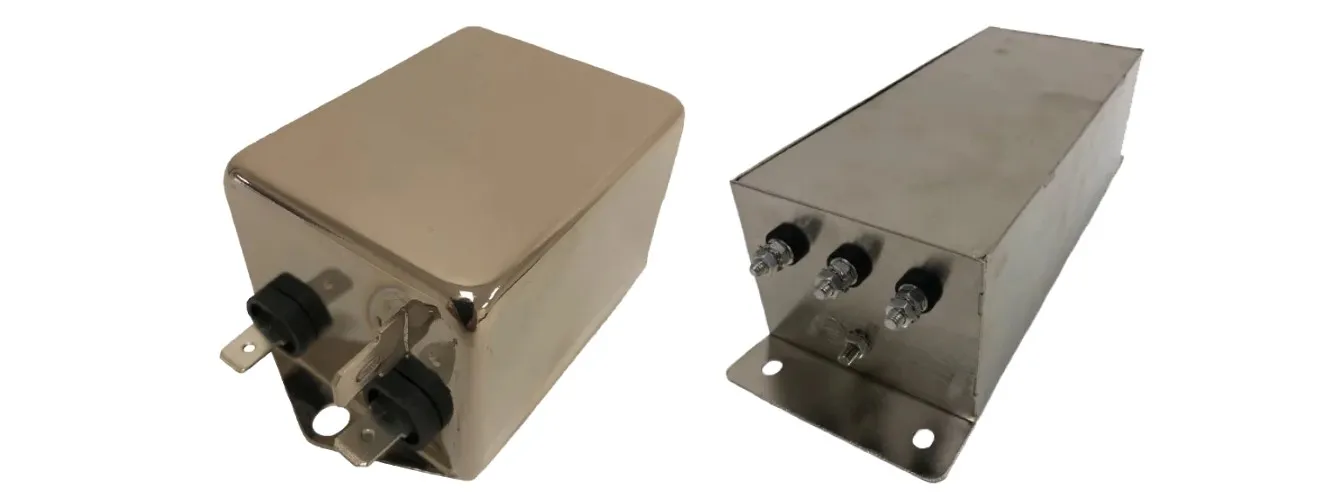

Modern electrical systems are expected to do more than simply deliver power—they must also provide clean, stable, and interference-free electricity to increasingly sensitive electronic equipment. From industrial automation and manufacturing facilities to hospitals, laboratories, telecommunications infrastructure, and commercial buildings, electrical noise has become one of the leading causes of equipment malfunctions and electromagnetic compatibility (EMC) challenges.
An effective AC power filter is one of the simplest and most reliable ways to reduce conducted electromagnetic interference (EMI) before it affects critical equipment. Also known as AC power line filters, these devices improve power quality, enhance equipment reliability, and help systems comply with commercial and military EMC requirements.
What Is an AC Power Filter?
An AC power filter is an EMI suppression device installed between the incoming AC power source and electronic equipment. Its purpose is to attenuate unwanted high-frequency electrical noise while allowing the normal 50 Hz or 60 Hz power signal to pass with minimal loss.
Electrical noise is generated whenever electronic devices rapidly switch voltage or current. This includes equipment such as switch-mode power supplies (SMPS), variable frequency drives (VFDs), servo drives, inverters, motor controllers, battery chargers, and LED lighting systems. Without proper filtering, this noise can travel throughout the power distribution network, affecting nearby equipment and reducing overall system performance.
Why Clean Power Matters
Many electrical problems are incorrectly blamed on poor equipment performance when the real issue is excessive electrical noise.
Conducted EMI can interfere with communication systems, reduce the accuracy of measurement equipment, create nuisance faults in automation systems, and even prevent products from passing EMC compliance testing. In environments where multiple electronic devices operate simultaneously, unwanted noise can propagate through shared power lines, increasing the likelihood of system instability.
Installing AC power line filters helps isolate sensitive equipment from these disturbances while preventing internally generated noise from affecting other connected devices.
How AC Power Line Filters Work
Although filter configurations vary depending on the application, most AC power filters use a combination of inductors, capacitors, and common-mode chokes.
These components work together to suppress both common-mode and differential-mode interference. The filter performs two important functions simultaneously. It prevents high-frequency noise generated inside equipment from returning to the electrical supply and blocks external electrical interference from entering the equipment through the incoming power lines.
This dual-direction filtering improves power quality while supporting compliance with EMC regulations.
Where AC Power Filters Are Used
The need for effective EMI suppression extends across virtually every industry.
Industrial manufacturing facilities rely on AC power filters to protect PLCs, robotics, motor drives, and automated production equipment. Healthcare facilities use them to maintain stable operation of diagnostic and laboratory instruments. Telecommunications infrastructure depends on clean electrical power to support continuous communication without signal degradation.
Commercial buildings also benefit from improved power quality, particularly where building automation systems, security equipment, lighting controls, and HVAC systems share common electrical circuits.
As renewable energy systems, battery storage, and EV charging infrastructure continue to expand, the demand for reliable AC power line filtering continues to grow.
Choosing the Right AC Power Filter
Selecting the right filter involves more than matching voltage and current ratings.
Engineers should consider the operating voltage, continuous load current, expected noise frequencies, leakage current limits, installation environment, and applicable EMC standards. Understanding where the interference originates and how it propagates through the electrical system is equally important.
Choosing a filter based solely on current capacity may not provide adequate attenuation if the application's electrical characteristics are overlooked.
The most effective filtering solution is one designed specifically for the system's electrical and environmental requirements.
Proper Installation Is Critical
Even the highest-performing AC power line filters cannot achieve their full attenuation if installed incorrectly.
The filter should be mounted as close as possible to the equipment's power entry point. This minimizes the opportunity for electrical noise to bypass the filter before it reaches the equipment. The filter housing should also be securely bonded to a conductive metal chassis to provide an effective ground path for high-frequency interference.
Another important consideration is cable routing. Input and output wiring should remain physically separated to reduce the possibility of noise coupling around the filter, which can significantly reduce its effectiveness.
Common Mistakes to Avoid
Many EMC issues can be traced back to simple design or installation decisions.
Selecting a filter without understanding the application's noise profile, placing the filter away from the power entry point, using poor grounding practices, or routing input and output cables together can all reduce filtering performance.
Another common mistake is assuming that every application requires the same type of filter. Industrial machinery, medical equipment, telecommunications systems, and military electronics often have different electrical characteristics and compliance requirements, making application-specific filter selection essential.
Why High-Quality Filters Make a Difference
An AC power filter is a critical component of an electrical system, not just an accessory.
High-quality filters provide consistent insertion loss across the required frequency range, maintain stable performance under demanding operating conditions, and support long-term equipment reliability. They also help simplify EMC compliance by reducing conducted emissions before products reach certification testing.
Investing in the right filter early in the design process can minimize troubleshooting, reduce downtime, and lower overall lifecycle costs.
Why Choose Premier EMC?
Premier EMC offers a comprehensive range of AC power line filters engineered for commercial, industrial, medical, military, aerospace, and secure facility applications. Designed to suppress conducted EMI and improve power quality, these filters support reliable system performance across a wide range of electrical environments.
Whether your application requires a standard product or a custom-engineered solution, Premier EMC provides filtering technologies that help protect sensitive electronics while meeting demanding EMC requirements.
Conclusion
As electrical systems become increasingly dependent on high-speed power electronics, maintaining clean power is more important than ever. An effective AC EMI power filter reduces conducted electromagnetic interference, improves equipment reliability, and supports compliance with international EMC standards.
By understanding the source of electrical noise, selecting the appropriate AC EMI power line filters, and following proper installation practices, engineers can build more reliable electrical systems that perform consistently in even the most demanding environments.
Whether you're designing new equipment or upgrading an existing power system, investing in high-quality AC power filtering is a practical step toward improving power quality and protecting valuable electronic assets.


























Sign in to leave a comment.