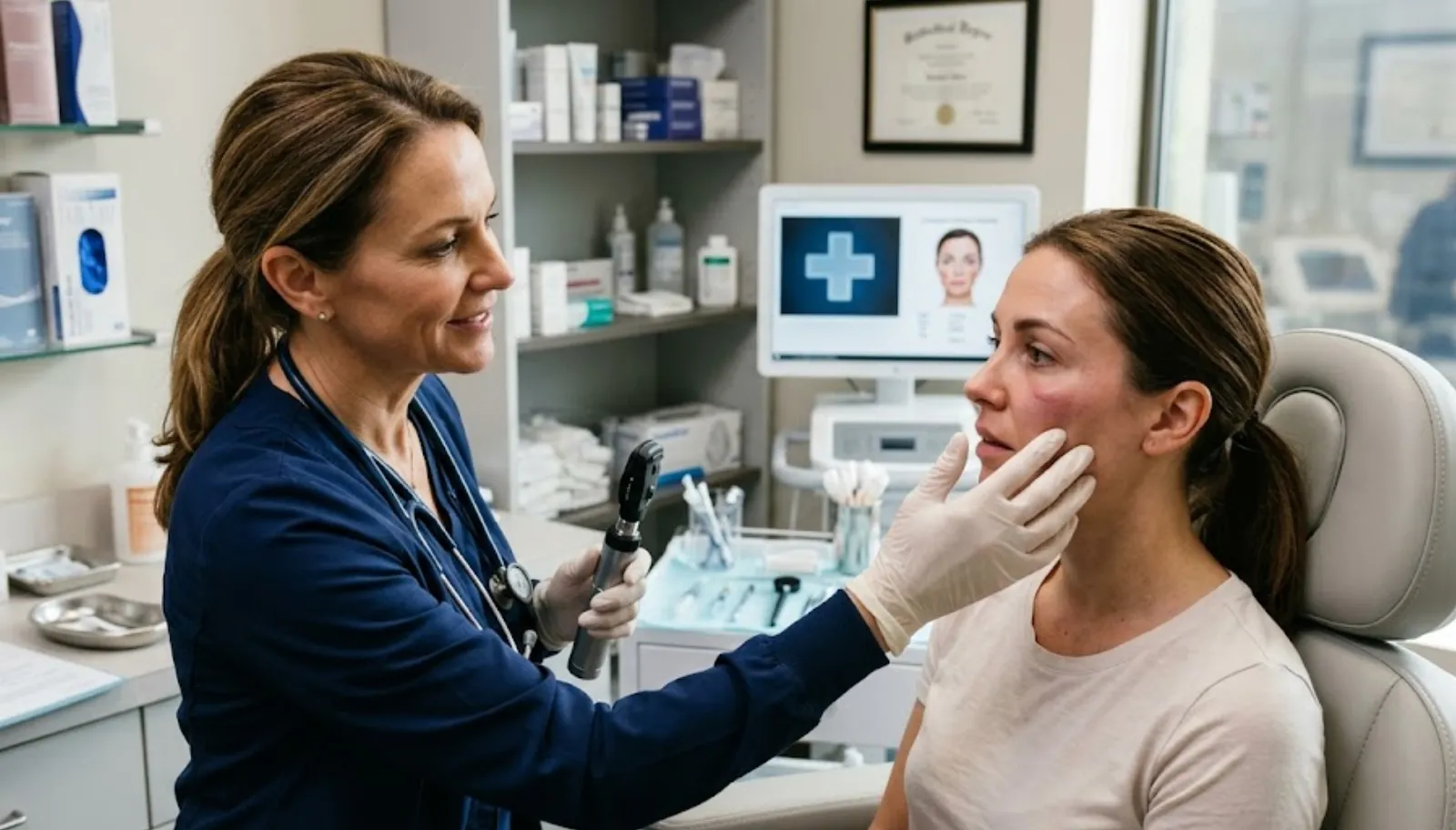

Most aesthetic treatments go smoothly when performed by experienced medical professionals.
But occasionally, patients find themselves in a situation they never expected.
A lip that suddenly looks uneven. Swelling that doesn’t settle. Skin that feels painful hours after treatment. A filler result that looks different from what was planned.
And usually, the first reaction is confusion.
"Is this normal… or should I be worried?"
This is exactly where an aesthetic complications expert becomes important.
In clinical practice, not every post-treatment concern is a true emergency—but not every concern should be ignored either. Knowing the difference can protect both your result and, in some cases, your skin health.
Whether the issue involves aesthetic complications, delayed swelling, asymmetry, product migration, or more serious vascular concerns, early assessment often makes a significant difference.
The most important thing patients need to understand is this:
When something doesn’t feel right after treatment, guessing is never the best strategy.
What Are Aesthetic Complications?
The term aesthetic complications covers a wide range of treatment-related concerns that may happen after procedures such as dermal fillers, lip injections UK, anti wrinkle treatments, skin boosters treatment, or other injectable treatments.
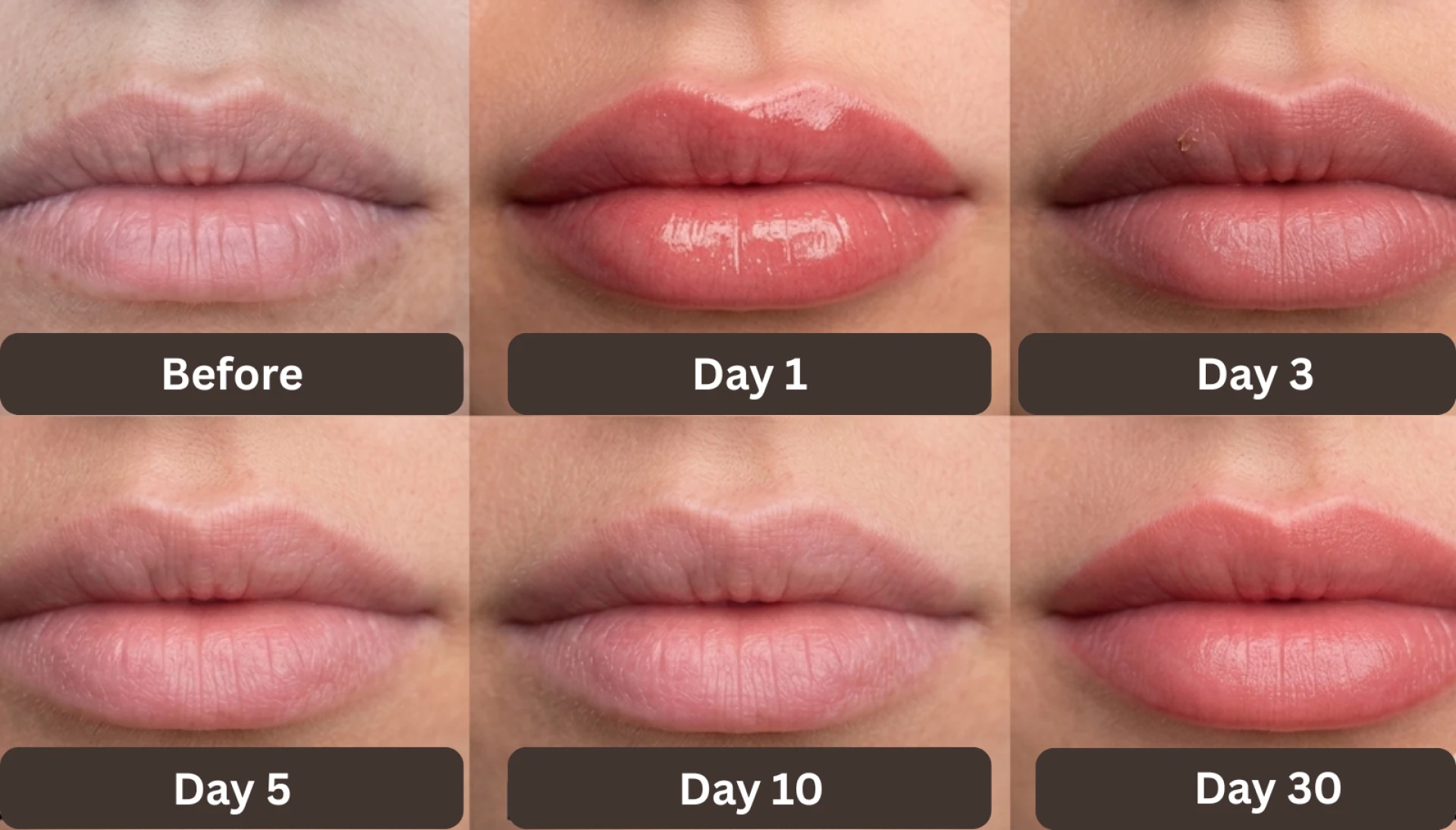
Some concerns are mild and temporary.
Others require urgent medical review.
Common concerns patients present with include:
Uneven filler placement, prolonged swelling, unexpected bruising, tenderness that worsens instead of improving, product migration, delayed inflammatory reactions, skin blanching, vascular compromise, or visible lumps beneath the skin.
Not every lump is dangerous.
Not every swelling means something has gone wrong.
But clinically, the skin often gives important warning signs early.
And learning to recognise those signs matters.
When Should You Be Concerned After Fillers?
One of the biggest problems I see is patients waiting too long.
They’re often told:
"Give it a few days."
And sometimes that’s reasonable.
But there are situations where waiting is the wrong decision.
For example, after dermal fillers, symptoms such as increasing pain, skin discolouration, blanching, unusual coldness, mottled skin, or delayed capillary refill can sometimes suggest vascular occlusion—a rare but serious complication.
This happens when blood supply becomes compromised.
Although uncommon, it requires immediate medical assessment.
This is exactly why choosing a qualified cosmetic doctor clinic matters from the start.
Because complications are not only about treatment.
They’re about knowing how to manage treatment when something unexpected happens.
Not Every Filler Problem Is an Emergency
That said, not every concern is dangerous.
Some patients visit an aesthetic complications expert because the result simply doesn’t feel right.
This may involve:
Lip asymmetry, filler migration, under-eye puffiness, cheek imbalance, delayed swelling, or product placement that feels unnatural.
These concerns are usually not emergencies—but they still deserve proper assessment.
In many cases, what patients think is “bad filler” may actually be:
Normal tissue swelling, uneven healing, inflammatory response, product settling, or underlying anatomical asymmetry that becomes more visible after treatment.
A medical assessment helps separate normal healing from genuine complications.
And that prevents unnecessary panic.
When Ultrasound Can Make a Difference
Modern complication management has changed significantly over the last few years.
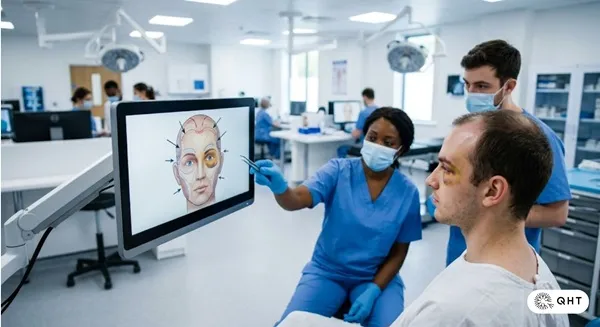
For more complex filler concerns, ultrasound guided filler assessment can sometimes help identify where product has been placed, how deeply it sits, and whether vascular structures are involved.
In cases of persistent swelling, migrated filler, or uncertain anatomy, ultrasound can improve treatment precision and safety.
This becomes especially valuable when patients have had filler elsewhere and are unsure what product was used—or exactly where it was injected.
Technology doesn’t replace clinical judgment.
But in experienced hands, it can improve decision-making significantly.
When Filler Dissolving Is Needed
Not every filler needs to stay.
Sometimes the safest or most aesthetic option is removal.
This is where ultrasound guided filler dissolving may be considered.
Using targeted assessment, product can be dissolved more accurately while protecting surrounding tissue.
This is commonly considered for:
Persistent lumps, migrated filler, chronic puffiness, overfilled lips, under-eye filler complications, or long-standing asymmetry.
What many patients don’t realise is that dissolving filler is not always as simple as “melting it away.”
It requires understanding anatomy, product behaviour, and how tissues respond.
That’s why medical expertise matters.
What Patients Often Get Wrong
One of the most common mistakes patients make after injectable treatments is asking social media what to do.
A swelling photo gets uploaded.
Ten strangers give ten different opinions.
And suddenly anxiety gets worse.
The reality?
No photo can replace a proper medical assessment.
Skin temperature, capillary refill, tissue colour, pain response, circulation, and anatomy all need to be examined properly.
That’s why an experienced aesthetic complications expert focuses on diagnosis before correction.
Because sometimes the right decision is treatment.
And sometimes the right decision is simply observation.
Why Prevention Starts Before Treatment
Most complications don’t begin when the filler is injected.
They often begin much earlier—with poor patient assessment, weak anatomy knowledge, inappropriate product selection, or overly aggressive treatment planning.
At a qualified medical aesthetic clinic, prevention usually includes:
Detailed medical history, facial anatomy analysis, vascular awareness, product selection, and clear complication planning.
Because good aesthetic medicine isn’t only about beautiful results.
It’s about managing risk before it becomes a problem.
Conclusion
If you’re concerned about swelling, asymmetry, lumps, pain, or unusual healing after cosmetic treatment, speaking to an aesthetic complications expert can provide clarity, reassurance, and—when needed—timely medical treatment.
Whether the concern involves aesthetic complications, dermal fillers, ultrasound guided filler, or ultrasound guided filler dissolving, early expert assessment usually leads to better outcomes.
Because when it comes to your face, uncertainty should never be the treatment plan.
FAQs
When should I see an aesthetic complications expert?
If you experience unusual pain, prolonged swelling, skin colour changes, asymmetry, or filler concerns that don’t improve as expected.
Are filler lumps always dangerous?
No. Some are part of normal healing, but persistent lumps should be medically assessed.
What is ultrasound guided filler assessment?
It uses imaging to identify filler placement, anatomy, and potential complications before correction.
Can migrated filler be dissolved?
Yes. In appropriate cases, ultrasound guided filler dissolving may help improve safety and treatment precision.





























Sign in to leave a comment.