
Imagine walking into a brand experience and instead of reading panels, pressing buttons, or navigating a touchscreen, you just speak. And the space responds — intelligently, naturally, in the way a knowledgeable colleague would. It knows what you're asking about. It clarifies when your question is ambiguous. It picks up where you left off if you circle back.
This isn't a science fiction scenario. It's what well-deployed conversational AI and voice-driven interfaces deliver today. And for brands that have built them correctly, the engagement difference compared to touch or click-based alternatives is substantial.
AI development solutions that power natural conversation and voice interaction are no longer experimental. They're becoming an expectation — particularly in high-consideration, high-engagement environments where visitors need more than a brochure but less than a full sales meeting.
Why Conversation Is the Most Natural Interface
Human beings are wired for conversation. We're not naturally wired for navigating menu trees, reading information panels, or figuring out what a touchscreen wants us to do.
When an interface matches the way people naturally communicate, the friction drops to near zero. Visitors don't need to think about how to use it — they just talk. And when they talk, they reveal what they actually want to know, not just what the interface was designed to show them.
This is the fundamental advantage of conversational interfaces: they're pull, not push. They respond to genuine curiosity rather than trying to anticipate every possible question and pre-programme an answer.
The result is richer engagement, more specific information capture, and a fundamentally different quality of interaction than any passive or even touch-based alternative.
What Makes a Conversational Interface Work
Building a conversational interface that genuinely works in a brand environment is harder than it looks. There are several places where it typically goes wrong.
The knowledge base is too shallow. If the AI can only answer a narrow set of anticipated questions, visitors quickly hit walls. The experience turns frustrating. The solution is building comprehensive knowledge bases that reflect the full depth of the product range, the brand story, and the likely question space — and continuing to update them as visitor interactions reveal gaps.
The voice interface doesn't handle real speech well. Human beings talk over each other, change direction mid-sentence, use regional accents, mix languages, and speak in incomplete thoughts. A voice interface that can only handle clean, complete, accent-neutral speech will fail in the field. Robustness to real-world speech conditions is a design requirement, not a nice-to-have.
The personality is inconsistent. Conversational AI needs a character — a tone, a way of responding to confusion, a sense of humour level, a warmth parameter. When the personality is inconsistent or feels mechanical, visitors disengage. When it's coherent and appropriate to the brand, they lean in.
It can't handle handoffs. There will always be conversations that should go to a human. A conversational interface that traps visitors in an AI loop when they need a real person creates frustration and brand damage. Graceful, well-timed handoffs to human support are essential.
Case Study: How HDFC Made Conversation the Core Experience
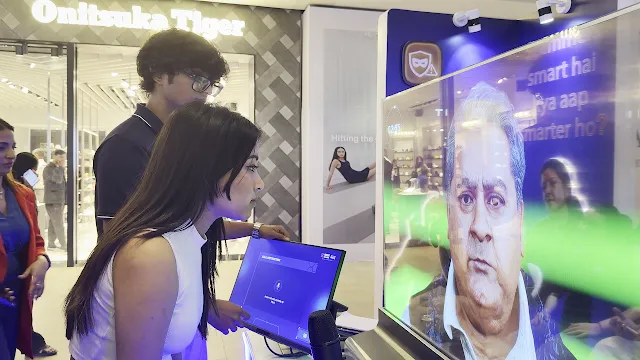
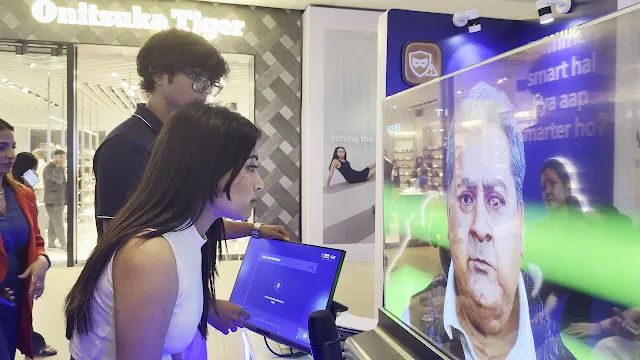
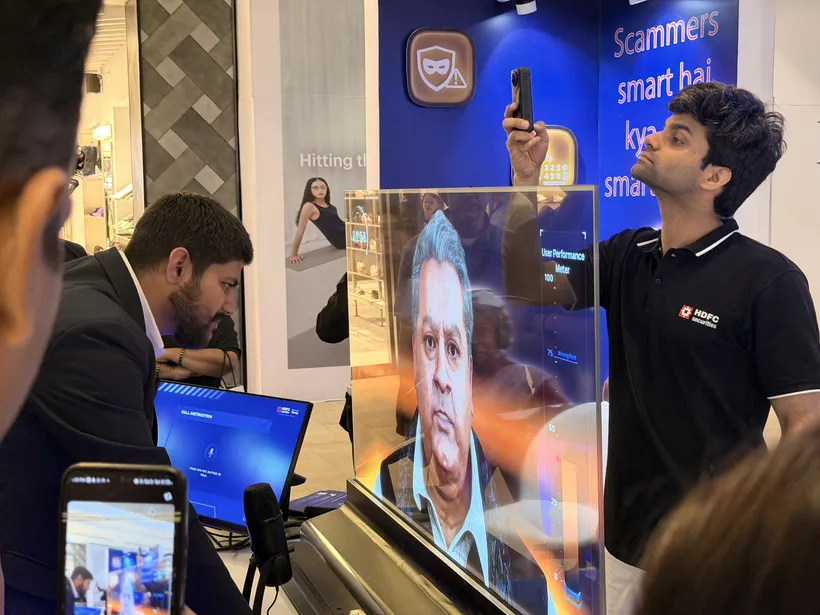
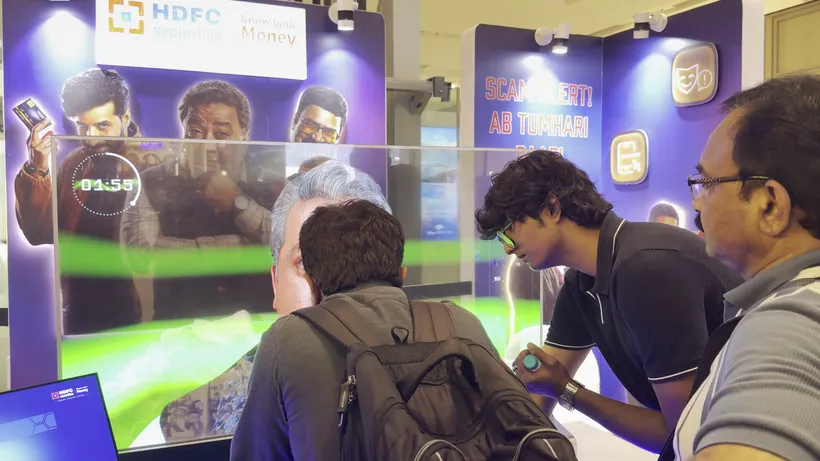
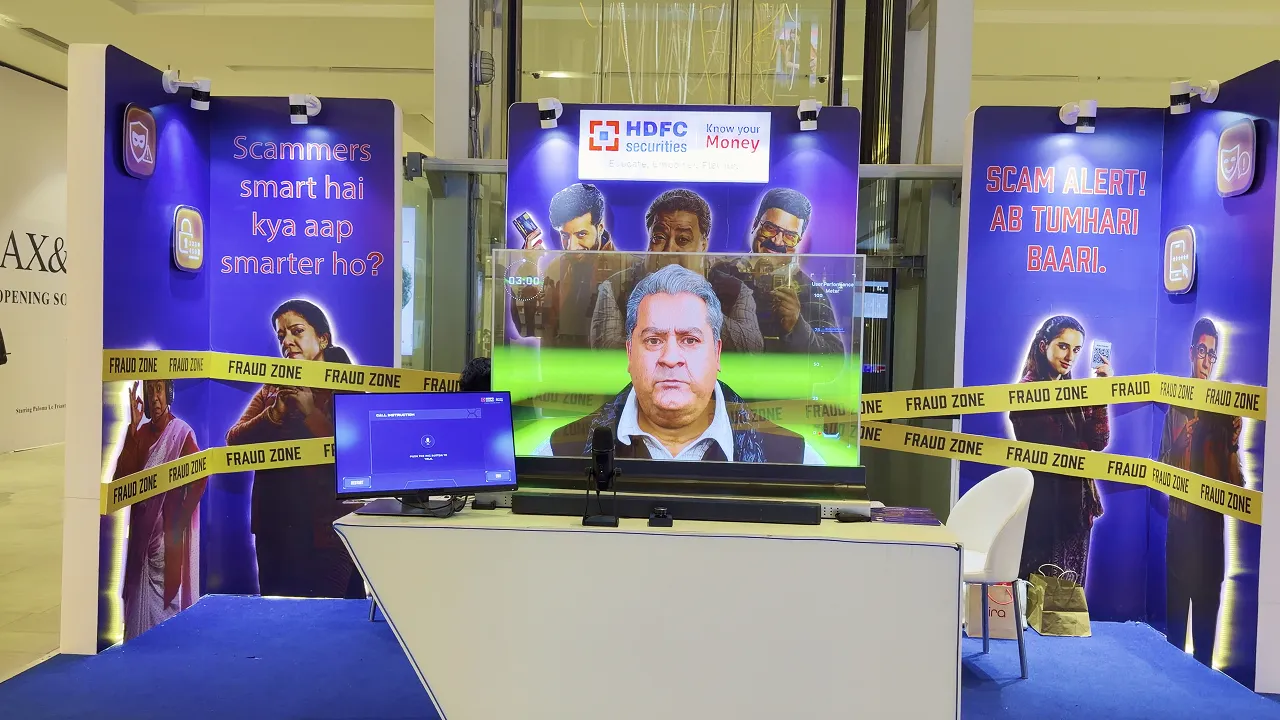
The HDFC Scam 2026 activation built by IIC Lab is perhaps the most extreme example of conversational AI as the primary experience medium deployed in an Indian brand context.
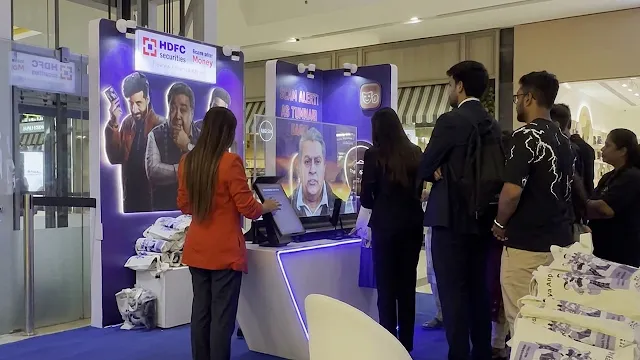
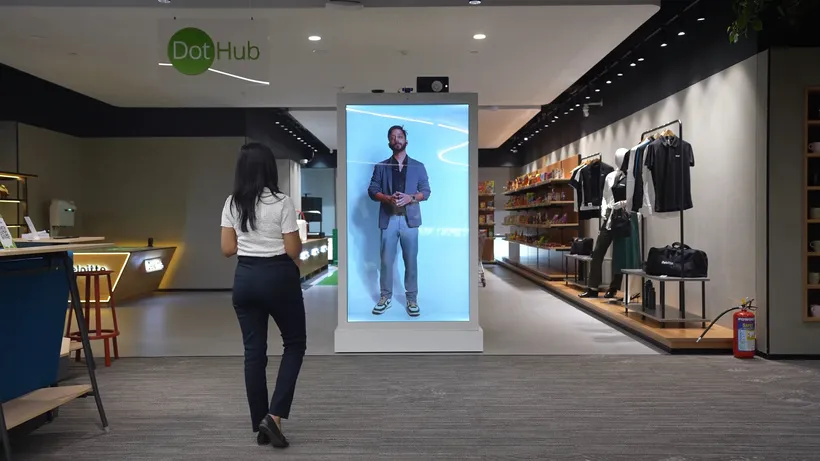
The entire installation — a live, two-way interaction with a hyper-realistic AI avatar of Manoj Pahwa — was conversational at its core. Visitors didn't navigate a menu or read content. They talked. The AI talked back. It adapted, pushed, probed, and responded in real time.
What made the experience extraordinary wasn't just the visual quality of the avatar — it was the conversational intelligence. The AI was equipped with five distinct scam scenario tracks, each with its own tone and tactics. Within each scenario, responses were genuinely adaptive — the AI shifted approach based on how each visitor responded. Someone who pushed back confidently got escalating manipulation. Someone who hesitated got increased urgency.
The result was that no two conversations were the same. Visitors couldn't game it with pre-prepared responses. They had to actually think, respond, and improvise — which is exactly what a real scam encounter requires.
The 20-minute average interaction time was not achieved through flashy visual design. It was achieved through the quality of the conversation itself. People stayed because they were genuinely engaged in something that felt real.
This case is explored in full at the HDFC Scam 2026 case study page — worth reading for any brand thinking about what conversational AI can do in a physical installation context.
Voice-Driven Experiences Beyond the Kiosk
Conversational and voice-driven AI has applications well beyond the interactive kiosk format.
Guided tours and experience centre navigation. A voice interface that can guide visitors through a complex space — explaining what they're looking at, answering questions as they arise, offering to go deeper on anything that catches their attention — transforms the experience centre format.
Multilingual accessibility. In India's diverse market context, voice interfaces that operate naturally across Hindi, English, and regional languages remove barriers that text-based or menu-driven systems create. IIC's experience with multilingual AI deployments is directly relevant here.
Ambient responsiveness. Spaces that respond to natural speech — "can you tell me more about that" said while looking at a display, without touching anything — create experiences that feel genuinely futuristic in the best sense: effortless, present, human-scale.
Post-experience follow-up. Conversational AI that continues the brand relationship after a physical encounter — via WhatsApp, SMS, or email — carries the warmth and specificity of the in-person conversation into the follow-up relationship.
The IIC Approach to Conversational AI Development
IIC Lab has been building conversational AI systems in physical brand environments for years — not as an adjacent service, but as a core capability.
The team brings together AI engineers, conversation designers, voice UX specialists, and brand strategists. The work starts from the human conversation that the brand wants to have with visitors — and works backward from there into the technology that can deliver it.
If you're building a brand environment where conversation should be at the centre — whether that's an experience centre, a retail activation, an event installation, or something entirely your own — let's think through it together.

























Sign in to leave a comment.