
AI in Manufacturing: Real-World Benefits and Applications
AI is transforming manufacturing operations across the board, from assembly lines to supply chains. By working closely with manufacturers and embedded AI experts, it's possible to guide teams through impactful AI projects that deliver real results: reduced defects, smarter scheduling, and more resilient workflows. Key benefits and practical use cases show how AI services and automation can drive meaningful improvements across operations.
Quality Control Powered by Computer Vision
AI in manufacturing is significantly improving quality control processes. By using computer vision, manufacturers can automate the inspection of products on the production line. This helps detect defects early, ensures consistency, and speeds up the quality check process—all while reducing human error.
Key benefits of AI in manufacturing for quality control:
- Real-time defect detection: Cameras and AI algorithms scan products instantly to catch defects as they occur, preventing faulty items from reaching customers.
- Consistency and precision: Unlike manual inspection, AI systems apply the same criteria across every product, ensuring uniform quality.
- Reduced waste: Early identification of issues allows manufacturers to stop production quickly and fix problems, minimizing material loss.
- Faster inspections: AI can process hundreds of images or units per minute, significantly reducing inspection time compared to human efforts.
- Lower labor costs: Automating repetitive inspection tasks frees up human workers for more complex responsibilities and reduces staffing needs.
- Data-driven improvements: AI tools collect and analyze inspection data, helping teams understand defect trends and continuously improve production quality.
Predictive Maintenance to Minimize Downtime
Predictive maintenance is one of the most valuable applications of AI in manufacturing, helping businesses avoid unexpected equipment failures and reduce operational downtime. By using machine learning algorithms and sensor data, AI can anticipate when machinery is likely to break down and recommend timely interventions.
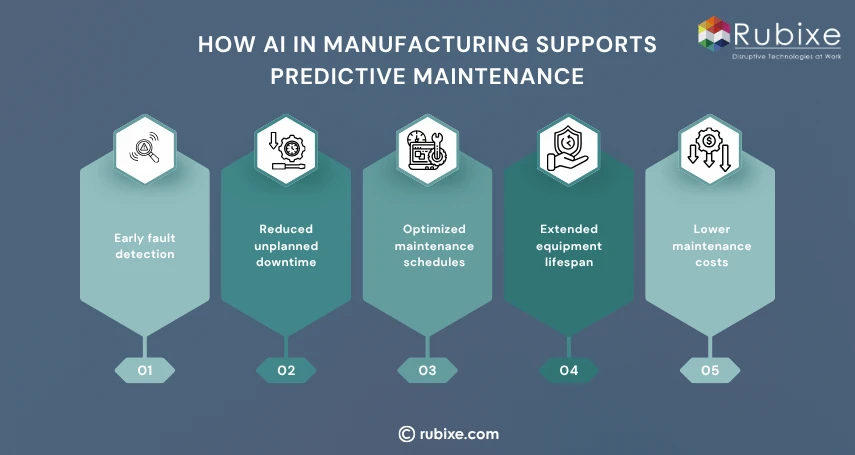
How AI in manufacturing supports predictive maintenance:
- Early fault detection: AI monitors vibration, temperature, and performance metrics to identify signs of wear or malfunction before failure occurs.
- Reduced unplanned downtime: Maintenance can be scheduled during low-production periods, keeping the production line running smoothly.
- Optimized maintenance schedules: Instead of relying on fixed maintenance intervals, AI schedules service only when it's needed, saving time and resources.
- Extended equipment lifespan: Timely repairs help avoid serious damage, allowing machines to operate longer and more efficiently.
- Lower maintenance costs: Preventive measures cost significantly less than emergency repairs or equipment replacement.
- Data-driven insights: AI collects operational data to improve maintenance strategies over time and uncover hidden performance issues.
Supply Chain Optimization and Demand Forecasting
AI in manufacturing plays a crucial role in enhancing supply chain efficiency and improving demand forecasting accuracy. By analyzing historical data, market trends, and external variables, manufacturers can make smarter decisions around inventory, logistics, and production planning.
How AI in manufacturing supports supply chain optimization:
- Accurate demand forecasting: AI models use historical sales data and seasonality to predict future product demand with high precision.
- Inventory management: Reduces overstocking or stockouts by aligning inventory levels with real-time demand patterns.
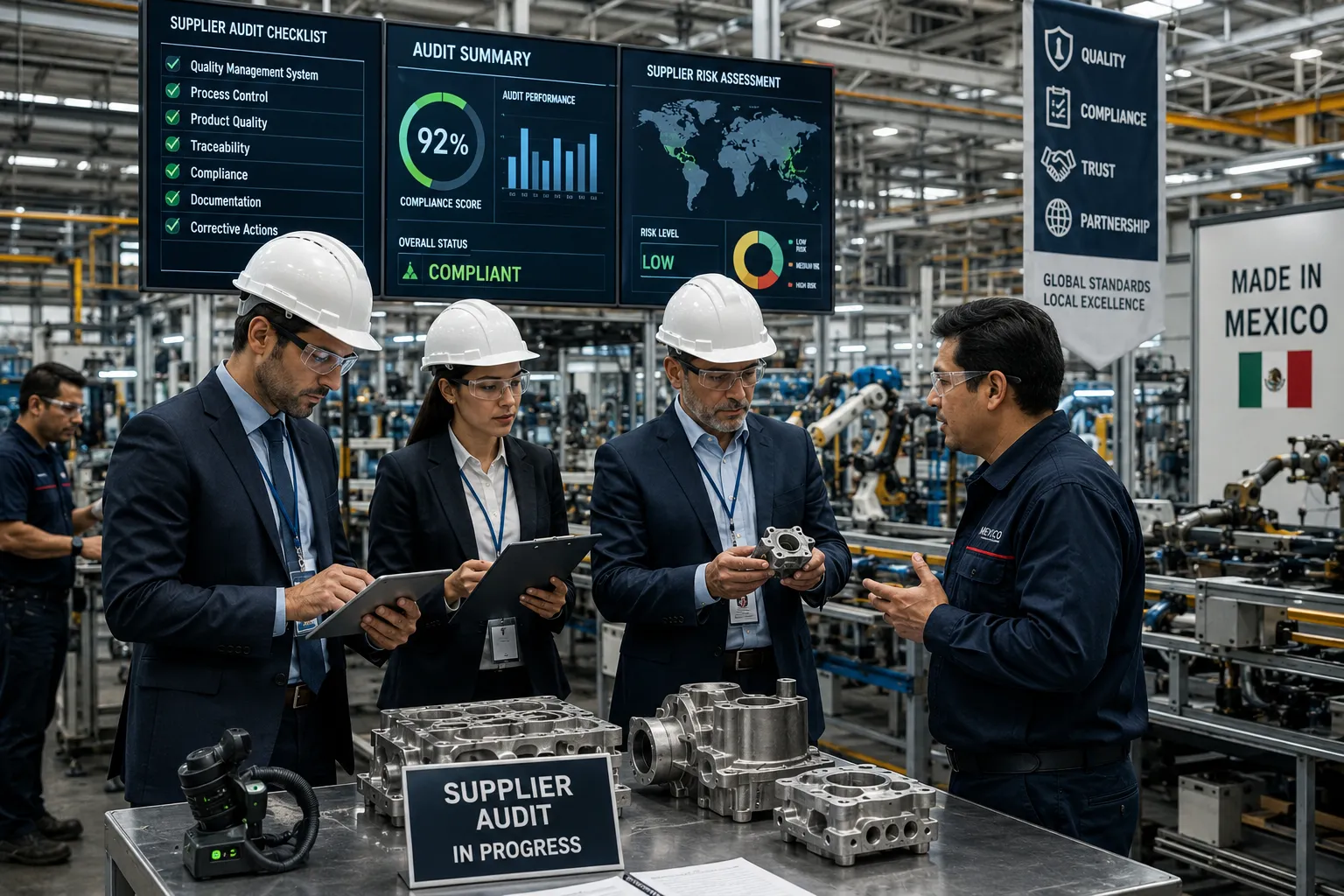
- Supplier performance monitoring: AI tools track delivery times, quality metrics, and cost fluctuations to optimize supplier relationships.
- Production scheduling: AI algorithms adjust schedules based on forecast changes, machine availability, and raw material supply.
- Risk management: Identifies potential disruptions from market shifts, weather events, or geopolitical risks before they impact operations.
- Cost efficiency: Optimized logistics and better resource planning reduce waste and improve bottom-line performance.
Process Automation and Robotics
In modern manufacturing, AI-driven process automation and robotics are transforming how factories operate. These technologies streamline workflows, reduce manual labor, and increase productivity, allowing manufacturers to focus on innovation and quality improvement.
How AI in manufacturing enhances automation and robotics:
- Automated assembly lines: AI-powered robots perform repetitive and complex tasks with high precision and consistency.
- Real-time quality checks: Vision-based systems detect defects or anomalies during production, minimizing human error.
- Smart material handling: Robotic systems use AI to transport, sort, and organize materials efficiently on the factory floor.
- Predictive scheduling: AI tools optimize work schedules based on machine capacity, demand fluctuations, and maintenance needs.
- Safety improvements: Collaborative robots (cobots) work alongside humans, using AI to adapt to their movements and prevent accidents.
Energy Management and Sustainability
AI in manufacturing plays a vital role in promoting energy efficiency and sustainability. By analyzing data from equipment, production lines, and facilities, AI helps manufacturers reduce energy waste, lower carbon footprints, and meet sustainability goals without compromising output.
How AI supports sustainable manufacturing operations:
- Energy consumption monitoring: AI systems track real-time energy usage across machines and processes to identify inefficiencies.
- Smart energy optimization: AI adjusts energy loads dynamically based on demand, reducing peak consumption and utility costs.
- Predictive energy modeling: Forecasts future energy needs using historical data and production schedules to improve resource planning.
- Carbon footprint tracking: AI tools measure emissions and suggest operational changes to support environmental compliance.
- Waste reduction: Identifies excess material usage or unnecessary production steps, helping to minimize scrap and rework.
Generative Design & Product Innovation
AI in manufacturing is reshaping how products are developed through generative design. This approach allows teams to input design goals and constraints like materials, size, weight, or cost, and then uses AI to create a wide range of optimized design alternatives.
Benefits of generative design in manufacturing:
- Faster development cycles: Quickly generates and evaluates multiple design options, reducing prototyping time.
- Improved material use: Suggests lightweight, efficient designs that reduce waste and cost.
- Enhanced performance: Produces solutions that meet technical requirements while improving durability or function.
- Lower production costs: Identifies simpler geometries that are easier and more affordable to manufacture.
- Flexible design options: Allow teams to adapt products based on customer preferences or industry trends.
AR-Assisted Maintenance & Training
AI in manufacturing is being enhanced with Augmented Reality (AR) to support equipment maintenance and workforce training. By overlaying digital information onto real-world machinery, AR-powered solutions improve accuracy, safety, and knowledge transfer on the factory floor.
How AR-assisted AI solutions add value:
- Visual guidance for technicians: Step-by-step repair instructions are displayed directly on equipment, reducing errors and downtime.
- Remote expert support: Workers can connect with specialists in real-time through AR headsets for troubleshooting.
- Faster onboarding and training: New employees gain hands-on experience using immersive AR simulations powered by AI.
- Enhanced safety: AR highlights safety zones and risk areas during complex procedures.
Why These Solutions Deliver Value
Throughout my work with manufacturers, I’ve seen repeated patterns:
- Precision and consistency via defect‑catching computer vision
- Less downtime and cost through predictive maintenance
- Faster supply chain response thanks to demand forecasting
- Simplified workflows with intelligent robotics and automation
- Operational savings and sustainability improvements via energy management
AI in manufacturing is no longer optional; it is a strategic advantage. With the right AI consulting support, manufacturers can identify opportunities to reduce downtime, improve quality and safety, and implement automation solutions that transform operations. A focused consulting approach helps streamline efficiency, lower costs, and ensure manufacturers remain competitive





























Sign in to leave a comment.