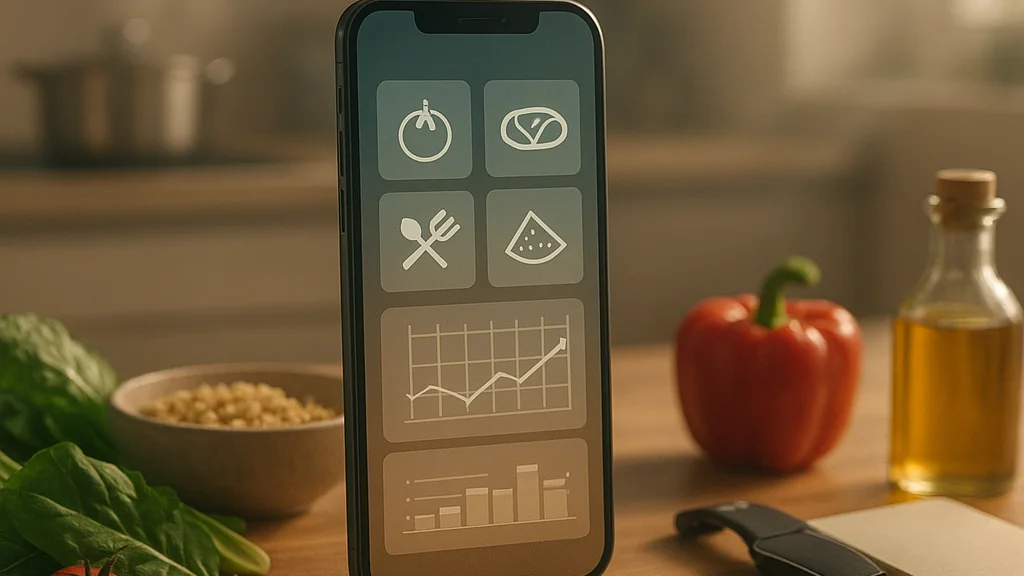

At 7:30 on a weekday morning, the modern meal plan often begins not in a kitchen notebook but on a phone screen. A user snaps a photo of poha, a banana, and chai; within seconds, an app estimates calories, flags protein as low, suggests adding curd or sprouts, and quietly rewrites lunch to compensate. That small exchange captures why nutrition apps that use AI for meal planning have moved from novelty to daily habit. They promise something diet culture rarely delivered well: personalization at scale.
The appeal is easy to understand. Traditional diet plans tend to be rigid, expensive, and culturally narrow. Many were built around generic calorie targets and Western food databases that never quite knew what to do with idli, bhakri, sabudana khichdi, or homemade amti. AI systems changed the proposition by combining food logging, recommendation engines, image recognition, wearable data, and conversational coaching. Instead of handing every user the same 1,500-calorie template, these apps attempt to learn patterns; when you eat, what you skip, how active you are, whether you prefer vegetarian meals, and how quickly you abandon unrealistic plans.
Yet enthusiasm deserves scrutiny. Recent reporting has shown that AI meal planning can be impressively convenient and worryingly inconsistent at the same time. According to News Medical, some AI-generated meal plans for teens lacked essential nutrients and calories. Science News reached a similar conclusion in its reporting on chatbot nutrition advice for younger users. The central question, then, is not whether AI can plan meals. It can. The real question is whether it can do so safely, usefully, and in ways that respect biology, culture, and long-term health.
For readers looking for a broader primer before going deeper, WriteUpCafe has already mapped the basics in AI Nutrition Apps for Meal Planning: Benefits, Risks, and Best Uses and Top 7 AI-Powered Nutrition Apps Transforming Meal Planning. What follows is a closer examination of how these systems actually work, where they are succeeding, where they are failing, and what 2026 has changed.
From calorie counters to adaptive coaches
The first generation of nutrition apps was largely manual. Users searched databases, typed portion sizes, and watched progress charts march up or down. Helpful, yes; intelligent, not really. The shift toward AI happened in stages. Computer vision began identifying foods from images. Natural-language interfaces made logging less tedious; users could type “two rotis, dal, and paneer sabzi” rather than hunt through endless menus. Recommendation systems, borrowed from e-commerce and streaming platforms, started predicting what a user might eat next and what swap they might accept.
Then came integration. Meal planning stopped being a static spreadsheet and became a feedback loop. If your smartwatch showed poor sleep, the app might avoid aggressive fasting recommendations the next day. If your glucose readings spiked after a breakfast pattern, the software could nudge you toward a higher-fiber alternative. If repeated entries suggested low iron intake in a vegetarian diet, the app might surface lentils, sesame, greens, and vitamin C pairings rather than simply lowering calories again.
That matters because nutrition is not one problem. It is several overlapping ones: energy balance, micronutrient sufficiency, metabolic response, food affordability, cooking ability, time pressure, taste preference, and adherence. AI apps are attractive precisely because they can juggle more variables than a paper plan. According to an MSN report on personalized AI nutrition coaches, these platforms have drawn millions of users by offering individualized guidance in a format that feels immediate and conversational rather than clinical.
Personalization is the product; convenience is the hook. The strongest apps do not merely count food; they reduce friction around healthier decisions.
India has its own reason to care about this evolution. We are a country of enormous dietary diversity and contradictory health burdens; undernutrition, obesity, diabetes, fatty liver disease, anemia, and high blood pressure often coexist in the same community, sometimes in the same household. A meal-planning system that cannot interpret regional cuisines or religious food practices will always be limited here. The better AI nutrition apps are finally beginning to reflect that reality, though unevenly.
How AI meal-planning apps actually make recommendations
Behind the polished interface, most AI nutrition apps rely on a stack of simpler systems rather than one magical model. First comes data collection: age, sex, height, weight, health goals, dietary restrictions, allergies, activity levels, medications, and sometimes biomarkers from wearables or connected devices. Next comes food intelligence; databases of ingredients, restaurant items, branded products, and recipes. Then the recommendation layer interprets patterns and turns them into meal suggestions, grocery lists, reminders, and coaching prompts.
The best products do three things at once. They estimate intake, predict adherence, and optimize for goals. A user trying to lose weight might receive a high-protein breakfast not because protein is fashionable but because the app has learned that a protein-forward first meal reduces evening snacking for that person. Someone training for a half-marathon may get carbohydrate timing around workouts. A user with elevated blood sugar may see lower-glycemic substitutions and fiber targets. The sophistication lies less in any single recommendation than in the system’s attempt to balance trade-offs over time.
- Image recognition identifies foods from photos, though mixed dishes remain difficult.
- Natural-language logging turns casual descriptions into structured meal entries.
- Predictive analytics estimate whether a user is likely to follow a plan.
- Behavioral nudges use reminders, streaks, and coaching to improve consistency.
- Dynamic meal generation adjusts future meals based on prior intake and missed targets.
None of this means the app “understands” nutrition in a human sense. It means the app can map patterns across large datasets and apply rules quickly. That distinction is important. AI can be excellent at spotting repetition, estimating portions, and generating alternatives; it can still miss context that a dietitian would catch immediately, such as appetite loss during illness, disordered-eating risk, festival eating patterns, or the difference between a household that cooks fresh twice a day and one that depends on tiffin delivery.
For a more practical look at safer usage patterns, readers may find AI Nutrition Apps for Smarter, Safer Meal Planning useful. The central lesson is simple; AI recommendations are only as good as the data, constraints, and guardrails built into them.
Where the technology is genuinely useful
For all the caution around AI, dismissing these apps would be a mistake. They solve several real problems remarkably well. The first is decision fatigue. Many people do not fail at nutrition because they lack information; they fail because they must make too many food decisions while busy, tired, or stressed. AI meal planners can pre-commit choices, automate shopping lists, and suggest practical substitutions from what is already in the fridge. That is not glamorous, but it is powerful.
The second advantage is pattern detection. A human may vaguely sense that weekends derail progress, but an app can quantify it. It can show that restaurant dinners on Fridays add 1,200 extra calories, or that protein intake falls below target on work-from-office days, or that late-night snacking rises after poor sleep. When presented clearly, these patterns can change behavior faster than abstract advice.
Third, AI can widen access. A personal dietitian remains out of reach for many families. An app is not a substitute for clinical care, especially in disease management, but it can provide structured support at a lower cost. According to a Today report, one 43-year-old man used an AI nutrition app as part of a major weight-loss journey, shedding 100 pounds in a year. Individual stories are not clinical proof; still, they illustrate how adherence tools, portion visibility, and daily feedback can help when users are motivated and the app is used sensibly.
- Weight management: automated calorie awareness and meal structure can improve consistency.
- Sports nutrition: meal timing around training is easier to personalize algorithmically.
- Vegetarian planning: apps can flag low protein, iron, B12, or omega-3 patterns.
- Household efficiency: grocery syncing and leftover-aware planning reduce waste.
- Chronic risk reduction: sodium, fiber, saturated fat, and sugar patterns become visible.
In India, there is another practical benefit; cultural flexibility is improving. Some apps now handle thali-style eating better than earlier systems did, and they are becoming more competent with regional recipes. That matters because sustainable nutrition rarely comes from abandoning familiar food traditions. Ayurveda, despite its different framework from modern nutrition science, has long emphasized balance, seasonality, digestion, and individualized responses. AI meal planning works best when it respects that spirit; not by turning ancient practice into pseudo-science, but by recognizing that people stick to plans that feel rooted in their lives.
The smartest nutrition app is not the one with the most features; it is the one that helps a user eat better without making daily life feel like a laboratory experiment.
The risks are no longer theoretical
By 2026, the weaknesses of AI nutrition guidance are clearer. One concern is nutritional adequacy. According to News Medical, AI-generated meal plans for teens often fell short on essential nutrients and calories. Science News, in its coverage of teen nutrition advice from AI systems, also highlighted troubling recommendations. Young users are especially vulnerable because growth, puberty, sports demands, and body-image pressures make simplistic calorie restriction risky.
Adults face different problems. Portion estimation remains imperfect, especially for mixed dishes, oils, homemade sweets, and restaurant meals. A bowl of misal pav or biryani can vary dramatically by preparation style. If logging errors are repeated, the app’s “personalization” starts drifting off course. Recommendation engines can also overfit to engagement; if a user responds to low-calorie meal suggestions, the system may keep pushing restriction without adequately checking for satiety, micronutrients, or sustainability.
Privacy is the other major fault line. Nutrition apps collect intimate data; weight history, menstrual cycles, medical conditions, medication use, location-linked food habits, and sometimes photos of every meal. That information can reveal more about a person’s life than many social platforms do. Users should ask hard questions: Is data shared with advertisers? Are health inferences used for marketing? Can the user delete records fully? Is the app transparent about model limitations?
There is also a subtler issue; authority bias. When an app speaks in a confident, conversational tone, users may overestimate its expertise. A chatbot that sounds like a coach can feel more credible than a static disclaimer buried in settings. That is dangerous in pregnancy, kidney disease, eating disorders, pediatric nutrition, and diabetes management, where one-size-fits-all meal generation can do harm. AI should support professional care in these cases, not replace it.
- Teens, pregnant users, and people with chronic illness need stronger safeguards than general wellness users.
- Food-photo recognition still struggles with mixed dishes, hidden fats, and portion size.
- Apps may optimize for engagement rather than long-term nutritional quality.
- Confident chatbot language can mask uncertainty or weak evidence.
These concerns explain why careful app design matters more than flashy branding. Good nutrition software should show uncertainty, allow human review, and avoid extreme recommendations by default.
What changed recently: the 2026 market is consolidating
The biggest business story in this segment is consolidation. Nutrition tracking and AI coaching are no longer separate categories; they are merging. In 2026, according to Yahoo Finance, MyFitnessPal acquired Cal AI, a move that signals where the market is heading. Established food-tracking platforms want stronger AI layers; newer AI-native apps want scale, data depth, and trust. The result is a more competitive field where image recognition, conversational coaching, and adaptive meal planning are becoming baseline features rather than premium curiosities.
That competitive pressure is changing product design. More apps now offer “coach mode” interfaces that explain why a meal was suggested, not just what to eat. Some are improving grocery integrations and recipe personalization. Others are moving into family planning, allowing one system to generate meal frameworks that account for a diabetic parent, a child’s lunchbox, and a vegetarian grandparent. The technical challenge is steep, but the commercial incentive is obvious; meal planning becomes stickier when it serves the household rather than one user.
Another 2026 shift is growing skepticism around unsupported health claims. Consumers are more alert to overpromising, and media coverage has become sharper. That is healthy. The sector needed a move away from vague “AI wellness” language toward measurable outcomes; lower logging burden, better adherence, reduced food waste, improved nutrient balance, or clinically supervised support for specific conditions.
WriteUpCafe’s How AI-Powered Nutrition Apps Are Revolutionizing Meal Planning in 2026 captures this transition well; the winners are likely to be the platforms that combine automation with transparency. In other words, the app should not merely generate a plan. It should show the logic, let users modify constraints, and know when to stop pretending certainty where none exists.
How to judge an AI meal-planning app before trusting it
Most users do not need another list of app names; they need a framework for evaluation. The first test is cultural and dietary competence. Can the app handle Indian meals accurately enough to be useful? Does it understand vegetarian protein sources beyond token tofu entries? Can it distinguish between homemade and restaurant versions of the same dish? If not, personalization will remain superficial.
The second test is nutritional depth. A good app should go beyond calories and macros. It should flag fiber, sodium, added sugar, and key micronutrient gaps where possible. It should also avoid extreme defaults. If a meal planner repeatedly drives calories too low, pushes punitive fasting, or labels ordinary foods as “bad,” that is a warning sign, not a sign of sophistication.
Third comes transparency. Users should be able to see why a recommendation appears. Was it based on goal setting, prior meal patterns, a wearable trend, or a generic template? Explainability builds trust and helps users catch mistakes. The strongest apps also let people state realistic constraints; budget, cooking time, regional preferences, digestive issues, office commute, and family meal patterns.
- Check whether the app supports your cuisine and language habits.
- Review whether it tracks micronutrients, not just calories.
- Look for clear disclosures on privacy and data sharing.
- See if the app explains recommendations in plain language.
- Prefer tools that allow human expert access for complex cases.
- Avoid apps that promise rapid transformation with minimal nuance.
There is a practical way to trial any system safely. Use it for planning and awareness first, not obedience. Compare its suggestions with your hunger, energy, digestion, and medical advice. If you have PCOS, diabetes, thyroid disease, kidney issues, or a history of disordered eating, involve a qualified clinician or dietitian early. AI can help organize choices; it should not become the loudest voice in the room.
Readers wanting a companion guide on applied use can consult Expert Tips for AI-Driven Nutrition Apps in Meal Planning 2026. The broad principle is one I return to often; technology should reduce confusion, not outsource judgment.
The next phase: from meal suggestions to metabolic context
What comes next is not merely better recipe generation. The more important shift will be context-rich nutrition guidance. AI meal planning is moving toward systems that combine dietary intake with sleep, stress, glucose trends, menstrual-cycle data, medication schedules, and physical activity. That can be genuinely useful when done carefully. A meal suggestion is more meaningful when it knows whether the user slept four hours, has a long commute, or is recovering from a hard training session.
Still, richer data does not automatically mean better health outcomes. More inputs can create more noise, more privacy exposure, and more false precision. The future belongs to apps that know which signals matter and which do not. They will likely become more modular; a general wellness mode for healthy adults, stricter guardrails for teens, and clinician-linked pathways for medical nutrition therapy. Regulatory attention may also increase as these tools move closer to health claims that affect treatment decisions.
There is room here for a more grounded philosophy of food technology. Indian wellness traditions have always understood that eating is contextual; season, constitution, appetite, routine, and environment all matter. Modern AI can add measurement and pattern recognition to that older wisdom, but it cannot replace lived experience. If a plan ignores satiety, affordability, family meals, and cultural comfort, it will fail no matter how elegant the algorithm looks.
The future of AI nutrition is not a robot dietitian issuing orders. It is a decision-support system that becomes quieter as human context becomes clearer.
For consumers, the takeaway is neither blind trust nor blanket rejection. Use AI nutrition apps for what they do best; reducing friction, revealing patterns, and making meal planning more responsive. Demand transparency on data and limitations. Be especially careful with children, teens, and medical conditions. And remember that the most advanced plan is still only a tool. Health is built in the ordinary rhythm of repeated meals, sensible portions, movement, sleep, and consistency; not in the illusion that software alone can solve nutrition.




























Sign in to leave a comment.