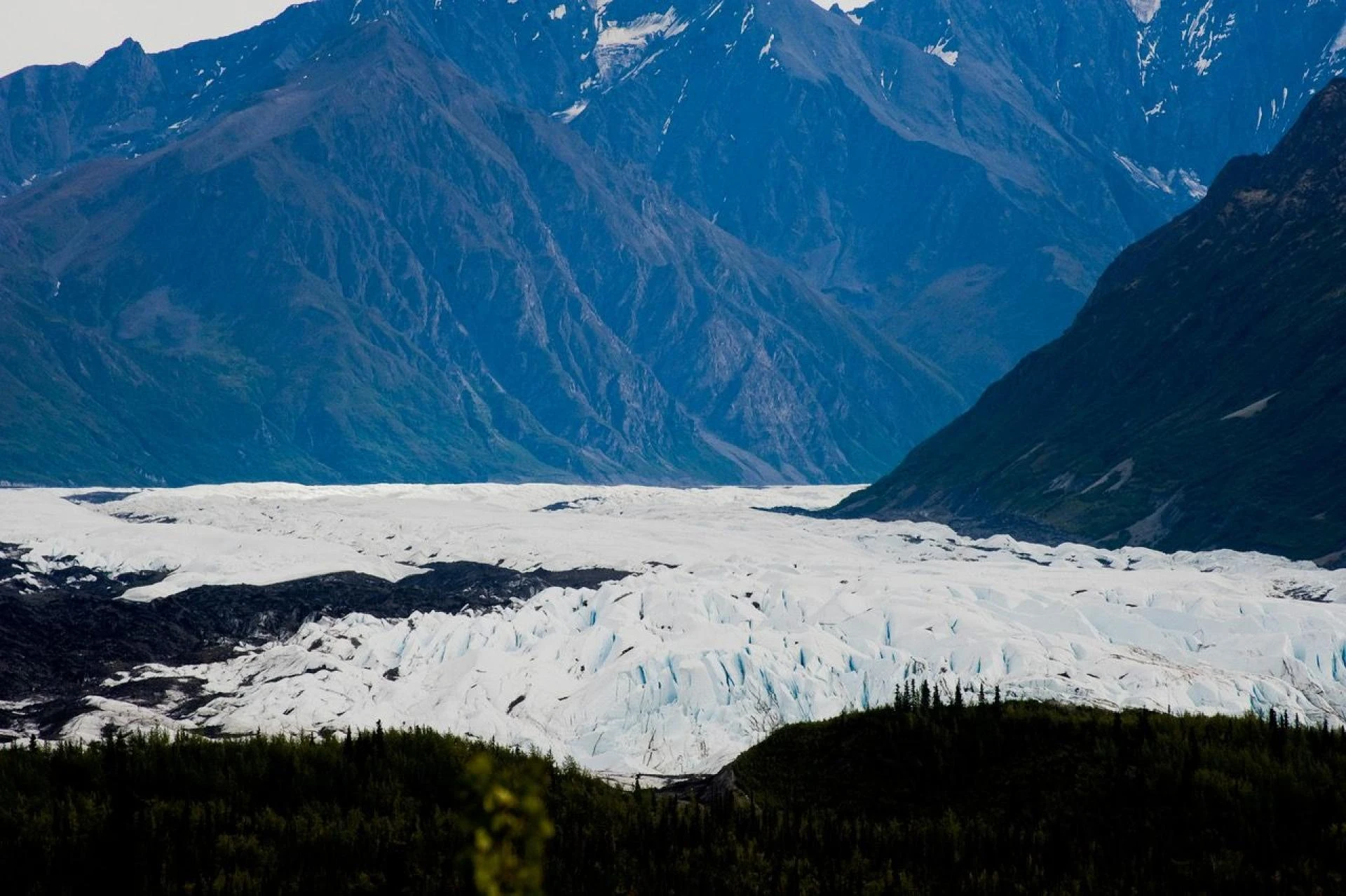

When you stand before a glacier, you're not just witnessing frozen water. You're observing Earth's geological processes in motion, a living archive of climate history carved into ice and stone. For photographers who specialize in Active Geology photography, Alaska's glaciers offer an unparalleled subject: dynamic, powerful, and heartbreakingly temporary.
Eric Hatch of Hatch Photo Artistry has spent over 13 years documenting these frozen giants, creating a visual record that captures not only their beauty but their urgent story. His Alaska glacier photography goes beyond scenic postcards to reveal the geological drama unfolding in real time across the far north.
What Makes Active Geology Photography Different
Active Geology photography isn't about static landscapes. It's about capturing Earth's processes as they happen: ice calving into the sea, moraines shifting, glacial rivers carving new paths through ancient rock. This approach requires patience, timing, and a deep understanding of geological forces.
Traditional landscape photography freezes a moment in time. Active Geology photography, by contrast, tells a story of movement and change. When a photographer documents a glacier, they're capturing evidence of forces that have been shaping our planet for millennia, forces that are now accelerating at rates we've never seen before.
In Alaska, these forces are especially visible. The state hosts more than 100,000 glaciers, from massive tidewater glaciers that calve icebergs into the ocean to smaller alpine glaciers nestled in mountain valleys. Each one is constantly moving, reshaping the land, and responding to our changing climate.
Why Alaska's Glaciers Tell an Essential Story
Alaska's glaciers aren't just beautiful. They're critical indicators of global climate patterns, and they're changing faster than almost anywhere else on Earth. Over the past 50 years, Alaska has lost more ice than any other glaciated region in the world except Greenland and Antarctica.
This makes Alaska glacier photography particularly important for museums, educational institutions, and climate advocates. These images provide tangible evidence of climate change, making abstract scientific data visceral and real. When viewers see the dramatic recession of a glacier between photographs taken just years apart, the impact of warming temperatures becomes undeniable.
Hatch Photo Artistry's work in the remote regions of Alaska and the Yukon documents this transformation with both scientific rigor and artistic sensitivity. These aren't just documentary images. They're carefully composed works of fine art that invite viewers to contemplate our relationship with the natural world.
The Technical Challenge of Capturing Ice in Motion
Photographing glaciers presents unique technical challenges. The extreme brightness of ice and snow can fool camera meters, leading to underexposed images. The scale of these massive ice formations is difficult to convey without reference points. And the weather in glacial regions is notoriously unpredictable, with conditions that can shift from clear skies to whiteout conditions in minutes.
Active Geology photography requires not just technical skill but physical endurance. Accessing remote glaciers often means hiking across unstable terrain, dealing with subzero temperatures, and waiting for hours or even days for the right light and conditions. The photographer must understand glacial behavior well enough to position themselves safely while still capturing the drama of calving events or the subtle beauty of ice formations.
The reward for this dedication is imagery that captures moments most people will never witness firsthand: the thunderous crash of a thousand tons of ice breaking free, the intricate patterns of crevasses that reveal the glacier's internal stresses, the ethereal blue glow of ancient ice exposed to sunlight for the first time in centuries.
From Scientific Document to Museum Quality Art
What separates documentary photography from fine art isn't just aesthetic choices. It's the ability to create images that resonate emotionally while remaining truthful to their subject. The best Alaska glacier photography achieves both goals simultaneously.
Museum curators and gallery directors seek work that can anchor exhibitions and spark meaningful conversations. Climate-focused programming needs visuals that engage audiences without overwhelming them with despair. Hatch Photo Artistry's glacier collections meet these needs by balancing the beauty of these ice formations with the reality of their retreat.
These photographs work equally well as standalone pieces for collectors who appreciate both aesthetic merit and environmental significance, or as centerpieces of larger exhibitions exploring climate science, geology, or human impact on natural systems.
The Broader Context: Wildlife and Wilderness
Glaciers don't exist in isolation. They're integral parts of ecosystems that support diverse wildlife populations, from salmon that depend on cold, silt-laden glacial rivers to marine mammals that hunt near tidewater glaciers. Understanding Active Geology photography means understanding these connections.
The same photographer who documents glaciers must also capture the wildlife that depends on these frozen environments, from bears fishing in glacial streams to seabirds nesting on ice-strewn shores. This holistic approach creates a more complete picture of what's at stake as these landscapes change.
For educators developing climate programming, this interconnection between geology, hydrology, and biology provides rich teaching opportunities. A single image can open discussions about water cycles, habitat requirements, food webs, and human communities that depend on glacial meltwater.
Creating Exhibitions That Inspire Action
The goal of climate-focused art isn't to paralyze viewers with fear. It's to create understanding and inspire engagement. Well-curated exhibitions using Alaska glacier photography can achieve this by:
Showing Change Over Time: Pairing images of the same glacier taken years apart creates immediate visual impact. Viewers don't need scientific training to understand what they're seeing.
Providing Context: Accompanying text that explains the geological processes at work helps audiences appreciate both the artistry and the science.
Connecting Local to Global: Alaska's glaciers are early warning systems for changes affecting the entire planet. Making these connections helps audiences understand relevance to their own lives.
Balancing Beauty and Urgency: Images that showcase the stunning beauty of glaciers while honestly depicting their retreat avoid the trap of either romanticizing or catastrophizing.
For museum and gallery curators, turnkey exhibitions featuring this work offer programming that's both visually compelling and aligned with institutional missions around education and environmental awareness.
The Artist's Perspective: 13 Years of Witnessing Change
Eric Hatch has been photographing glaciers for over 13 years, returning to the same locations season after season. This long-term commitment allows him to document changes that might not be apparent from a single visit. It also creates a personal connection to these landscapes that comes through in the finished work.
This sustained engagement with subject matter is what separates tourist snapshots from serious Active Geology photography. It requires not just technical skill but dedication to telling a story that unfolds over years and decades.
For collectors and institutions, this depth of engagement adds value. These aren't opportunistic images captured during a brief visit. They're the result of repeated journeys into remote locations and an ongoing dialogue between the photographer and the landscape.
Why This Work Matters Now
We're at a pivotal moment in human history. The choices we make in the next few years will determine whether we can slow the rate of glacial retreat or whether we'll witness the disappearance of ice formations that have existed for thousands of years.
Art has always played a role in shaping how societies understand and respond to major challenges. Alaska glacier photography serves this role today by making the abstract concrete, by putting faces and places to statistics about temperature increases and sea level rise.
For environmentally conscious patrons and collectors, acquiring these works isn't just about aesthetic appreciation. It's about supporting artists who use their craft to document our changing world and amplify important messages about environmental stewardship.
Experience the Collection
Hatch Photo Artistry offers museum-quality prints and exhibition-ready collections for institutions and individuals who want powerful visual storytelling that sparks conversation and contemplation. Whether you're a curator planning climate-focused programming, an educator seeking impactful teaching tools, or a collector who values purposeful art, this work speaks to audiences across backgrounds and interests.
The combination of artistic excellence and environmental advocacy creates pieces that work in multiple contexts: gallery walls, educational settings, corporate collections, and private homes. Each image invites viewers to reconsider their relationship with the natural world.
Ready to Bring This Story to Your Audience?
If you're interested in featuring Alaska glacier photography in your institution, building a climate-focused exhibition, or acquiring pieces for your collection, reach out to Hatch Photo Artistry. With 13 years of documentation, extensive portfolio options, and experience working with museums and galleries, Eric Hatch can help you create programming that engages audiences and makes a lasting impact.
The glaciers are still there, but they won't be forever. Now is the time to share their story, to use the power of Active Geology photography to create understanding, and to inspire the action our planet needs. Contact Hatch Photo Artistry today to explore how these stunning images can become part of your next exhibition or collection.



























Sign in to leave a comment.