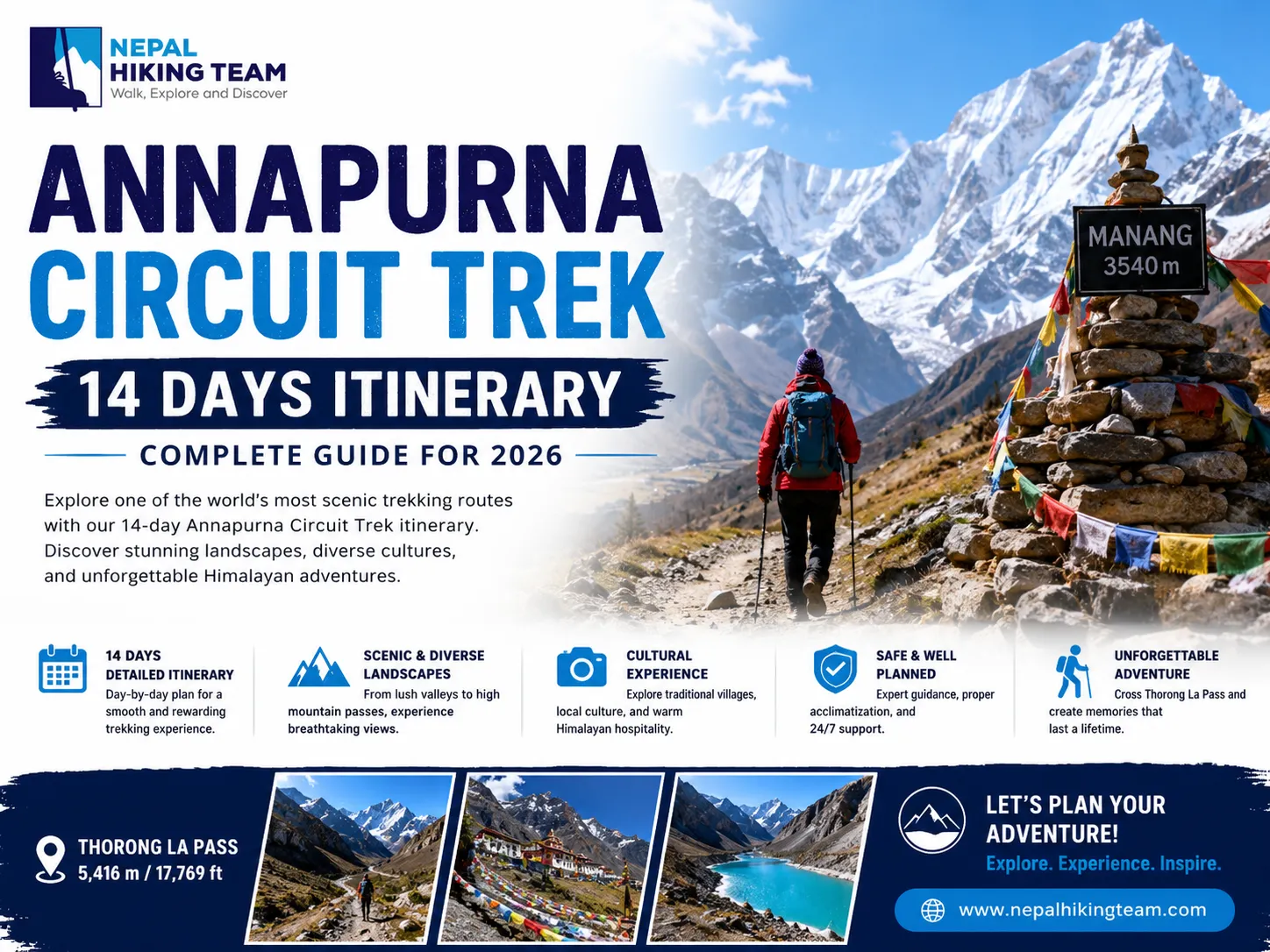

Thorong La, the highest point on this route, sits at 5,416 meters (17,769 feet), making it the world's highest trekking pass, according to Wikipedia's entry on the Annapurna Circuit. That's higher than every peak in the Lower 48 states combined into one number, and it's the centerpiece of any complete annapurna circuit trek 14 days itinerary. If you've been staring at scattered blog posts trying to piece together a realistic schedule, this guide lays out exactly what each day looks like.
What Does a 14-Day Annapurna Circuit Itinerary Actually Cover?
A 14-day itinerary is the modern, jeep-assisted version of the classic Annapurna Circuit. Instead of walking the full 160 to 230 km route from Besisahar, most trekkers now take a jeep to Chame or Dharapani, cutting out the lower, less scenic road sections, and trek the rest on foot. You still get the full Thorong La crossing, Manang's acclimatization stops, and the descent into Mustang.
Why Planning This Trek Trips People Up
The biggest challenge isn't fitness — it's altitude. Jumping from sea level in the U.S. to over 5,000 meters in under two weeks is rough on the body if you don't pace it right. A lot of first-time trekkers also underestimate how cold and windy the high camps get, or pack the wrong gear because they planned around photos instead of an actual day-by-day plan.
Permits, teahouse availability, and side trips like Tilicho Lake also throw people off if they're not built into the schedule ahead of time. Without a clear plan, trekkers either rush the acclimatization days (dangerous) or run out of time before reaching Muktinath.
How Nepal Hiking Team Builds This Itinerary Around You
Nepal Hiking Team plans this 14-day route with proper acclimatization days baked in, not skipped for the sake of a shorter brochure. Our guides know the trail conditions in real time, which teahouses are open each season, and how to adjust the pace if weather or altitude symptoms show up along the way.
Day 1 to 2: Kathmandu to Chame by Road
Why start with a jeep instead of walking from Besisahar?
Road construction has paved much of the lower trail anyway, so most trekkers skip the dusty road walk and drive straight to Chame (2,710m). This saves two to three days without losing any of the trek's scenic core. Day 1 is Kathmandu to Besisahar; Day 2 continues by jeep to Chame.
Day 3: Chame to Upper Pisang (3,300m)
The trail starts to feel like real Himalayan trekking here, with pine forests opening up to views of Annapurna II and the Paungda Danda rock face, a massive curved cliff that looks like a giant skateboard ramp carved into the mountain.
Day 4: Upper Pisang to Manang (3,540m)
Why does the upper route matter on this day?
Trekkers taking the upper Pisang trail get better mountain views and a slightly higher elevation gain, which actually helps acclimatization. It's a longer day, but the payoff is one of the best ridgeline walks on the whole circuit.
Day 5: Acclimatization Day in Manang
This is non-negotiable. Manang sits at 3,540m, and the next stretch climbs fast. Most itineraries use this day for a short hike up to Ice Lake or the Gangapurna viewpoint, both of which help your body adjust without losing trekking time entirely.
Day 6: Manang to Yak Kharka (4,018m)
The trail thins out and the landscape turns stark and high-alpine. Trees disappear, and you'll start feeling the altitude more directly, like walking with a light backpack that somehow keeps getting heavier with every step up.
Day 7: Yak Kharka to Thorong High Camp (4,925m)
Why stop at High Camp instead of pushing further?
Stopping at High Camp shortens the summit push the next morning and gives your body one more night to adjust before the pass. Skipping this stop to save time is one of the most common mistakes that leads to altitude sickness symptoms at the top.
Day 8: Crossing Thorong La to Muktinath (3,800m)
This is the day everything builds toward. Trekkers start around 4 to 5 a.m. to beat the wind, cross the 5,416m pass, then descend into Muktinath, a major Hindu and Buddhist pilgrimage site. It's a long day, often 7 to 9 hours, but it's the highlight of the entire trek.
Day 9: Muktinath to Marpha or Jomsom
The terrain changes dramatically here. You drop into the high desert landscape of Mustang, which looks more like the American Southwest than the lush valleys you started in. Apple orchards around Marpha are a nice contrast after days of barren high-altitude trail.
Day 10: Jomsom to Pokhara by Flight or Jeep
Do trekkers walk the whole way back down?
No, most itineraries fly or drive from Jomsom to Pokhara to save several days of walking through road-heavy lower sections. This keeps the 14-day timeline realistic without cutting any of the scenic high-altitude portion.
Day 11 to 13: Buffer Days and Optional Side Trips
These days act as a buffer for weather delays at the pass, or they can be used for an extension like Tilicho Lake, the highest lake in the world according to several trekking guides, if time and acclimatization allow.
Day 14: Pokhara to Kathmandu and Departure
The final day wraps up with a flight or drive back to Kathmandu, leaving room for a relaxed last evening or onward international travel.
What Usually Works (and What Often Fails)
Building in a real acclimatization day at Manang works. Skipping it to "save a day" often fails badly, because altitude sickness doesn't care about your itinerary, and it can force an unplanned descent that costs far more time than the rest day would have. Starting the Thorong La crossing before sunrise works, since wind picks up hard by early afternoon; starting late is one of the most common planning mistakes trekkers make.
Packing layers for both desert heat in Mustang and freezing wind at the pass works. Packing for just one climate, based on trip photos from one season, often fails once trekkers hit the actual temperature swings between Manang and the pass.
Quick Takeaways
- Thorong La Pass sits at 5,416 meters, the highest trekking pass in the world.
- A jeep start to Chame cuts 2 to 3 days off the route without skipping the scenic core.
- The Manang acclimatization day is essential, not optional, for a safe pass crossing.
- Crossing Thorong La requires an early start, ideally before 5 a.m., to avoid afternoon wind.
- Flying or driving from Jomsom to Pokhara keeps a 14-day schedule realistic.
Final Thoughts
Fourteen days is enough time to do the Annapurna Circuit right, as long as the schedule respects altitude instead of rushing past it. The version above keeps the parts that make this trek legendary — Thorong La, Manang, the desert landscapes of Mustang — while trimming the road-heavy sections that don't add much anymore. Nepal Hiking Team has guided this exact route for years, and the trekkers who finish strong are almost always the ones who trusted the acclimatization days instead of trying to outpace them.
FAQs
Is 14 days enough for the Annapurna Circuit?
Yes, with a jeep start to Chame and a flight back from Jomsom, 14 days covers the full high-altitude experience, including Thorong La, without cutting acclimatization short.
How hard is the Thorong La Pass crossing?
It's demanding due to altitude and cold, but it's a walking pass, not technical climbing. Proper acclimatization and an early start make it manageable for reasonably fit trekkers.
Do I need a guide for the Annapurna Circuit?
It's not legally required, but a guide helps with route-finding, altitude monitoring, and adjusting the schedule if weather or health issues come up.
What permits do I need for this trek?
The Annapurna Conservation Area Permit (ACAP) is required and can be obtained through the Nepal Tourism Board in Kathmandu or Pokhara.
When is the best time to do this trek?
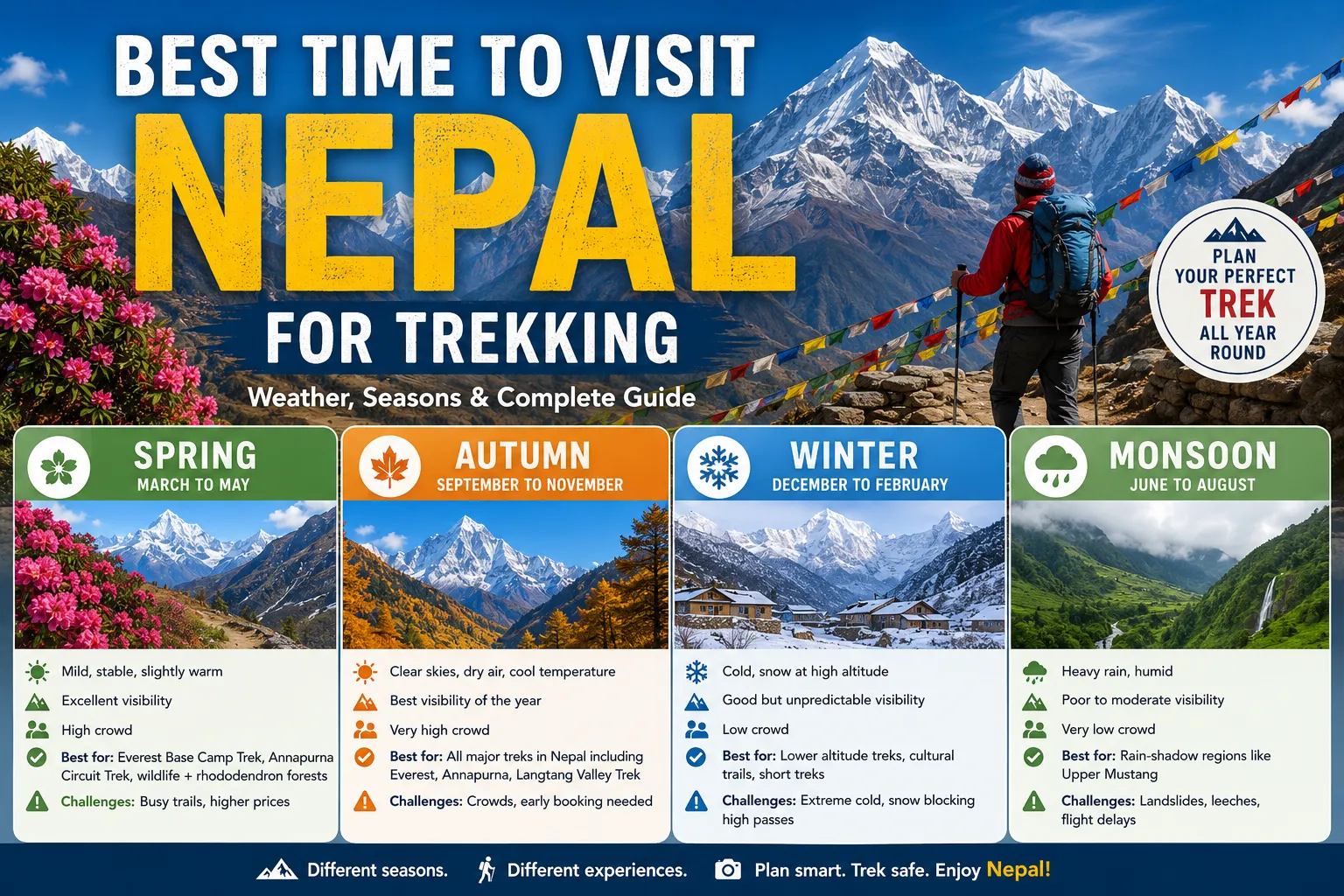
October to early December and March to April are the most popular windows, offering the clearest mountain views and more stable weather at the pass.





























Sign in to leave a comment.