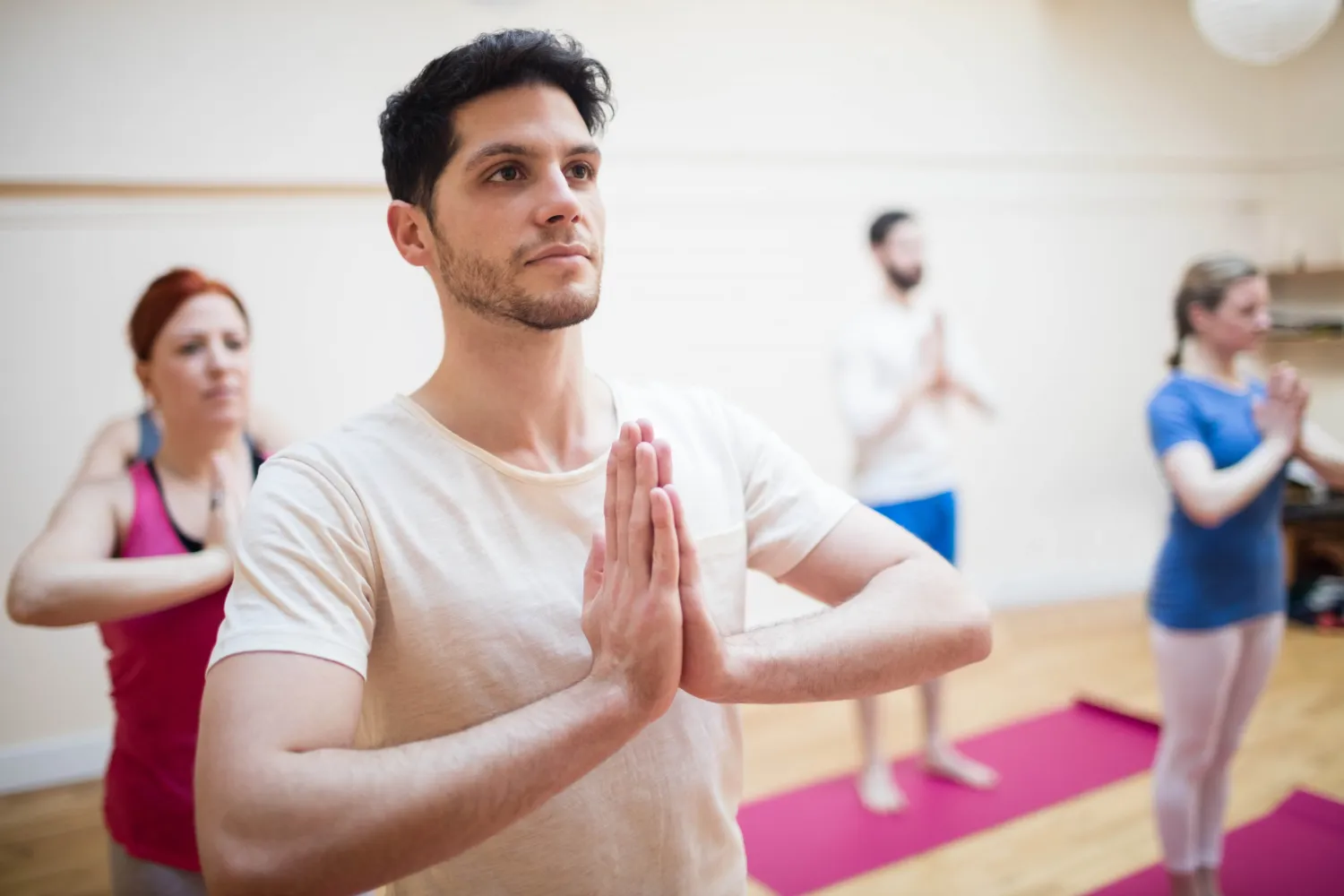

One of the most common reasons people delay joining a yoga class is not laziness or lack of interest — it is not knowing what to expect when they walk in. The unfamiliarity of a new environment, combined with the assumption that everyone else already knows what they are doing, keeps a surprising number of people on the fence far longer than necessary.
This is a walkthrough of what your first session at a yoga studio actually looks like — from the moment you arrive to the moment you leave — written for someone who has never been to one before.
Before You Arrive
The most important thing to know going in is that you do not need to prepare anything impressive. You do not need flexibility, fitness, or prior experience. The only things worth thinking about before your first class are practical ones: wear comfortable, stretchy clothing, avoid a heavy meal in the two hours before class, and arrive a few minutes early so you can settle in without feeling rushed.
Most well-run studios in Mumbai offer a free trial class before you commit to a membership — which is worth taking. It gives you a chance to experience the environment, the teaching style, and the pace before making any financial decision.
Walking In
A good studio has a particular quality to it the moment you step inside — quieter than the street outside, cleaner, and deliberately calm. This is not incidental. The physical environment of a yoga space is part of the practice itself. A studio that is spacious, well-ventilated, and thoughtfully designed makes it easier for your body and mind to begin transitioning out of the outside world and into the present moment.
You will typically be greeted, shown where to leave your footwear, and directed to the practice space. If it is your first visit, the instructor will usually take a moment to understand whether you have any injuries, physical limitations, or specific reasons for starting yoga — not to screen you out, but to make sure the session is appropriate for where you are.
The Session Itself
A typical offline yoga class runs between 45 and 60 minutes. Here is roughly what that time looks like:
Opening: The class usually begins with a short settling period — a few minutes of stillness or gentle breathing to help the mind shift out of autopilot mode. This transition is more useful than it sounds, especially if you have come directly from a stressful commute or a busy workday.
Main practice: The bulk of the session covers asanas — physical postures — designed with a specific focus for that day. A well-structured studio does not repeat the same sequence daily. A quality weekly rotation might move through forward bending on one day, backbends the next, then side stretches, twisting postures, and core work across the week. This ensures the body is developing in a balanced way rather than just reinforcing a familiar pattern.
During this section, the instructor is actively observing — and this is one of the real differences between a live studio class and any screen-based alternative. Adjustments are made in real time. If your alignment in a pose is placing strain on the wrong part of the body, the instructor can see it and correct it before it becomes a habit or an injury.
Pranayama and meditation: Most authentic yoga classes include dedicated time for breathwork and a short meditation. This is the part that many first-timers are most uncertain about, and also the part that tends to surprise them most positively. Five or ten minutes of guided breathwork after a physical practice produces a quality of quiet that is genuinely difficult to replicate at home without guidance.
Closing: The session ends in Savasana — a period of complete rest lying down. This is not optional filler. It is the moment where the practice integrates. Skipping it, as some studios allow, diminishes the quality of what came before it.
After Class
Most people describe leaving their first class feeling lighter than when they walked in — physically looser, mentally quieter, and often surprised that an hour passed so quickly. This is not a universal experience, but it is a common one.
What tends to determine whether someone comes back for a second class is not how challenging the session was, but how the space made them feel. Studios with 700+ positive student reviews — like Yoga365, which offers offline yoga classes in Mumbai at their Borivali studio — tend to earn that feedback not through spectacle but through consistency: certified instructors, a welcoming atmosphere, a structured practice, and a community that makes showing up feel worthwhile.
Multiple morning and evening batch timings mean that the class schedule works around real lives, not ideal ones.
The Honest Reality About Starting
The first class is rarely the transformative experience people romanticize. It is more likely to be mildly awkward, slightly humbling, and genuinely interesting. Your body will do things you didn't expect it to, you won't understand every instruction immediately, and that is completely fine.
The value of yoga does not arrive in session one. It accumulates over weeks and months of consistent practice — and the studio environment, more than any other format, tends to create the conditions for that consistency to happen.
Walking into a yoga studio for the first time is less about being ready and more about deciding to begin.
Author Bio
Gaurav Dudhane
Gaurav is a certified yoga instructor and co-founder of Yoga365. Gaurav has a diverse range of expertise and experience in Yoga catering to individuals at different levels and in various settings.


























Sign in to leave a comment.