
Search is changing shape in a quiet way that’s easy to miss until it hits your numbers.
People still “search,” but they’re increasingly getting the answer without clicking—through AI summaries, chat-style results, and snippets that pull the key points straight onto the results page.
That shift doesn’t mean SEO is dead. It means the job has expanded: you’re not only trying to rank a page, but you’re also trying to become the source an answer engine chooses to quote.
That’s where service page answer optimisation for Australia comes in: structuring your key information so it’s easy to extract, verify, and surface in those on-page answers.
That’s what Answer Engine Optimisation (AEO) is really about: making your expertise easier to extract, trust, and reuse—without turning your site into a robotic FAQ farm.
What AEO is and what it isn’t
AEO is the practice of structuring your content so it’s genuinely helpful to people and easy for machines to interpret.
It’s not a separate channel that replaces SEO. It sits alongside it.
When you do AEO well, you still produce good pages for humans, but you also:
- state the answer clearly and early
- make supporting details easy to skim
- use consistent language for the entities you serve (services, locations, products, audience terms)
- reduce ambiguity so systems don’t have to guess what you mean
AEO is also not a guarantee that “AI will feature you.” Different systems pull answers differently, and outcomes depend on authority, content quality, and how competitive the topic is.
Think of AEO as removing friction. You’re making it easier for the right answer to be taken from the right place.
Common mistakes
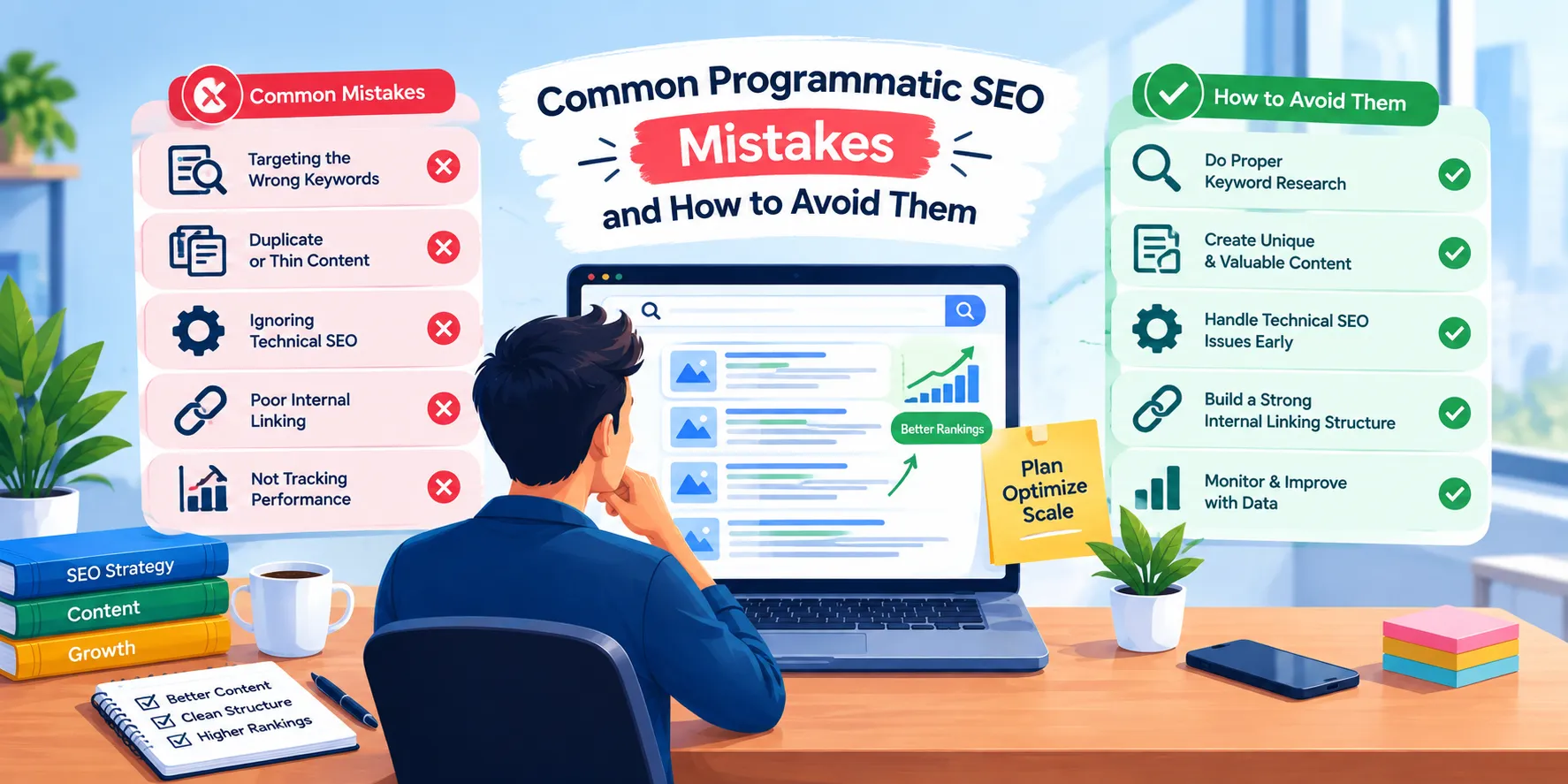
The biggest mistake is treating AEO like a formatting trick—adding a few headings, a few FAQs, and hoping that’s enough.
Another common mistake is publishing pages that never commit to an answer. They “explain” around the topic, but they don’t actually say what the reader came for.
Some teams try to cover every keyword variation with near-duplicate pages. In an answer-driven world, that can dilute clarity and create internal competition, where your own pages fight each other.
A fourth mistake is writing for “algorithms” and forgetting trust. If your content lacks specificity, real-world constraints, and clear authorship signals, it may be less likely to be used as a source.
Finally, many businesses don’t measure AEO outcomes properly. They track traffic only, then assume “nothing happened,” even if brand searches, assisted conversions, or enquiry quality improved.
Decision factors: what to change first and how to prioritise
AEO is easiest when you treat it like a triage exercise: fix the biggest blockers, then build repeatable formats.
Start with high-intent questions that affect revenue
Begin with questions that sit close to buying decisions:
- pricing and inclusions
- timelines
- comparisons between options
- “Do I need X or Y?”
- eligibility and constraints
- setup requirements and next steps
These questions are the ones answer engines love, and they’re also where clarity reduces sales friction.
Decide which pages should be “answer hubs”
Not every page needs an FAQ section, and not every blog post should try to rank.
Pick a small set of pages to act as answer hubs—service pages, category pages, core explainers—and build depth there. Then support them with narrower articles that link inward.
Answer engines reward coherence. A scattered content library with no centre of gravity is harder to interpret.
Make answers easy to extract without losing nuance
A practical rule: the page should give a direct answer in the first few lines of the relevant section, then expand with context, trade-offs, and examples.
This helps readers and helps answer systems because the “quoteable” part is obvious.
If you’re mapping what to fix first and want a baseline for what AEO work typically includes, experienced answer optimisation specialists are a helpful reference.
Build trust signals into the page, not into the footer
Answer engines lean on signals that reduce uncertainty:
- clear definitions and scope boundaries (“this applies when…”, “this doesn’t apply if…”)
- current process descriptions (how it works today, not in theory)
- consistent entity language (service names, location coverage, product terms)
- credible authorship signals (who wrote it, who’s responsible for the advice, how to contact)
You don’t need hype. You need specificity.
Choose a measurement that matches the new reality
AEO can improve outcomes even when clicks don’t rise.
Useful measures can include:
- growth in brand and service-related queries
- increases in enquiries that reference “I saw this answer”
- improvements in conversion rate on the pages that do get traffic
- better rankings stability for core pages (less volatility)
- higher-quality leads (fewer wrong-fit enquiries)
The goal is not just “more traffic.” It’s the answer people trust.
A practical content format that wins answers
You don’t need to rewrite your whole site. You need a repeatable structure that makes answers easy to lift.
Use “answer first, detail second” sections
For each major query a page should satisfy, structure the section like this:
- Direct answer (1–3 sentences)
- When it applies / when it doesn’t
- Key factors list
- Next step guidance
- Related internal link to the next logical page
That format respects reader's time and reduces ambiguity for machines.
Create “decision tables” without the fluff
Instead of generic pros/cons, use decision factors:
- best for
- not ideal for
- cost drivers
- time drivers
- common constraints
- what to prepare before starting
This is the information people actually compare, and it’s what gets quoted.
Standardise your entity language
If you call something three different names across your site, search engines have to guess whether they’re the same thing.
Pick the label you want to own (service name, product type, audience segment) and use it consistently:
- in headings
- in first-sentence answers
- in internal link anchors (not keyword-stuffed, just consistent)
- in image alt text and captions where relevant
Consistency beats cleverness.
Use FAQs where they help, not as filler
FAQs work when they’re real questions your team gets repeatedly, and the answers are specific.
Avoid broad, non-committal answers like “It depends” without a next step. If something depends, say what it depends on and what the reader should do next.
Next 7–14 days plan
Days 1–2: List the top 15–30 questions prospects ask before buying, taken from sales calls, inboxes, and support tickets.
Days 2–4: Map those questions to 5–8 “answer hub” pages that should own the topic, then identify where you have gaps or duplicates.
Days 4–6: Rewrite the top sections on your hub pages using answer-first structure (direct answer, constraints, factors, next step).
Days 6–8: Add internal links that reflect real decision flow (from explainer → service page → pricing/timeline → enquiry), and remove competing near-duplicate pages where possible.
Days 8–10: Standardise entity language across the site: same service names, same labels, same definitions.
Days 10–14: Set a lightweight measurement dashboard that tracks lead quality and conversion behaviour, not just raw clicks.
A two-week sprint is enough to make your content “quote-ready” in the places that matter most.
Operator Experience Moment
The fastest wins usually come from rewriting what you already have, not publishing new content. When a page answers the question directly and then supports it with the right detail, it becomes easier to trust and easier to reuse. The slowest progress happens when teams try to “out-produce” the problem with more posts instead of making the existing pages clearer.
Local SMB mini-walkthrough for Australia-wide teams
Start with the questions your sales team answers repeatedly, because those are your highest-leverage AEO targets.
Pick a small number of hub pages and make them the most complete, most updated resources you own.
Align service naming across states and regions so your content doesn’t fragment into inconsistent terminology.
If you serve multiple locations, clarify coverage and constraints early on each relevant page to reduce wrong-fit enquiries.
Create an internal linking path that matches how Australians actually buy: research → compare → check price/timing → contact.
Track lead quality in your CRM, because “fewer but better” can be the best outcome of answer visibility.
Practical Opinions
Answer engines reward clarity, not cleverness.
One strong hub page beats five thin pages that repeat themselves.
Measure outcomes in leads and conversions, not only in clicks.
Key Takeaways
- AEO is about making your expertise easy to extract, trust, and reuse in answer-driven search.
- Start with high-intent questions and build a small set of answer hub pages with an answer-first structure.
- Avoid common traps: formatting-only changes, non-answers, duplicate pages, and weak trust signals.
- A 7–14 day sprint can create meaningful improvements by clarifying existing content and standardising language.
Common questions we hear from Australian businesses
Q: Is AEO just SEO with FAQs added?
Usually, it’s broader than that—FAQs help, but AEO is mainly about clear answers, consistent structure, and trust signals across key pages. A practical next step is to pick one core service page and rewrite the top sections into direct answers with constraints and next steps. In Australia, multi-location service businesses often see quick gains just by clarifying coverage and terminology.
Q: How do we know which questions to target first?
In most cases, the best starting point is the questions that block sales: price, timeline, inclusions, suitability, and comparisons. A practical next step is to pull 20 questions from calls and emails and map them to 5–8 hub pages. In Australian markets, clarity on “what’s included” and “how long it takes” often reduces back-and-forth before booking.
Q: What if answer engines reduce clicks to our website?
It depends on the query type—some informational searches may click less, but commercial intent queries still need deeper detail and trust. A practical next step is to focus AEO on pages that move people toward action and track conversion rates and lead quality. In most cases for Australian SMEs, fewer clicks can still mean better outcomes if enquiries improve.
Q: Do we need special tools or a schema to do AEO well?
Usually, good structure and content clarity come first, and technical enhancements can follow once the basics are solid. A practical next step is to implement answer-first sections and standardise entity language before investing heavily in tooling. In Australia-wide teams, consistent terminology across branches and service pages often delivers more benefit than adding new tech layers.



















Sign in to leave a comment.