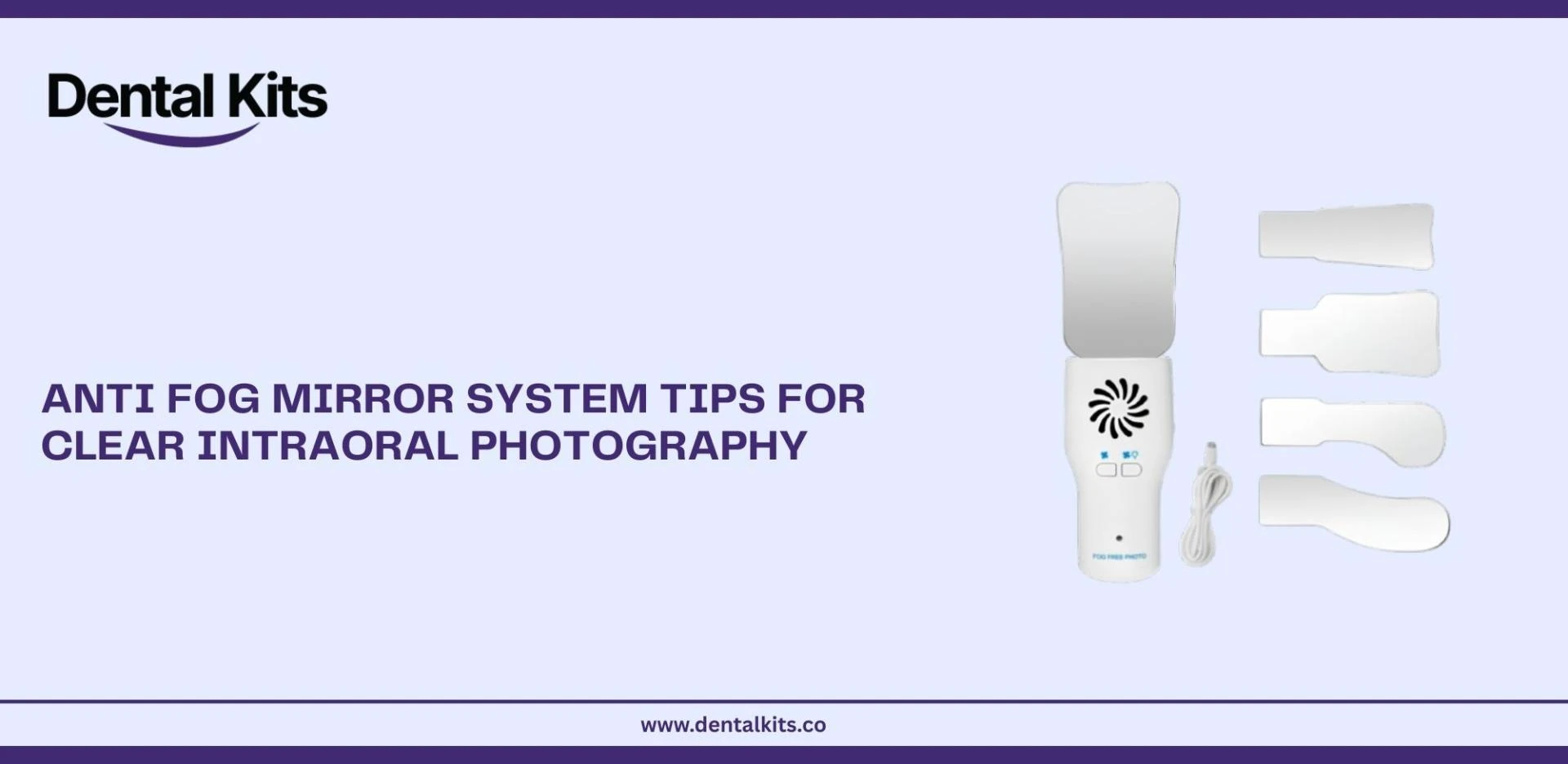
Introduction: Why Clear Intraoral Photography Depends on Fog-Free Mirrors
Intraoral photography plays a vital role in modern dentistry. Dentists rely on clear images for diagnosis, treatment planning, case documentation, patient education, and marketing. However, one persistent challenge affects image quality more than most clinicians realize — mirror fogging.
When mirrors fog inside the oral cavity, visibility drops instantly. Important details are lost, shots must be retaken, and workflow slows down. This is exactly why the anti fog mirror system has become an essential tool for dental photography.
An anti-fog mirror system for dental photography ensures uninterrupted visibility by preventing condensation on mirror surfaces. When used correctly, it allows dental professionals to capture sharp, consistent, and clinically accurate intraoral images with ease.
This guide shares practical, real-world tips to help you get the most out of your anti fog mirror system and consistently achieve clear intraoral photographs.
Why Mirrors Fog During Intraoral Photography
Fogging occurs when warm, moist air from the patient’s breath contacts a cooler mirror surface. Inside the mouth, humidity levels are high, airflow is limited, and temperature changes happen quickly — creating the perfect conditions for condensation.
Traditional solutions such as wiping mirrors, warming them with water, or using saliva ejectors only provide temporary relief. These interruptions reduce efficiency and often result in inconsistent image quality.
A dedicated anti fog mirror system eliminates this problem at the source, keeping mirrors clear throughout the entire photography process.
What Is an Anti Fog Mirror System?
An anti fog mirror system is a dental mirror designed with built-in features that actively or passively prevent condensation from forming on the reflective surface.
Most modern systems include one or more of the following:
- Active airflow to keep moisture away from the mirror
- Integrated LED lighting to improve visibility
- Specialized mirror surfaces designed to resist fogging
- Interchangeable mirror heads for different intraoral views
Unlike standard dental mirrors, these systems are built specifically for continuous visibility, making them ideal for photography, documentation, and long procedures.
Topical Map: What This Article Covers
This article is structured to fully answer user intent around intraoral photography and anti fog mirrors:
- How anti fog mirror systems work
- Benefits of anti fog mirrors for dental photography
- Types of anti fog mirror systems
- Step-by-step tips for clear intraoral photography
- Common mistakes that reduce image quality
- Cleaning, maintenance, and sterilization best practices
- How to choose the right anti-fog mirror system for your practice
How Anti Fog Mirror Systems Work
Active Airflow Systems
Many anti fog mirror systems use a small internal airflow mechanism. This creates a gentle stream of air across the mirror surface, preventing moisture from settling and forming condensation.
This method is highly effective during longer photography sessions, especially when capturing multiple intraoral angles.
LED-Assisted Anti Fog Mirrors
Some systems integrate LED lighting directly into the mirror. Beyond improving visibility, this light slightly warms the mirror surface, reducing fog formation while also enhancing image clarity.
LED-assisted mirrors are particularly useful when photographing posterior teeth or deep intraoral areas.
Anti Fog Coatings
Certain mirrors use special surface coatings designed to resist moisture buildup. While effective initially, coatings can wear down over time, especially with frequent sterilization. These systems are best used with careful handling and maintenance.
Benefits of Using an Anti Fog Mirror System for Dental Photography
Consistently Clear Images
The most obvious benefit is uninterrupted visibility. With fog eliminated, you can focus entirely on framing, lighting, and capturing the best possible image.
Faster Workflow
No stopping to wipe mirrors. No retakes due to fog. This saves time for both the clinician and the patient.
Improved Image Quality
Clear mirrors result in:
- Sharper reflections
- Better focus
- Accurate representation of tooth surfaces and soft tissue
Better Patient Communication
When patients see high-quality images of their own oral condition, treatment explanations become easier and trust improves.
Step-by-Step Tips for Clear Intraoral Photography
Tip 1: Start With a Clean Mirror Surface
Even the best anti fog mirror system performs poorly if the mirror surface is dirty. Always ensure mirrors are:
- Free of residue
- Scratch-free
- Properly sterilized
A clean surface improves reflectivity and reduces glare in photos.
Tip 2: Activate the Anti Fog Function Before Placement
If your system includes active airflow or LED lighting, turn it on before placing the mirror into the mouth. This ensures the mirror is already prepared to resist condensation.
Tip 3: Choose the Right Mirror Shape
Different shots require different mirror heads:
- Occlusal mirrors for biting surfaces
- Buccal mirrors for cheek-side views
- Lingual mirrors for inner tooth surfaces
Using the correct mirror reduces repositioning and improves consistency.
Tip 4: Stabilize the Mirror Properly
Hold the mirror steady and avoid excessive movement. A stable mirror:
- Reduces motion blur
- Improves focus accuracy
- Makes framing easier
Small hand movements can significantly impact image clarity in close-up photography.
Tip 5: Position the Mirror to Reduce Glare
Angle the mirror slightly to avoid direct reflections from lights or flashes. Even with anti fog systems, glare can still affect image quality if angles are incorrect.
Tip 6: Pair With Proper Dental Photography Lighting
An anti-fog mirror system works best when combined with:
- Dual LED lights
- Ring lights
- Continuous dental photography lighting
Balanced lighting enhances details and minimizes shadows in reflected images.
Tip 7: Capture Multiple Angles
Always take more than one photo:
- Slight angle changes can reveal hidden details
- Multiple images ensure at least one perfect shot
- Helpful for documentation and comparisons
Common Mistakes to Avoid
Relying on Traditional Mirrors
Standard mirrors are not designed for photography. Even experienced clinicians struggle with fog when using non-specialized tools.
Ignoring Maintenance
Scratched or worn mirror surfaces reduce clarity and increase glare. Regular inspection is essential.
Overexposing the Image
Too much light can wash out reflections. Adjust brightness rather than moving lights too close.
Poor Mirror Positioning
Incorrect angles lead to distorted reflections and unusable images. Proper technique matters as much as the equipment.
Cleaning, Maintenance, and Sterilization Best Practices
To keep your anti fog mirror system performing at its best:
- Clean mirrors immediately after use
- Follow manufacturer-recommended sterilization methods
- Use protective cassettes during autoclaving
- Avoid abrasive cleaning materials
- Inspect mirror surfaces regularly
Well-maintained mirrors deliver consistent clarity and last longer.
How to Choose the Right Anti-Fog Mirror System for Dental Photography
When selecting an anti fog mirror system, consider:
- Active fog prevention vs coated mirrors
- LED lighting integration
- Battery life and charging method
- Interchangeable mirror options
- Comfort and ergonomics during use
For frequent photography, systems with active airflow and integrated lighting generally provide the most reliable results.
Final Thoughts: Elevate Your Intraoral Photography
Clear intraoral photography is impossible without clear mirrors. A high-quality anti-fog mirror system for dental photography removes one of the biggest obstacles clinicians face when capturing professional images.
By using the right system and following proven techniques, you can:
- Improve image clarity
- Speed up your workflow
- Enhance patient understanding
- Strengthen clinical documentation
Mastering your anti fog mirror system isn’t just about better photos — it’s about working smarter and delivering a higher standard of care.


























Sign in to leave a comment.