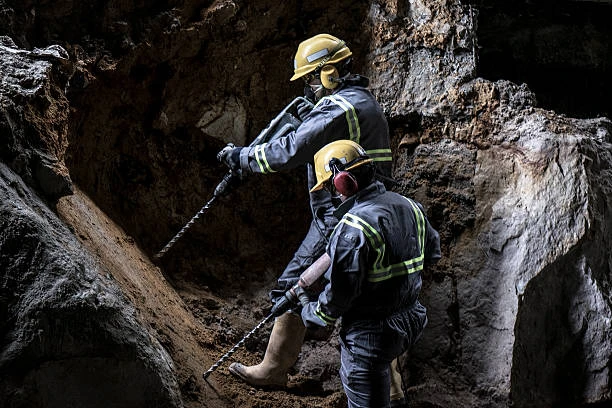

Mining is one of the world’s most essential yet dangerous industries. Employees often work in hazardous conditions, from deep underground tunnels to open-pit mines exposed to extreme weather. According to the International Labour Organization, mining remains one of the industries with the highest rates of workplace injuries and fatalities. In such environments, every second counts, and even small mistakes can have catastrophic consequences.
Fortunately, augmented reality (AR) technology, particularly AR glasses, is transforming the way mining companies approach safety, training, and operational efficiency. By overlaying digital information onto the physical world, AR glasses provide miners with real-time guidance, alerts, and remote support, reducing risks while improving productivity.
In this blog, we explore how AR glasses are helping employees in high-risk mining environments and why this technology is quickly becoming an indispensable tool for modern mining operations.
1. Understanding AR Glasses in Mining
AR glasses are wearable devices that overlay computer-generated information onto the wearer’s view of the real world. Unlike virtual reality (VR), which immerses users in a completely digital environment, AR enhances reality by adding digital layers of data while keeping the user aware of their surroundings.
In mining, AR glasses can display:
- Safety alerts: Notifications about hazardous zones, toxic gas levels, or unstable structures.
- Equipment instructions: Step-by-step guides for operating heavy machinery or performing maintenance.
- Navigation assistance: Directional overlays to guide miners through complex underground tunnels.
- Remote collaboration: Live video streams for supervisors or experts to guide employees remotely.
By equipping miners with this technology, companies can minimise accidents, reduce downtime, and boost overall operational efficiency.
2. Improving Safety in Dangerous Environments
Safety is the most critical aspect of mining. Every day, miners face risks such as rockfalls, gas leaks, equipment malfunctions, and cave-ins. Traditional safety measures, such as signage, training, and PPE (personal protective equipment), are essential but sometimes insufficient for preventing accidents in dynamic mining environments.
AR glasses enhance safety in multiple ways:
2.1 Real-Time Hazard Alerts
AR glasses can be connected to environmental sensors that detect dangerous conditions. For example:
- Gas leaks: If methane or carbon monoxide levels rise, AR glasses can alert miners immediately, displaying color-coded warnings in their field of vision.
- Structural instability: Sensors can detect shifts in tunnels or walls, prompting AR overlays that guide miners away from collapse zones.
These real-time alerts are faster and more intuitive than traditional alarms, allowing miners to react instantly.
2.2 Proximity Warnings for Heavy Machinery
Collisions with large machinery are a significant cause of accidents in mines. AR glasses can integrate with equipment sensors to provide:
- Visual proximity warnings: Highlighting nearby vehicles or moving equipment.
- Distance indicators: Showing how far a miner is from a dangerous machine.
By receiving immediate, visual warnings, employees can avoid accidents that might otherwise result in serious injuries or fatalities.
2.3 Remote Safety Monitoring
Supervisors can monitor miners in real time through AR systems, receiving video feeds and sensor data. In emergencies, they can:
- Guide workers to safety.
- Activate emergency protocols.
- Provide step-by-step instructions to address critical hazards.
This remote oversight is invaluable in mines where access is difficult, and conditions can change rapidly.
3. Streamlining Training and Skill Development
Mining is a highly skilled industry, requiring workers to operate complex machinery, understand geology, and follow strict safety protocols. Traditional training methods — manuals, classroom instruction, and on-site shadowing — can be time-consuming, risky, and inconsistent.
AR glasses can revolutionize training by providing immersive, hands-on guidance without putting employees in danger.
3.1 Step-by-Step Procedures
AR glasses can overlay instructions directly onto equipment, guiding miners through:
- Machinery operation: Showing which levers to pull or buttons to press.
- Maintenance tasks: Highlighting parts that need lubrication, repair, or replacement.
- Emergency procedures: Visualizing escape routes or safety equipment locations.
This visual, step-by-step guidance improves comprehension and retention while reducing errors caused by misreading manuals or rushing through tasks.
3.2 Simulated Hazard Training
AR can create realistic hazard scenarios without putting miners at risk. For example:
- Simulating a rockfall or gas leak in a controlled environment.
- Training miners to navigate obstructed tunnels.
- Practicing emergency responses to equipment malfunctions.
This type of immersive training increases confidence, ensures employees are prepared for real-world emergencies, and reduces the likelihood of accidents on the job. Learn more here.
3.3 Remote Expert Support
For complex tasks, AR glasses enable real-time collaboration with experts who may not be physically present. Through live video streaming and digital annotations, an experienced engineer or supervisor can:
- Highlight specific components on machinery.
- Draw instructions directly in the miner’s view.
- Verify that steps are completed safely and correctly.
This reduces downtime, improves task accuracy, and ensures best practices are consistently applied.
4. Increasing Operational Efficiency
Beyond safety and training, AR glasses significantly enhance operational efficiency in mining. By providing contextual information and automating guidance, AR helps miners work faster and smarter.
4.1 Real-Time Data Access
AR glasses can display live data from machinery, sensors, and mining software. This allows miners to:
- Monitor equipment performance.
- Track production metrics.
- Identify maintenance needs before failures occur.
Instead of consulting separate manuals or devices, miners have all essential information right in their line of sight, reducing downtime and increasing productivity.
4.2 Improved Navigation in Complex Mines
Many mines, especially underground ones, are labyrinthine and poorly lit. AR glasses can:
- Overlay directional arrows and maps.
- Highlight restricted or hazardous areas.
- Mark important locations such as exits, emergency stations, and storage areas.
This reduces the risk of getting lost, ensures safe passage, and saves time during operations.
4.3 Optimizing Equipment Use
AR systems can guide miners on optimal operating procedures, reducing wear and tear on machinery. For example:
- Suggesting ideal drilling angles or speeds.
- Indicating correct load limits for vehicles and conveyors.
- Alerting workers to potential mechanical issues before they escalate.
This proactive approach not only extends equipment life but also lowers maintenance costs.
5. Enhancing Communication and Collaboration
Communication in mining environments is often difficult due to distance, noise, and limited connectivity. AR glasses improve communication by:
- Enabling live video streaming to supervisors and engineers.
- Allowing digital annotations on real-world objects.
- Integrating with team communication tools for instant alerts.
Miners can get immediate guidance, report hazards, and share updates without leaving their work site. This reduces miscommunication and ensures critical information reaches the right people promptly.
6. Case Studies: AR in High-Risk Mining
Several mining companies have already seen remarkable benefits from AR implementation:
6.1 Underground Coal Mines
AR glasses have been deployed in coal mines to detect hazardous gas concentrations. Sensors linked to AR displays alert miners in real time, drastically reducing the risk of explosions and toxic exposure.
6.2 Precious Metal Mines
In gold and platinum mines, AR glasses guide workers through complex ore processing tasks, improving efficiency and reducing human error. Remote experts can assist in real time, avoiding costly mistakes in sensitive operations.
6.3 Heavy Equipment Maintenance
Mining companies have used AR glasses to train mechanics on excavators and drilling rigs. Visual overlays show which components need attention, reducing maintenance time by up to 30% and improving safety for technicians working in confined spaces.
7. Overcoming Challenges in AR Adoption
While the benefits are clear, implementing AR glasses in mining is not without challenges:
- Connectivity issues: Underground mines often have weak signals, which can hinder real-time AR functionality. Solutions include local edge computing and offline AR modules.
- Device durability: AR glasses must withstand dust, moisture, and impact. Ruggedized devices designed for industrial use are essential.
- Training adoption: Employees need time to adapt to wearable technology. Providing gradual onboarding and hands-on support ensures smooth adoption.
With careful planning and investment, these challenges can be overcome, making AR a practical and transformative tool.
8. The Future of AR in Mining
The potential of AR in mining extends far beyond current applications. Emerging innovations include:
- AI-integrated AR: Smart analytics that predict hazards and optimize workflows in real time.
- Wearable exoskeleton integration: Combining AR with exoskeletons to assist miners in heavy lifting while ensuring proper posture.
- Enhanced remote operations: Operators can control mining machinery from safe distances using AR guidance.
As technology advances, AR will increasingly become a standard safety and efficiency tool across all high-risk mining environments.
9. Conclusion
Mining will always be a challenging and dangerous industry. However, AR glasses offer a powerful solution to some of the sector’s most pressing problems. By providing real-time hazard alerts, immersive training, remote expert guidance, and operational insights, AR technology is enhancing safety, efficiency, and productivity in environments where every decision matters.
For miners, AR glasses are not just a technological novelty — they are a life-saving tool, helping them navigate dangerous terrain, operate equipment safely, and respond to emergencies with confidence. For mining companies, AR represents a significant investment in employee well-being, operational efficiency, and long-term sustainability.
As more mining organizations adopt AR solutions, the industry will move toward safer, smarter, and more resilient operations — demonstrating that even in the world’s scariest workplaces, technology can be a powerful ally.




















Sign in to leave a comment.