
Lenders make decisions every day that can affect their portfolios for years. If the numbers they rely on are inconsistent or outdated, the risk of bad decisions grows. Small missteps like misclassified expenses, missing ratios, or overlooked patterns can quietly build up until the picture you see no longer matches the borrower’s reality.
This blog looks at how automation, especially automated financial spreading, can improve the way you handle borrower data, ratios, and scoring. By the end, you’ll see how automation can make your credit assessments clearer and faster.
How Automated Financial Spreading Strengthens Data Foundations
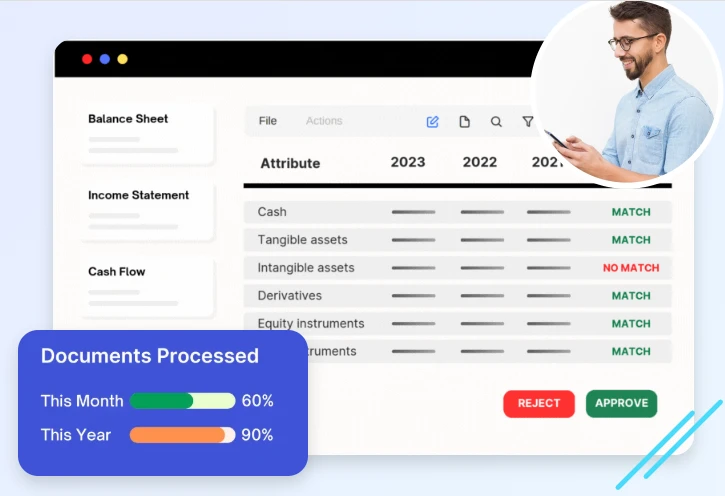
Automated financial spreading gives you a structured way to organize and review borrower statements. Instead of spending hours copying figures line by line, you can load files into a system that sorts, classifies, and formats them automatically. This removes the usual inconsistencies caused by different statement styles or human error. With cleaner input, ratios and performance metrics become far more reliable.
When you use automated financial spreading, your data flows into consistent templates that match your institution’s standards. This standardization reduces the time analysts spend correcting figures or guessing at classifications.
It also leaves more time for judgment calls and discussion, which are areas where your experience truly adds value. By building a strong data foundation, you give your credit models better material to work with and create a fairer comparison between borrowers.
Why Consistent Ratios Matter in Credit Risk Decisions
Ratios show you the borrower’s health in a form you can measure, like debt service coverage, leverage, margins, and more. When each analyst calculates them differently, the numbers lose meaning. Consistency is key because it lets you compare borrowers on equal terms and spot real changes over time.
Automated systems apply the same calculations across every spread, so your ratios don’t shift because of a formula error or a different interpretation. This consistency strengthens your internal credit ratings and gives decision-makers a clearer sense of who qualifies for funding and at what terms. You spend less time debating the math and more time weighing the actual risk.
Reducing Analyst Errors While Improving Accuracy
Manual entry often introduces small but costly mistakes. A misplaced decimal point or a skipped cell can distort an entire spread. You’ve probably seen situations where a single error led to extra hours of review or an incorrect assessment.
Automation reduces those errors by capturing figures directly from digital files or structured templates. This process eliminates repetitive data entry and the mistakes that come with it. With fewer errors, your ratios stabilize, your scoring models become more predictive, and your lending decisions gain more credibility inside and outside your institution. In short, analysts can focus on analysis, not correction.
Can Automation Improve Credit Risk Scoring Models?
A common question lenders ask is: can automation actually improve credit risk scoring models? The answer is yes, because cleaner data makes every model stronger. Scoring models work best when the input is consistent, accurate, and free from bias caused by irregular methods.
Automated processes deliver that kind of input by standardizing the way financial statements are captured and classified. Once the data enters your system, your models can produce ratios and trends with far more stability. This helps you identify risk earlier and fine-tune your lending policies. Over time, your credit risk scoring becomes sharper because the foundation you build on is reliable.
Compliance and Transparency Benefits of Automated Spreading
Regulators and internal auditors expect a clear trail of how each number appears in your spread. They want to know where figures came from, who adjusted them, and why. Automation gives you this trail automatically, recording the source, date, and any changes made during the process.
This transparency saves time during audits and builds trust with supervisors. When your team can show exactly how you reached each ratio or classification, reviews go more smoothly. In the bigger picture, transparency also improves communication inside your bank. Senior managers gain a clearer picture of portfolio health without needing to question every detail.
Preparing Your Team to Work With Automation
Even the best system works best when your people know how to use it. Training analysts on clear standards for classification, exceptions, and ratio calculation makes a big difference. When everyone uses the same guidelines, spreads become more uniform and easier to compare.
Regular refreshers also matter. Software updates bring new features, and financial reporting changes over time. Keeping your staff up to date lets them apply the system correctly and confidently. A skilled team supported by smart automation handles complex lending cases more smoothly, which improves the overall quality of your credit analysis.
Improving Internal Collaboration Through Better Data
Automation doesn’t just improve numbers; it changes how your team works together. When spreads follow the same format and ratios stay consistent, discussions between credit officers, risk managers, and executives become clearer. You no longer spend meetings debating which number is correct. You focus on the borrower’s actual situation.
This shared language also helps when you communicate outside the credit department. Loan committees, compliance teams, and senior leaders can quickly understand the reports you produce. Faster decisions and clearer communication can strengthen your institution’s ability to respond to changes in the market or shifts in your borrowers’ financial health.
Looking Ahead
Automated financial spreading offers a way to keep your credit risk analysis steady and transparent as lending grows more data-driven. The technology gives you structured, consistent input so your scoring models can do their work with fewer blind spots. As reporting standards evolve and new regulatory expectations appear, this approach can help you stay ready.




























Sign in to leave a comment.